
+Free Morning Routine Kit (3 printable tools included)
The perfect morning routine is often sold as a formula for success — but real mornings don’t always look like that. This article shows you how to create a routine that works for your life, with examples, myths debunked, and practical tools.
By GoToBetter | Tested by real life, not just theory
Why the Perfect Morning Routine Is a Myth
Most people searching for the “perfect morning routine” are already tired of failing at one. The internet is full of strict 5AM schedules and influencer habits — but real mornings don’t follow blueprints. They’re messy, unpredictable, and personal.
Your mornings don’t need to look like anyone else’s. They only need to work for you. That could mean five quiet minutes, or a simple ritual that grounds you before the day begins. The goal isn’t perfection — it’s rhythm, presence, and a calm start.
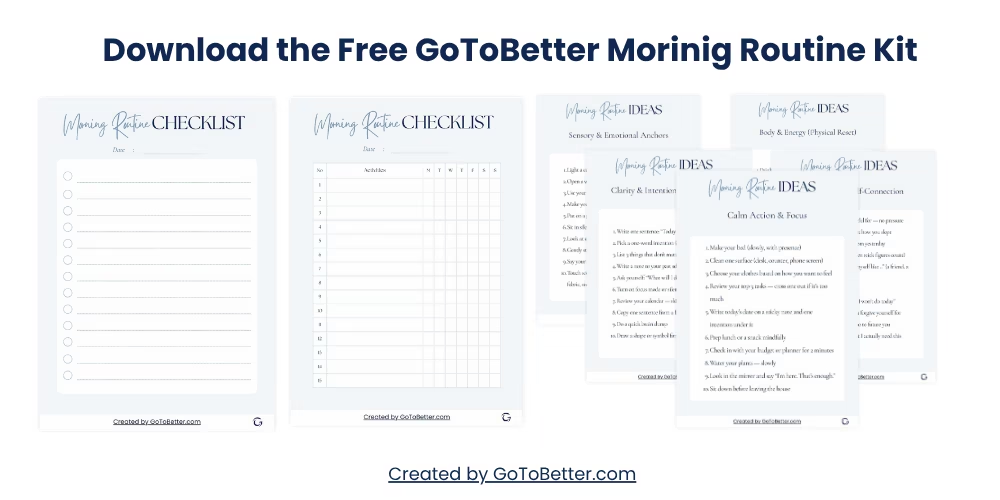
And if you’re unsure where to begin, we’ve made it easier. Before you go further, grab your free Morning Routine Kit — designed to help you plan, adapt, and reflect without pressure. Here’s what’s inside:
- 50 Morning Routine Ideas — A categorized list of flexible actions for every kind of morning
- Daily Morning Routine Template — A clean space to sketch or track your routine day by day
- Weekly Morning Planner — A simple layout to test different versions and see what actually works
Use it to circle, sketch, or experiment — or just keep it nearby as something real to hold onto while you build your own rhythm.
Write your email and get your Free Kit here↓
What Actually Makes a Morning Work
Most mornings don’t fail because people lack discipline. They fail because the plan doesn’t match the day.
A workable morning has three parts: energy check, one anchor, and optional add-ons. Think of it like a simple doorway. First, notice your energy. Then, do one small thing that steadies you. If there’s room, add more. If not, you’ve already done enough for a calm start.
Research-backed ideas are useful, not sacred. Hal Elrod popularized the “Miracle Morning.” Robin Sharma championed 5AM. James Clear explains friction and habit design. Useful lenses, not laws. Chronobiology also reminds us that chronotypes differ — so a late-rising student can still build a strong routine without sunrise heroics.
What works is anything that helps you arrive. A two-minute stretch. Making the bed once. A quiet sip of water before phone scroll. If a step adds pressure, it doesn’t belong today. The test is simple: after doing it, do you feel steadier, clearer, or kinder? If yes, keep it.
This is a realistic morning routine approach. It’s flexible, permission-based, and forgiving. It favors presence over performance. It leaves space for mess. It asks, “What’s true this morning?” not “What would impress Instagram?”
The phrase “perfect morning routine” sounds inspiring. It often becomes a trap. Swap “perfect” for “repeatable.” Swap “ideal” for “light.” Build a routine that fits your life — one that bends without breaking when the day starts crooked.
GoToBetter says it like this: “The perfect morning routine is the one that didn’t make you cry.”
You might notice the change right away. When the plan is smaller than your life’s chaos, mornings stop arguing with reality. That’s where momentum starts.
Three Real Mornings, Three Lifestyles
The Parent Who Needs Quiet, Not Perfection
There’s a kid on one hip and a backpack missing in action. The clock is loud. A long routine won’t survive this. Two minutes will. One breath while the kettle boils. One shoulder roll before shoes. A note on the fridge with a single word: “water.” That’s the anchor. Add-ons wait for weekends.
Call this a morning routine for parents that respects noise. It’s built for interruptions. The win is small and repeated. Over time, tiny resets stack into stability. The signal is clear: “We start with care, even when we’re late.” That’s a household culture change, not a hack.
Notice the metric isn’t minutes. It’s relief. If a habit shrinks the morning argument — keep it. If it expands the argument — cut it. One line to remember: pursue tiny wins, not theatrical ones.
The Student Who Wakes Later — And Still Succeeds
Classes run late. Brains wake slower. A 5AM template punishes the wrong person. A morning routine for students can start at 9:30 or 10 and still be powerful. Two steps: sunlight for two minutes at the window and a one-line day plan in the margin of a notebook. That’s enough to steady focus without draining willpower.
Swap intensity for repeatability. A short stretch between lectures. A five-breath pause before opening the laptop. A mini-reset at noon if the start was rocky. The goal is productive mornings without stress. The clock is a tool, not a judge.
Keep a simple rule: two actions before screens. If that rule holds three days a week, you’re moving. Call it progress, not failure.
The Remote Worker Who Needs Boundaries
Home can blur everything. Work shows up before coffee and never leaves. A remote-friendly routine uses boundaries as tools. Stand by a window. Drink water. Open the calendar and delete one non-essential task. That single deletion creates space for attention to breathe.
Movement matters here. Ten squats or a short walk to the mailbox counts as energizing morning activities. Then, the smallest plan: “When I sit, I do one focused block.” That’s the anchor. Keep a visible cue — notebook open on the desk, not the phone. Reduce friction to start and protect the first 20 minutes.
If the dog barks through everything, accept the soundtrack. Make the first block shorter. You’re building a system that honors reality, not a stage performance with costume changes and perfect lighting.
GoToBetter InsightStart with a two-minute anchor habit. Then adapt. Add one element per week after it feels natural.
Across all three, the pattern is simple: one anchor first, then optional flourishes. That’s a non-ideal morning routine by design. It works because it keeps the door open when life gets loud.
Small Habits That Actually Count
People ask for simple morning routine ideas. The trick is choosing habits that travel well — the ones that work in messy kitchens, quiet dorms, and tiny apartments. Think of habits like pocket tools. They should be light, easy to reach, and hard to break.
Below is a quick table to help decide what to include and whether to track it. The goal is not to build a museum of habits. It’s to keep a handful that make every start a touch easier.
| Habit | Track It? | Why |
|---|---|---|
| One glass of water | Presence mark only | Fast hydration signals “start.” Zero setup, high payoff. |
| Two-minute stretch | Optional | Wakes joints gently; works in tight spaces. |
| Sunlight at window | Optional | Light anchors circadian cues; improves alertness. |
| One-line day plan | Presence mark only | Reduces decision load; creates focus boundary. |
| Five-breath pause | No | Too small to log; better to just do. |
| Short walk to mailbox | Optional | Movement + daylight; resets stress quickly. |
Choose habits that are under five minutes and portable across locations. Keep the list short so you actually use it. If a habit becomes friction, shrink it. If it becomes invisible, move it to a new spot or pair it with a cue — kettle, window, backpack.
When someone says they want the perfect morning routine, what they often need is a reliable anchor and one or two add-ons. That’s it. Less choreography, more repeatability.
GoToBetter says it like this: “Consistency beats intensity — five quiet minutes done daily outlast an hour done once.”
You might notice that these tiny moves don’t impress anyone. That’s the point. Impress your nervous system first.
How to Reset a Messy Morning
Some mornings arrive sideways. The alarm fails. The bus leaves early. Coffee meets the shirt. It happens. The difference between a bad day and a salvageable one is the reset speed.
Resetting is a skill. It has three beats: pause, one action, re-entry. Pause: one slow breath with shoulders down. One action: choose anything grounding — water, window, a single sentence plan. Re-entry: resume with the smallest next step. No catching up. Just rejoining.
Think of the day like a book. If the first page tore, start on page two. No one needs a perfect prologue. Use a simple phrase that interrupts the spiral: “Begin again.” Then, do the smallest viable move. That’s how momentum returns without drama.
This is where a bold truth helps. A day can be reset at noon. The morning doesn’t own your outcomes. The moment you re-enter is the new start. Call it reset at noon and mean it.
For a calm start to the day, even when it’s already noon, choose one grounding action and one clarifying sentence. That’s enough to shift the tone.
GoToBetter InsightUse presence-based tracking: mark “showed up” instead of perfect completion. It lowers pressure and preserves momentum on hard days.
If you feel the urge to compensate, stop. Overcorrection leads to burnout. Under-correction — one small step — keeps the door open.
When people chase the perfect morning routine, they often forget this safety valve. Keep it visible. Write it on a sticky note. Place it near the kettle: still counts.
Common Myths to Ignore
Myth one: everyone should wake up at five. Chronotype research says otherwise. If early works, great. If not, build around your real wake time and protect light exposure soon after rising. The clock is a tool, not a personality test.
Myth two: longer is better. Long routines collapse under pressure. Short ones bend. If you keep finding excuses, shrink the plan. If you keep forgetting, move the cue. If you keep dreading it, change the anchor.
Myth three: order is sacred. Order is helpful until it becomes brittle. Prefer clusters over scripts. “Water, light, one line” beats a 12-step symphony. Flex the sequence to match the day.
Myth four: copying greatness transfers greatness. Borrow ideas, not identities. Carry the flexible morning habits that fit your context. Leave the rest at the door.
Myth five: missing a day means starting over. Momentum lives in patterns, not streaks. The next honest rep reactivates the pattern. That’s the only restart that matters.
Keep a single sentence lens for all myths: make it work for the person with your life. It is, by definition, not universal.
How to Design a Flexible Morning Routine (Step by Step)
This is a short guide to build a routine that adapts to your days. Use it as a living plan you can adjust without guilt.
Step 1 – Choose an Anchor
Pick one action that steadies you in two minutes or less. Water, window light, or a one-line plan are strong candidates.
Step 2 – Map Your Constraints
List the first hour’s realities: kids, commute, late nights. Design around them instead of fighting them.
Step 3 – Test for One Week
Run the anchor daily for seven days. No add-ons. Notice where it breaks and why. Adjust location, timing, or cue.
Step 4 – Add One Add-On
Layer a small add-on only after the anchor feels automatic. Keep it under two minutes to prevent friction.
Step 5 – Define a Reset
Choose a written phrase and one action for messy starts. Use them any time the morning derails.
Step 6 – Use Presence Tracking
Mark “showed up” on paper or in a simple sheet. Skip numbers and streak pressure.
Step 7 – Review Weekly
Once a week, ask: what helped, what hurt, what’s next. Keep what works, delete one thing that doesn’t.
Two final reflections help the design stick. What would a version of this routine look like on your worst day? And what would a two-step deluxe version look like on your best day? Plan both. That way you can adapt your morning without drama.
Think of the routine as a small lantern you carry, not a spotlight fixed to a stage. The lantern moves with you. It doesn’t demand applause. It just makes the next step visible.
People chasing the perfect morning routine often want guarantees. Real life offers levers, not guarantees. Pull the ones that make sense today. Put the rest back on the shelf for tomorrow.
One last nudge for balance: keep your first habit friction-low and joy-adjacent. If it feels like homework, cut it in half. If it still feels like homework, replace it. Build for sustainability, not performance.
And remember: a routine that no one notices but you is often the strongest kind — quiet, repeatable, and kind to the person who has to live it.
test, don’t copy
GoToBetter Mini Tool: Morning Reset Scan (1 Minute)
Use this one-minute scan to design or repair today’s morning. Grab a pen or type into your notes — the goal is a tiny, workable plan you can follow immediately.
- Label today’s energy: write low, medium, or high.
- Pick one anchor (2 minutes max): water · window light · two-minute stretch · one-line plan. Write the choice.
- Choose a reset phrase you’ll use if things derail: “Begin again” or “Page two.” Write it under the anchor.
- Add zero or one optional add-on only if energy is medium/high (e.g., short walk, three squats). Write it next to “+”.
- Mark presence: draw one dot when you do the anchor. If you reset later, draw a second dot. Dots beat drama.
Want to Keep Going? Here’s the Next Step
You’ve seen how small, flexible actions steady the start of your day. Keep building a version that bends with your life — not against it.
This support article sits inside our broader Morning Routine pillar — a calm, real-world approach to mornings that favors rhythm over perfection.
Read The Ultimate Guide to Morning Routines — your no-fluff map to designing mornings that actually work.
If you want a simple way to test ideas this week, get the Free Morning Routine Kit. It gives you three printable tools you can use immediately — no apps, no pressure:
- 50 Morning Routine Ideas — a categorized list of flexible actions
- Daily Morning Routine Template — space to map or track each day
- Weekly Morning Planner — try variations and see what actually works
Enter your email to download the Morning Routine Kit and keep it nearby — it’s a gentle nudge when you wake and a steadying plan when mornings go sideways.
Perfect Morning Routine FAQ
What is the perfect morning routine, really?
There isn’t a universal “perfect morning routine” — only one that consistently steadies you. Think in layers: one anchor (water, light, or a one-line plan) and optional add-ons when energy allows. If it reduces friction and helps you start, it’s right for today.
Do I need to wake up at 5AM for a good routine?
No — chronotypes differ, and effective routines can start later without losing impact. Prioritize early daylight exposure after your personal wake time, one small movement, and a simple plan. A student starting at 10AM can be as consistent and productive as a 5AM riser.
How do I start a morning routine if I only have five minutes?
Use one two-minute anchor and one three-minute add-on at most. For example: drink water, stand at a window, then write a one-line plan like “Focus block: 20 minutes after coffee.” Keep it portable so you can repeat it in any kitchen, dorm, or hotel room.
How can parents build a routine with kids at home?
Shrink the plan and make it interruption-proof. Choose a one-hand anchor (water or shoulder rolls) and a visible cue on the fridge that simply says “water.” Add-ons wait for weekends. Measure relief, not minutes — if tension drops, the routine is working.
Can I reset the day if my morning goes wrong?
Yes — reset at noon with a pause, one grounding action, and the smallest next step. Breathe once, drink water, write a single sentence plan, and re-enter without “catching up.” This avoids burnout and preserves momentum for the rest of the day.
Ready to Go Deeper?
When daily check-ins start feeling grounding, it may be time to build a clearer view of your habits and well-being.
The Ultimate Habit Tracker (Google Sheets) — fully customizable, easy to use, and accessible on all devices. Track daily, weekly, and monthly habits, visualize progress with automated updates, and stay consistent without overthinking. Privacy stays with your Google account.
- Save time with automated visuals and simple organization
- Review patterns weekly and adjust without starting over
- Stay motivated with trophies and gentle rewards
Wellness Tracker (Google Sheets) — manage mood, sleep, and wellness habits in one clean spreadsheet. Automated logs and clear summaries help you keep balance without complexity.
Self-Care Habit Tracker (Google Sheets) — track up to 30 self-care activities, customize categories, and keep consistent with visual progress and simple prompts.
Or explore all tools built for real life, not perfection: GoToBetter Shop.