
+Free Morning Routine Kit (3 printable planning tools)
The best morning routine for men is one you’ll actually keep—whether you want more focus, steady energy, or just a calmer start. This guide shows you realistic routines, practical examples, and a free kit to help you shape mornings that work in real life.
By GoToBetter | Tested by real life, not just theory
Morning Routine for Men That Actually Works
A morning routine for men doesn’t need to be extreme, complicated, or built on outdated clichés. The truth is simple: you need mornings that give you clarity, energy, and a steady start you can repeat without pressure.
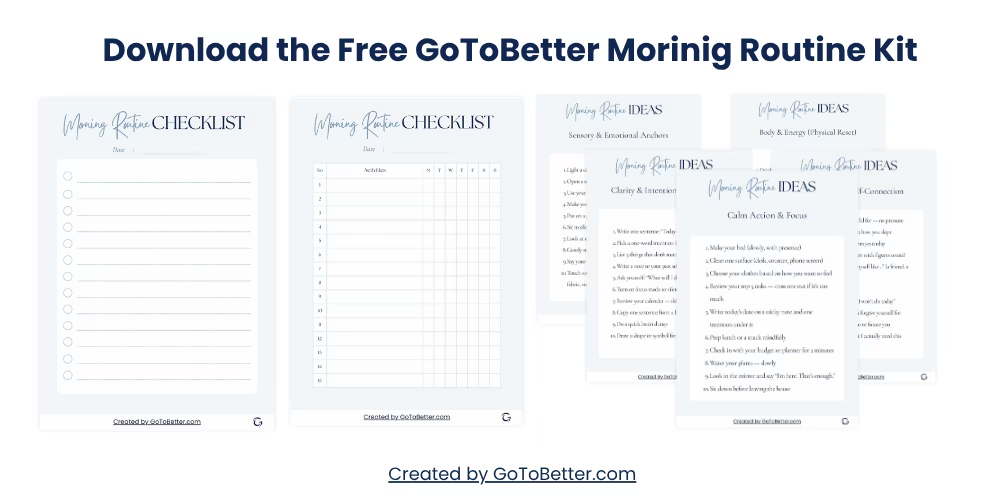
That’s why we put together the Free Morning Routine Kit. It gives you something real to hold onto while you experiment, instead of leaving you with a list you’ll never follow. Here’s what’s inside:
- 50 Morning Routine Ideas — categorized so you can pick by focus, energy, or calm
- Daily Morning Routine Template — a clean sheet to track or test routines
- Weekly Morning Planner — a simple view to see what actually works in your life
Use them to circle, sketch, or adapt your mornings step by step — no pressure, no hustle.
Write your email and get your Free Kit here↓
What a Morning Routine for Men Actually Means
A morning routine for men is not a badge of honor or a punishment. It’s a short sequence that sets your brain to a clear channel so the rest of the day isn’t static. Think of it like tuning a radio: a few precise moves and the noise fades. The point is peace over pressure.
Most search results promise the “best morning routine for men” with long lists and hard rules. Useful? Sometimes. But many skip what matters: your current season, your energy, your constraints. A healthy morning routine should steady you, not grade you. If it feels like a test, it’s the wrong design.
Three myths get in the way. First, that earlier is always better. Earlier only helps if sleep is solid. Second, that more steps equal more results. Complexity collapses when life gets real. Third, that intensity makes it “manly.” Stress chemistry doesn’t care about identity; it cares about load. Keep the load light enough to repeat.
Start with two or three actions that improve clarity and circulation. A glass of water, a slow stretch, one page of notes. You’re not building a prison; you’re laying down a small runway. The goal is a realistic morning routine you can keep on bad days, not a perfect one you abandon by Friday.
GoToBetter says it like this: “Small, steady mornings beat heroic plans — because repetition compounds and willpower doesn’t.”
If you want a quick filter, ask: does this step calm my nervous system, move my body, or clarify my day? If it does at least one, it belongs. If it does none, it’s decoration. Keep the decorations off the runway.
Why a Simple Start Works Better
Brains love certainty in the morning. When the plan is short and obvious, you conserve decision energy for later. James Clear popularized the idea that small, repeated actions change identity over time; the lesson applies here: starting tiny is the lever. Andrew Huberman often notes that light, movement, and breath influence alertness — each is a low-friction win.
There’s also physiology. Hydration, gentle mobility, and a few minutes outdoors signal your body to wake naturally. That’s why simple choices often outperform complex stacks. You can keep a simple men’s routine on travel days and tough weeks; the complicated one fails the first time a meeting moves.
For credibility, look to sources that don’t sell struggle. Harvard Health regularly links morning movement and sunlight to mood regulation. Hal Elrod’s “Miracle Morning” made the case for structured starts, but most readers succeed only when they shrink it to fit real life. Shrinking is not cheating. It’s how routines survive.
You might notice that calm mornings make it easier to focus without pep talks. When the first fifteen minutes are stable, the rest of the day doesn’t have to fight its way through fog. That is the true benefit of a realistic morning routine: it removes friction before momentum matters.
GoToBetter InsightStart with light, water, and one page. Then adapt. This trio stabilizes alertness, hydration, and clarity with almost zero setup.
If you want a line to draw on your mental map, draw it here: keep the first block of the day stable and short. Later blocks can flex. Stability first, variety later.
Three Reliable Types: Focus, Energy, Calm
Not every morning needs the same recipe. Rotate between three types based on the day’s demands. This keeps your daily routine for men responsive instead of rigid, and it naturally covers focus morning habits, energy boosting habits, and mindful morning practices without turning into a checklist marathon.
Focus Type
For heavy thinking days. Dim notifications, drink water, open a single note, write a three-line plan. Add a two-minute stretch for your neck and upper back. End with one intentional breath. This is the most “quiet power” version — nothing flashy, all signal.
Energy Type
For sluggish days. Open a window, step outside if possible, walk for five minutes, then a 30–60 second cold face splash or cool shower finish. Eat something simple with protein. You’re aiming for an alert, steady curve, not a caffeine spike.
Calm Type
For stressful days. Keep lights soft, sit upright, do a 4-7-8 breathing cycle twice, and read eight lines of something grounding. If spiritual, one short prayer or reflection; if not, a gratitude note that names specifics. Close with a micro-mobility move: slow ankle circles, wrist circles, shoulder rolls.
| Habit | Track It? | Why |
|---|---|---|
| Hydration on waking | Optional | Restores fluids and signals “start,” supports a healthy morning routine. |
| 5-minute walk | Optional | Light movement raises alertness without fatigue; easy on busy mornings. |
| Three-line plan | Optional | Clarifies the day’s top moves; prevents scattered effort. |
| Breathing cycle | No | Better to feel the effect than to count reps; reduces friction. |
Notice what’s missing: punishment. This is morning self-care for men in practical form — not spa language, not grind language. Choose the type that fits the day. That’s how a men’s wellness routine stays alive through real life.
How to Build a Realistic Morning Routine
Building a sustainable morning routine for men is less about willpower, more about removing obstacles. Think cupboard at eye level: what you see, you use. Put the glass on the counter. Place shoes by the door. Keep the notebook open to a blank page. Make the first minute obvious and the second minute automatic.
Before steps, repeat the North Star: calm the system, move the body, clarify the day. Everything else is optional. If a step doesn’t serve those anchors, it’s noise. And noise is what you said you were done with.
How to Build a Simple Morning Routine for Men
This sequence creates a short, repeatable start you can keep on busy weeks. Adjust durations, not the order, and protect consistency over intensity.
Step 1 – Choose Your Type
Decide whether today needs Focus, Energy, or Calm. Pick one and commit for the morning. This prevents indecision spirals and keeps the plan short.
Step 2 – Stage Your Tools
Set water on the counter, place shoes by the door, open your notes app or paper to a blank page. Staging removes friction and makes starting feel inevitable.
Step 3 – Do the First 60 Seconds
Drink water, open the window, and take one slow breath. This is the ignition. Momentum beats motivation.
Step 4 – Complete Your 5-Minute Block
Walk, stretch, or write a three-line plan depending on the type you chose. Keep it tight. Stop while it still feels easy.
Step 5 – Close and Transition
Do a one-sentence intention: “Today I’m moving one thing forward.” Then close the routine the same way each day to create a mental exit ramp.
Two small reflection questions can keep the design honest: what step felt like friction, and what step actually changed the way the morning unfolded? Keep the changer, fix or remove the friction. The routine gets better because it gets simpler.
GoToBetter says it like this: “If a step requires motivation to start, it’s too big for mornings.”
When this lands, the routine stops being a project and becomes a posture. It’s how you walk into the day — balanced, not braced.
Mistakes to Skip (So It Sticks)
First mistake: turning the routine into a self-improvement performance. Mornings are not the place to measure worth. Keep the scope modest. Second mistake: copying an influencer’s stack without your constraints. Commuters, parents, shift workers — context changes the logic. Third mistake: treating coffee as the entire plan. Coffee is fine; clarity is better.
Another trap is data obsession. If you love numbers, great — but don’t let tracking become the routine. The practice is the point. If a simple tally mark keeps you honest, fine. If logging takes longer than the habit, it’s upside down. A realistic morning routine is felt in the body and seen in the day, not just recorded on a sheet.
Finally, all-or-nothing thinking. Missed a step? Continue with the next. A resilient routine bends and returns. Rigidity breaks. The easiest safeguard is a default five-minute version you can do on travel, illness, or kid chaos. It’s your rainy-day plan.
GoToBetter InsightUse a five-minute fallback for hard days. Consistency comes from never needing a perfect window.
If you need a metaphor to remember this: pack a carry-on, not a suitcase. The carry-on fits every overhead bin. The suitcase gets checked and sometimes never arrives.
Real Morning Examples Across Life Stages
Some mornings, it feels like the house runs you. On weeks like that, a compact plan saves you from the day’s undertow. Here are patterns I’ve seen work repeatedly — simple, repeatable, and pressure-free.
New father
Lights low, water, two diaper-bag breaths at the window while the kettle warms, then a one-sentence plan on the fridge. That’s it. When sleep is random, the win is predictability of tone. This keeps focus without pretending you control the clock.
Knowledge worker with back-to-back calls
Hydration, five-minute walk outside, three-line priority note, headphones on with notifications silenced until 9:00. This is the focus type in action — no drama, just a clean runway for deep work. It’s a realistic morning routine that avoids noise and saves your best attention for the first block.
Student
Open the curtains, drink water, read eight lines from a class text out loud, then two minutes of mobility. Short, audible reading flips on attention more reliably than scrolling. As a daily routine for men in school, this sequence feels simple and keeps the brain warm.
In your 40s resetting health
Protein-forward breakfast prep staged at night, light exposure, and a brisk seven-minute walk. Finish with a blood-pressure-friendly breathing cycle. This supports a healthy morning routine without heroic measures.
Retired or flexible schedule
Sunlight on the porch, notebook check-in, and a ten-minute tidy of one surface. It’s mindful morning practices disguised as light housework; the environment resets your head. The smallest wins ripple.
Across all stages, the rule holds: make it fit today, not your ideal self. The right morning routine for men is the one you can do now — not the one you promise for later.
Light Tools That Help Without Pressure
Tools should feel like a note on your fridge — always in sight, never in the way. A categorized list of ideas helps you swap types quickly; a one-page template gives you a place to jot a three-line plan; a weekly planner shows which mornings actually worked. Keep tools visible and boring. Boring is reliable.
If you prefer digital, a simple sheet can support rotation between Focus, Energy, and Calm days. Mark the type, circle the two steps, done. This keeps a men’s wellness routine flexible without turning it into a dashboard. If you ever add a tracker, keep it presence-based: did it happen, yes or no. No graphs required.
Two quick checks keep tools honest. First, do they reduce friction tomorrow morning? If not, they’re decoration. Second, do they nudge health and clarity anchors? If not, wrong tool. Most people need fewer inputs and a steadier start. That’s the core of a realistic morning routine: fewer, steadier, clearer.
Use any tool only if it makes the first minute obvious. If a template or sheet adds clicks, skip it. Your attention is the scarce resource; protect it like daylight in winter.
GoToBetter Mini Tool: Pick Your Morning Type in 60 Seconds
Use this one-minute setup to design a short routine you’ll actually keep today. Grab any paper or notes app and move through these steps without pausing.
- Label today: write one word — Focus, Energy, or Calm.
- Choose two actions that match your label and write them down. Focus: three-line plan, silent notifications. Energy: five-minute walk, cool rinse. Calm: 4-7-8 breath, eight lines of reading.
- Set a five-minute timer and start immediately with water + one deep breath.
- Add a one-sentence intention under your two actions: “Today moves forward when I ______.”
- After the timer, rate each action: Impact (0–2) and Friction (0–2). If Friction > 1, swap that action tomorrow. Keep the highest-Impact step as your anchor.
Want to Keep Going? Here’s Your Next Move
You’ve got a short, repeatable start — keep it steady and let the day benefit. This article is part of our broader Morning Routine system built for real life, not performance.
Read The Ultimate Guide to Morning Routines — a calm, no-fluff walkthrough of how to shape mornings that support health, clarity, and momentum.
If you prefer something you can use in minutes, get the Morning Routine Kit — it’s a simple set of pages you can glance at and go:
- 50 Morning Routine Ideas — grouped by Focus, Energy, and Calm
- Daily Morning Routine Template — one clean space for today’s plan
- Weekly Morning Planner — compare versions and see what actually works
Ready for a calmer start tomorrow? Enter your email and download the free Morning Routine Kit. Keep it nearby. Open, circle, and start — no setup, no pressure.
Morning Routine for Men — FAQ
What is the best morning routine for men?
The best routine is the one you repeat on your busiest weeks. Start with two steps that calm your system, move your body, or clarify the day. For example: water + five-minute walk (Energy) or three-line plan + one breath cycle (Focus). Keep it short so it survives real life.
How long should a morning routine be for busy mornings?
Five to fifteen minutes is plenty for a stable start. Use a five-minute fallback on hectic days — water, light, one micro-action — and expand to ten or fifteen when you have space. If it takes longer than your first meeting buffer, it’s too long.
Should I work out in the morning or later for better focus?
Either works — match intensity to your schedule and recovery. Light movement in the morning boosts alertness without fatigue; heavier lifts often fit better later when your body is warmer. If mornings are tight, keep it to a brisk walk or mobility set and lift later.
What’s a good morning routine for men over 40?
Prioritize hydration, sunlight, mobility, and a protein-forward first meal. Add a short breathing cycle to support blood pressure and stress regulation, then a seven-minute walk. Avoid hard sprints on waking; save intensity for a planned training window.
How do I avoid burning out on a routine?
Rotate between Focus, Energy, and Calm types and keep a five-minute version ready. Track only presence (“did it happen?”) and swap any high-friction step the next day. If a tool adds clicks without reducing friction, remove it.
Ready to Go Deeper?
When daily check-ins start to feel grounding, it might be time to keep a clearer view of your habits and progress — without adding pressure.
The Ultimate Habit Tracker (Google Sheets) simplifies your routine with customizable daily, weekly, and monthly views, automated updates, and privacy in your own Google account. See patterns, reflect without overthinking, and adjust without starting over.
- Save time with automated tracking and clear visuals
- Stay in control on laptop, phone, or offline
- Build momentum with quick weekly reviews and reflection
- Tailor categories, goals, and views to your life
Wellness Tracker — track mood, sleep, and wellness habits in one simple sheet with automated logs and clear summaries to support your health rhythm.
Self-Care Habit Tracker — keep up to 30 self-care actions visible and consistent with gentle prompts and visual progress that feels natural, not forced.
Explore all tools built for real life, not perfection: Visit the GoToBetter shop.