
+Free Morning Routine Kit (printable tools & planners)
Morning routine examples are what you’re searching for — whether you want to copy, adapt, or simply test a structure without building from scratch. Includes: time-based templates, real-life scenarios, and free printable tools to personalize your mornings.
By GoToBetter | Tested by real life, not just theory
What Morning Routine Examples Really Show You
Morning routine examples aren’t blueprints to follow forever. They’re starting points. **Steal what works, skip what doesn’t.** That’s how you build mornings that fit your actual life, not someone else’s fantasy schedule.
And here’s the part most guides skip: you don’t have to invent your routine from scratch. You can use ready-made templates, swap activities, and test versions until you land on one that feels natural.
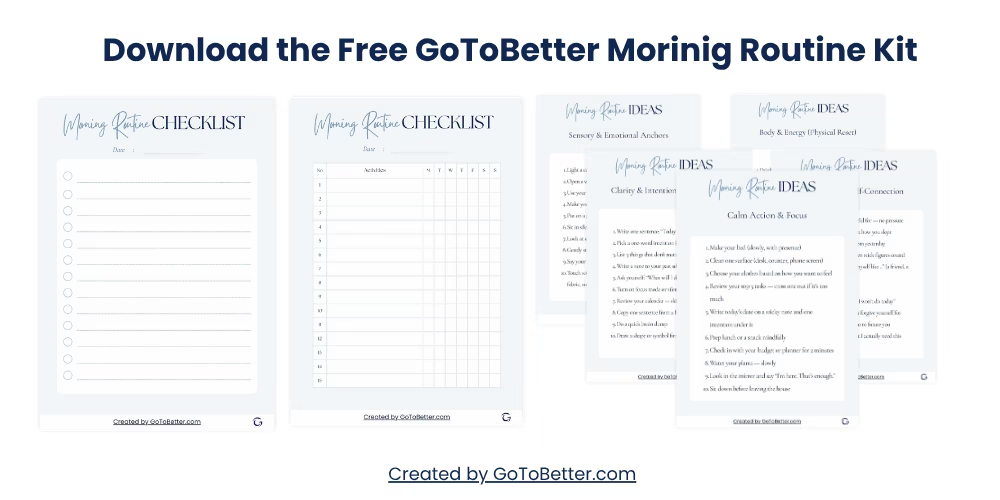
Before you dive into the examples, grab your Free Morning Routine Kit — it gives you tools to experiment without overthinking:
- 50 Morning Routine Ideas — A categorized list of flexible actions
- Daily Morning Routine Template — A clean, editable sheet
- Weekly Morning Planner — Try versions and see what sticks
No pressure. No “perfect morning.” Just something real you can print, circle, and adjust as you go.
Write your email and get your Free Kit here↓
How to Structure a Morning Schedule by Time (So It Actually Fits Your Life)
Think of your morning as a sequence of time blocks, not a fixed script. That shift matters because real life moves. Mornings expand and shrink. Energy rises and dips. Building by blocks makes your routine swap-friendly instead of fragile.
Start with order, not duration. Place your grounding action first (water, light, breath), then your centering action (journal, stretch, prayer), then your activation action (movement, planning, focused task). If the clock squeezes you, trim duration — keep the order. It’s a dimmer switch, not a light switch.
You might notice how a simple layout beats a long list. Below is a compact, scannable morning routine list with time that works across wake-up windows. Use it as machine-readable structure and as human-friendly guidance. Treat it like morning schedule examples you can steal and adapt.
| Wake-Up Window | 0–10 min | 10–20 min | 20–40 min | Swap-ins |
|---|---|---|---|---|
| 6:00–6:30 | Hydrate + light exposure | Stretch or mobility | Plan day (top 3) | Short walk, gratitude line, espresso |
| 7:00–7:30 | Water + breath (3x slow) | Shower stack (affirmation on mirror) | Protein breakfast | 5-minute tidy, podcast cue, vitamins |
| 8:30–9:00 | Open blinds + water | 10-minute mobility | Focus block (1 task) | Brain dump, inbox cap (5), quick call |
| Shift worker | Hydrate + light (or dark mode) | Body scan reset | Meal + plan anchor | Blackout prep, earplugs, sleep cue |
Notice the logic: a grounding cue, a body cue, then a planning or production cue. That order holds whether you wake at 6:00 or 9:00. It’s also easy to plug into a daily routine template if you want a printable snapshot.
GoToBetter says it like this: “Order beats duration. Keep the sequence when time shrinks and the routine still works.”
If you’ve tried building routines from scratch and stalled, borrow templates first. That’s the point of morning routine examples: a head start, not homework.
Morning Routine Examples by Wake-Up Time (Keep the Rhythm, Not the Rules)
Let’s make it specific. Different wake-up times need different pacing, but the structure stays stable. The goal is **energy-first**: regulate, then move, then decide. It’s a rhythm you can keep on messy days. For parents or carers, make it **parent-proof** by shrinking steps, not skipping the first one.
6:00–7:00 Early Riser
0–5 min: water + light. 5–10: mobility (hips/neck). 10–20: quiet page (journal or prayer). 20–40: movement (walk, kettlebell, yoga). 40–60: plan top 3 + protein breakfast. If the hour compresses, keep the first 10 minutes intact and trim the rest.
7:00–8:00 Standard Start
0–3: water, blinds, one breath you notice. 3–10: shower and a single intention line on the mirror. 10–25: protein + fiber breakfast. 25–45: one task you resist. 45–60: commute-ready or kid wrangling. The routine is the order, not the clock.
8:30–9:30 Late Starter / Night Owl
0–5: daylight + water. 5–15: 10-minute mobility while coffee brews. 15–35: quiet work block (20 minutes, no inbox). 35–60: breakfast + plan. This set keeps circadian reality in view (see Sleep Foundation on chronotypes); consistency beats arbitrary early alarms.
Shift Worker Adaptation
0–5: adjust light (bright on wake, dark mode pre-sleep). 5–15: body scan or 4-7-8 breathing. 15–35: maintenance task (meal prep, quick tidy). 35–60: plan anchor and sleep-protecting boundary. The aim: recover rhythm despite rotating hours.
GoToBetter InsightStart with a regulate–move–decide sequence. Then scale minutes up or down. The nervous system gets a cue, the body follows, the brain chooses — in that order.
If you want references: James Clear popularized environment-first habit design; Hal Elrod highlighted morning stacks; Sleep Foundation explains why circadian timing varies. Use the science to justify flexibility, not rigidity. That’s how realistic morning routines survive busy seasons.
30-Minute Morning Templates When Time Is Tight
Some mornings, it feels like the clock is sprinting. You don’t need more willpower — you need **quick wins**. A compressed routine prioritizes state, not volume. Keep two anchors and one outcome. Everything else is optional. Protect your **non-negotiables** like you would your keys.
30 Min: Clarity & Focus
0–3: water + light. 3–8: breathe (box or 4-7-8). 8–18: mobility flow. 18–28: one focus task (no phone). 28–30: choose the 1 thing you’ll start with after breakfast. This is a “morning routine for productivity” you can repeat.
30 Min: Calm & Wellness
0–3: water. 3–10: journal line: “If I only do one thing today, it’s…”. 10–20: yoga or walk. 20–27: protein + fruit. 27–30: gratitude line. These are healthy morning routine ideas designed to regulate mood — a quiet way to do a “morning routine for mental health.”
15 Min: Minimum Viable Morning
0–2: water. 2–5: breath. 5–10: mobility. 10–15: pick top 1. Keep the order. This is the smallest stable unit that still preserves identity: regulate, move, decide.
GoToBetter InsightTry a 2–5–5–3 pattern: regulate (2 min), write/breathe (5), move (5), choose (3). Shrink or stretch each block without changing the sequence.
You can drop these into a daily routine template and keep versions side by side — one for normal days, one for chaos days. That’s the kind of morning routine examples people keep using because they bend without breaking.
Student & Commuter Routines That Travel Well
Transit time changes everything. Headphones become a classroom; a bus seat becomes a desk. The goal is **study-ready** by the time you arrive, and **commute-proof** so a delayed tram doesn’t erase your morning.
Student, 7:00 Wake for 8:00 Class
0–3: water + blinds. 3–10: five glute bridges, five pushups, five squats. 10–15: pack bag checklist. 15–25: review flashcards or notes (offline). 25–40: breakfast on autopilot (protein + carb). 40–60: commute podcast that matches today’s subject. You reach class mentally warmed, not overloaded.
Commuter, 7:30 Wake for 9:00 Start
0–3: water. 3–8: breath + intention line. 8–18: mobility or short walk to stop. 18–45: on-train deep work (headphones + one reading). 45–60: quick message clear or calendar scan. This keeps your cognitive peak for when it counts.
From my own mornings: when school drop-off eats half the hour, I keep the first five minutes intact — water, blinds, three breaths — then I choose one anchor: either a two-minute mobility flow or a single journaling line. It’s enough to keep the thread when everything else is loud.
GoToBetter says it like this: “A routine that survives bad traffic is better than a perfect routine that needs silence.”
Want more examples of morning rituals that travel? Pair cues with objects: headphones = review, coffee cup = intention line, escalator = four belly breaths. The environment becomes part of the sequence. James Clear would call it environment design; it’s simply making the right action the easy action.
How to Build a Time-Based Morning Routine (Step by Step)
This is the practical path for anyone asking how to build a morning routine without inventing it from nothing. Follow the steps, adapt weekly, and keep the order even when minutes change.
Step 1 – Pick a Wake-Up Window
Choose a 30-minute window you can repeat most days (for night owls, choose later rather than earlier). Consistency helps circadian rhythm more than extreme timing.
Step 2 – Place Three Anchors
Assign one regulate cue (water/light/breath), one move cue (mobility/walk), and one decide cue (plan top 1–3). Write them in that order inside your template.
Step 3 – Size the Blocks
Give each anchor a default duration (e.g., 3–10–10). Create a compressed version beside it (2–5–5). This gives you a normal day plan and a chaos day plan.
Step 4 – Choose Two Swap-Ins
For each anchor, list one alternative that works in transit or with kids around (e.g., breath on the bus, mobility at the sink). The goal is resilience, not perfection.
Step 5 – Test for One Week
Run the routine for seven days and jot one line after each morning: keep/trim/replace. Use a simple weekly planner to notice patterns instead of judging yourself.
Step 6 – Keep the Order When Time Shrinks
On tight days, preserve the sequence and halve durations. Order maintains identity; duration flexes with context. That’s how a template becomes your routine.
If you’re collecting morning routine examples to save time, this step-by-step is the fastest way to convert them into lived mornings. The map is there; you only need to pick the lane and drive it for a week.
GoToBetter Mini Tool: 1-Minute Morning Order Lock
Set tomorrow’s routine in under a minute. Write, circle, commit — then test once.
- Write your wake window for tomorrow (e.g., 7:00–7:30).
- List three anchors in order: Regulate → Move → Decide (e.g., water/light → mobility → plan one task).
- Assign times for a normal day and a chaos day (e.g., Normal: 3–10–10; Chaos: 2–5–5).
- Add one swap-in for each anchor that works in transit or with kids (e.g., breath on bus, sink-side stretches, decide on sticky note).
- Circle which version you’ll run tomorrow (Normal or Chaos) and put a tiny dot next to the first anchor — non-negotiable.
- After you finish, mark ✓ if you kept the order. If not, write one tweak for next time.
Want to Keep Going? Here’s What Helps
You’ve got time-based templates and a way to adapt on messy days. Keep the order, flex the minutes, and your mornings will survive real life.
This support article is part of our larger method on mornings that work without pressure or perfection.
Read The Ultimate Guide to Morning Routines — a no-fluff overview of rhythm, timing, and how to keep progress when life moves.
If you want a simple way to start tomorrow, grab the Free Morning Routine Kit — three printable tools designed to help you test and adjust:
- 50 Morning Routine Ideas — a categorized list for fast picking
- Daily Morning Routine Template — a clean space to map your blocks
- Weekly Morning Planner — try versions and notice what sticks
Write your email to get the Free Morning Routine Kit now ↓
Morning Routine Examples FAQ
How do I structure a morning routine by time?
Use a three-step order: regulate, move, decide. Place a short regulate cue first (water, light, breath), a body cue second (mobility or walk), and a decide cue last (choose top 1–3). Size each block for a normal day and a chaos day, then keep the order even when minutes shrink.
What should I include in a 30-minute morning routine?
Pick two anchors and one outcome. For example: 3 minutes water/light, 10 minutes mobility, 15 minutes focused task, 2 minutes pick your starting action. If you’re commuting, swap mobility for a brisk walk to the stop and do the focused task as offline reading with headphones.
How do I adapt if I wake up late or sleep poorly?
Run the chaos version and protect the first anchor. Keep a 2–5–5 pattern (regulate, write/breathe, move) and skip the extras. If energy is low, trade movement for a gentle mobility flow and move the focused task to a 20-minute block after breakfast.
Do students or commuters need a different routine?
Keep the same order and shift location. Use headphones and a single reading task on transit, and prep your bag the night before so the morning stays light. If classes start early, compress to 2–5–5 and do the decide step as one sticky note before you leave.
What are healthy morning rituals that actually help mood?
Combine light, hydration, and gentle movement within the first ten minutes. Add one mood stabilizer — a single gratitude line or three slow breaths. Pair with a protein-forward breakfast and you’ll cover regulation, energy, and clarity without needing a long routine.
Ready to Go Deeper? Build It with Trackers That Fit
When daily check-ins start to feel grounding, a tracker gives you one clear view of your habits and patterns without extra effort.
The Ultimate Habit Tracker (Google Sheets) is fully customizable and easy to use. Track daily, weekly, and monthly habits, see automated progress updates, and reflect with built-in weekly reviews — all in your own Google account, private and accessible on any device. Earn trophies and small rewards as you stay consistent.
For well-being focus, try the Wellness Tracker — a simple template to log sleep, mood, and wellness habits with clear summaries that help you stay organized and balanced.
For gentle self-care structure, the Self-Care Habit Tracker lets you track up to 30 activities, customize categories and goals, and keep momentum with visual progress tracking and prompts.
Want to browse? Explore all tools built for real life at our GoToBetter Shop.