
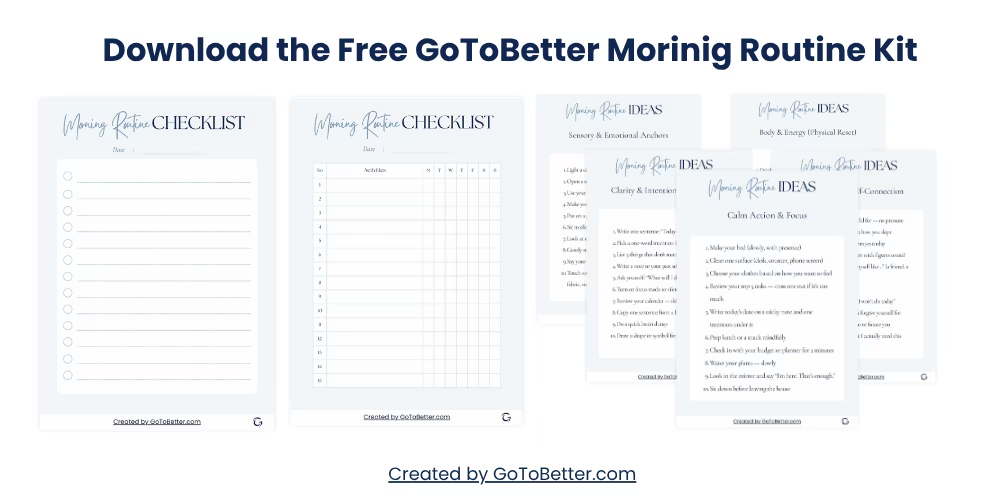
+Free Morning Routine Kit (3 printable planning tools)
The 5AM Club routine is built around waking early for focused growth — but is it realistic for you? This article breaks down what it is, the real benefits and costs, plus alternatives that fit different lives. Includes tools and examples.
By GoToBetter | Tested by real life, not just theory
What Is the 5AM Club Routine?
The 5AM Club routine became popular through Robin Sharma’s book. It’s a structured way of using the early hours for yourself before the world wakes up. The standard version follows the 20/20/20 method: 20 minutes of movement, 20 minutes of reflection, 20 minutes of learning.
On paper, it looks powerful: quiet mornings, no distractions, time to grow. In reality, it’s not a magic formula. It works well for some, but it can feel punishing if you’re cutting sleep or forcing a rhythm that doesn’t fit your life.
Before you read further, grab the free Morning Routine Kit — it makes testing any version of a morning easier. Inside you’ll find:
- 50 Morning Routine Ideas — A categorized list of flexible options.
- Daily Morning Template — A printable sheet to map and track what you try.
- Weekly Planner — A layout for experimenting with different morning versions.
Use it to circle, sketch, and adapt until you find what actually works for you.
Write your email and get your Free Kit here↓
What a Typical 5AM Morning Looks Like (Without the Hype)
The idea is simple: wake at 5:00, use one intentional hour, then step into the day. Think of it as a quiet first hour reserved for you, before the inbox and noise arrive.
The classic “5AM Club schedule” (popularized by Robin Sharma) uses the 20/20/20 split: movement, reflection, learning. It’s a neat container, not a law. If learning drains you at dawn, swap it for planning. If journaling feels heavy, use three bullets and be done. The 5AM morning routine is a frame, not a finish line.
The 20/20/20 pattern (and why it’s optional)
First, blood flow. Move just enough to wake the system—mobility, a brisk walk, or a few push-ups. Then, reflection: a short journal, a breathing cycle, or a quick plan on paper. Last, learning: ten pages, one podcast segment, or a course snippet. That’s the skeleton of many personal growth morning habits.
Some mornings, the pattern flips. A parent might read first while the house is quiet, then move later with the stroller. A founder might plan first to capture fresh ideas. That’s still a 5 am morning routine—shaped by reality, not perfection.
Variations that actually stick
Consider “45/10/5” for recovery days: a longer walk, a short plan, a micro-read. Or “30/15/15” when you want more learning. You can also run a single-focus block: sixty minutes of writing or coding, then a quick stretch. Often, that creates the strongest morning energy boost.
You might notice that the more rigid the plan, the faster it breaks under stress. Treat the first hour like a runway: long enough to lift, clear enough to steer. Tight choreography looks good on paper; loose structure survives Tuesdays.
GoToBetter InsightStart with a 60-minute block and only fill half of it. Leave spacious margins for wake-up lag and small delays. The empty space protects consistency when life pushes back.
And when the alarm rings and your plans feel heavier than your eyelids, scale to a two-minute opener: five squats, one sentence in a journal, three lines of planning. In practice, the first move matters more than the perfect one.
GoToBetter says it like this: “The 5AM Club routine is a tool, not a badge of honor.”
Real Benefits of Early Morning Practice
There are good reasons people swear by early hours. The environment is quieter. Decision friction is lower. That combination invites low-distraction focus—the kind that’s hard to find after 9AM.
Fewer inputs mean fewer detours. That’s the core of most 5AM productivity tips: start before the world has the chance to scatter your attention. Even 30 minutes can move an important project further than two distracted afternoon hours.
There’s also the mood effect. Gentle movement plus a small win early can lift the baseline for the day. If mornings usually feel like a sprint, one planned block can change the tone—less reaction, more intention.
When aligned with natural sleep cycles and routines, early work often feels lighter. Chronobiology research shows that some people naturally peak earlier. If that’s you, a 5AM Club routine may amplify your best energy instead of forcing it.
What about learning at dawn? Short, predictable inputs stack well: two pages of a difficult book, one concept from a course, a single technique to try later. The cumulative effect can be surprising after a month.
GoToBetter says it like this: “Distraction is a tax on progress. Remove the inputs and the work gets cheaper.”
None of this requires worshipping 5:00. It requires protecting one block of time when your mind is clearest. For some, that’s early. For others, it’s late. The benefit lives in the quiet, not the number on the clock.
Hidden Costs and Limitations
The biggest risk is obvious and often ignored: sleep. Cut sleep to “make 5AM happen” and the cost shows up everywhere—mood, immunity, memory, and willpower. As sleep scientists like Matthew Walker argue, chronic sleep loss is a health debt with compounding interest. In any case, sleep comes first.
There’s also the social and family layer. Early alarms can clash with a partner’s schedule or a baby’s unpredictable nights. You might find that the “perfect routine” quietly creates friction at home. If the price of a 5AM Club routine is household stress, the cost is too high.
Chronotype matters. Night-leaning types often need more time to warm up. For them, dawn can feel like moving through wet cement. Pushing hard through that fog can turn a promising practice into a daily failure loop.
Ask simple questions before you change the clock. What time did you fall asleep last night? How often do nights get interrupted? Where is the easiest hour to protect—morning, lunch, or late evening? Often, the honest answers point to a better plan than “wake earlier.”
One more limitation: signaling. It’s easy to treat 5AM as a virtue signal—proof of discipline, not a tool for work that matters. The calendar doesn’t care when you woke up. It only records what you did.
GoToBetter says it like this: “Health beats hustle. If the routine costs sleep, the routine is wrong.”
The takeaway is simple: align the routine with biology and context, not pride. If you keep the sleep window intact and still feel worse after two weeks, the clock isn’t your lever.
Who It Fits—and Who It Doesn’t
This works best when the early slot is both available and valuable. If your environment is loud by 7AM, earlier might truly be easier. If your peak focus arrives at 10PM, night may be cleaner. In other words, chronotype matters.
Likely to benefit
- Early-leaning chronotypes who wake clear-headed without heavy grogginess.
- People who need quiet for deep work and can’t find it later.
- Parents who trade a small earlier wake for a smoother breakfast hour.
- Professionals with global teams who must protect one non-meeting block.
Likely to struggle
- Night owls who hit stride after dinner and need that late creative window.
- Shift workers whose sleep schedule already competes with daylight.
- Anyone with frequent night interruptions (newborns, caregiving).
- People who treat 5AM as identity, not utility, and push through exhaustion.
When my kid was teething, I shifted the “first hour” to 1:00PM for a month. The result was boring and effective: stable sleep, stable work, zero drama. That’s the pattern to look for—friction goes down, results go up.
GoToBetter InsightUse a two-week trial with a hard sleep floor. Go to bed 60–90 minutes earlier, wake 30 minutes earlier. If energy and mood don’t improve by week two, end the trial and adjust later.
The goal isn’t to join a club. It’s to protect the right hour for the work that moves your life forward. That might be dawn. It might be dusk. Either way, the measure is outcomes, not aesthetics.
Real Alternatives That Work in Real Life
If the number “5:00” feels like a wall, pick a door that opens. The best plan is the one you’ll repeat. Choose options that fit your life and still give you the same advantages: quiet, clarity, and a single meaningful win.
Alternative templates with the same benefits
- First Light Focus (6:00–6:45): Wake when the sun does. Move for five minutes, plan for ten, work 30 minutes on one thing that matters.
- Split Morning: Ten minutes before breakfast, thirty after school drop-off, twenty at lunch. Three small blocks, one big outcome.
- Commute Club: Noise-canceling headphones and a preloaded playlist for learning. Turn transit into a classroom.
- Evening Quiet Hour (9:30–10:30): For night owls, mirror the structure after dinner. Same rules, different clock.
- Weekend Dawn Session: Two 90-minute sessions on Saturday and Sunday when weekdays are chaotic.
Track only what helps: presence, not perfection. A simple checkmark in a sheet is enough. If you like structure, the Ultimate Habit Tracker, the Wellness Tracker, or the Self-Care Habit Tracker can hold the shape without stealing attention.
| Habit | Track It? | Why |
|---|---|---|
| First Light Focus (6:00–6:45) | Yes | Near-dawn energy with less social cost; easy to sustain on weekdays. |
| Split Morning Blocks | Yes | Protects progress on busy days; small wins add up without pressure. |
| Commute Learning | Optional | Low effort repurposes dead time; pairs well with audio notes. |
| Evening Quiet Hour | Yes | Aligns with night-owl peaks; mirrors 5AM benefits after dinner. |
| Weekend Dawn Session | Optional | Deep work when weekdays fail; preserves weekday sleep and family flow. |
GoToBetter InsightTry a 6AM start instead of forcing 5AM—same quiet, less strain. Shift in 15-minute increments until energy improves, not just the schedule.
If you want a metaphor, think of wind. Sail with the wind you have. The point is to catch the still air—whenever your day actually gives it to you.
How to Test the 5AM Club Without Burning Out
This is a short, safe protocol for a two-week trial of a 5AM Club routine—built to test, don’t convert. Keep sleep intact, measure energy honestly, and end the trial if it doesn’t help.
Step 1 – Set a Sleep Floor
Pick a non-negotiable minimum sleep window (7–9 hours for most adults). Move bedtime earlier before moving wake time earlier. If the sleep floor breaks, pause the trial.
Step 2 – Make a 30-Minute Start
Begin with 30 minutes at 5:30 rather than 60 minutes at 5:00. Put one task in the slot: move, reflect, or learn. Expand only if you feel clearer by late morning.
Step 3 – Choose a Simple Sequence
Use a single-focus block or a light 20/10/0 split: twenty minutes of movement, ten minutes of planning, zero minutes of learning on day one. Add learning later if it helps.
Step 4 – Prepare the Night Before
Lay out clothes, pin one page to read, and write your first action on a sticky note. Remove choices so the morning begins before your brain tries to negotiate.
Step 5 – Use a Gentle Wake Method
Pick a quiet alarm or a sunrise light. Put the device across the room. Avoid screens for the first ten minutes to protect the signal that this hour is different.
Step 6 – Log Presence, Not Perfection
Track only attendance and energy—two checkboxes are enough. If you’re using a sheet, add one line of reflection. The goal is awareness, not streaks.
Step 7 – Run the Two-Week Check
After fourteen days, ask three questions: Is energy better by 10AM? Is mood steadier? Did important work move forward? If the answer is no twice, end the trial.
Step 8 – Adapt or Shift
If early hours help but 5:00 feels sharp, keep the structure and slide to 5:30 or 6:00. If early hours don’t help, shift to an evening quiet hour or a split morning.
GoToBetter Mini Tool: The 1-Minute Morning Slot Finder
Use this quick check to decide whether to test a 5AM Club routine or choose a better-fit quiet hour.
- Set a sleep floor in your head right now: minimum hours you will not cross (e.g., 7.5 hours).
- Pick two candidate slots for a protected hour this week: 5:00 and the easiest alternative (e.g., 6:00 or 21:30).
- Rate your last 3 mornings for energy on a 1–5 scale. If the average is under 3, select the later slot first.
- Write one sentence you’ll do in that slot tomorrow (e.g., “20 min walk, 10 min plan, 10 min read”).
- Lay out one object now that forces momentum (shoes by the door, book on the table, headphones on the charger).
- Tomorrow, run a 10-minute “micro version” at the chosen time, then mark: Better / Same / Worse by 10:00.
- If “Better,” extend to 30 minutes the next day; if “Same,” tweak the sequence; if “Worse,” switch to the other slot.
Want to Keep Going? Here’s What Helps Next
You’ve seen both sides: the clarity of early hours and the cost of cutting sleep. The win isn’t the time on the clock—it’s the one protected block that moves life forward.
This support article sits inside our broader Morning Routine pillar—practical, calm, and built for real days. If you want a full map of options and adaptations, start here:
Read The Ultimate Guide to Morning Routine — your no-fluff walkthrough for designing mornings that actually fit.
And if you want a simple way to start tomorrow without overthinking, grab the Free Morning Routine Kit. It includes exactly what you need to experiment with a 5 am morning routine or a later slot—without apps or setup:
- 50 Morning Routine Ideas
- Daily Morning Routine Template
- Weekly Morning Planner
Get the Free Morning Routine Kit: enter your email and download instantly. Keep it visible. Use it as a calm prompt, not a pressure badge.
5AM Club Routine FAQ
Is the 5AM Club routine healthy if I can’t fall asleep earlier?
No. If wake time moves earlier but bedtime doesn’t, the sleep debt outweighs any benefit. Keep a hard sleep floor (7–9 hours for most adults), shift bedtime first by 15–30 minutes, and only then test an earlier wake. If energy and mood slip, stop the trial.
How long should I test a 5AM morning routine before deciding?
Two weeks is enough to see a pattern without forcing a lifestyle change. Run a 30-minute version for days 1–3, then expand to 45–60 minutes only if you feel clearer by late morning. Decide using three signals: energy by 10:00, mood steadiness, and progress on one priority.
I’m a night owl—can I get the same benefits without 5AM?
Yes. Mirror the structure at night: movement to reset posture, short planning to offload the mind, and a small learning input. Protect one quiet hour between 21:00–22:30, dim lights, and avoid screens afterward so sleep isn’t delayed by the session.
Do I need the full 20/20/20 schedule to see results?
No. The gains come from a protected block, not that exact split. Use a single-focus hour for writing or study on high-stakes days, or try 30/15/15 if you want variety. Keep the first action lightweight and repeatable so it survives stressful mornings.
How do I avoid grogginess when waking at 5AM?
Protect sleep first, then use light and movement. Expose yourself to bright light on waking, hydrate, and add two minutes of gentle mobility before thinking tasks. If grogginess persists after a week, shift to 5:30 or 6:00—similar benefits, less strain.
Ready to Go Deeper?
When daily check-ins start to feel grounding—not exhausting—it might be time to build something more complete. That’s where these trackers help: clear views, simple updates, and progress you can actually feel.
Ultimate Habit Tracker (Google Sheets)
- Track daily, weekly, and monthly habits with automated updates and clear visuals.
- Reflect with weekly reviews to see patterns and adjust without starting over.
- Private by default—lives in your Google account, accessible on any device.
Simple Daily Wellness Tracker (Google Sheets)
- Log mood, sleep patterns, and wellness habits in one straightforward sheet.
- See clean summaries that support mental health and daily balance.
- Fully customizable to match your routines and goals.
Self-Care Habit Tracker (Google Sheets)
- Track up to 30 self-care activities with automated check-ins and visual progress.
- Create categories, set personal goals, and keep consistency with gentle prompts.
Browse the full GoToBetter shop — tools built for real life, from quick daily check-ins to complete systems.