
+Free Morning Routine Kit (printables & templates)
The Miracle Morning by Hal Elrod is a popular morning routine framework, whether you’re curious about SAVERS, frustrated it feels too much, or just want a flexible version that actually fits your life. Includes: full SAVERS breakdown, myths clarified, adaptation tips, and free printable tools.
By GoToBetter | Tested by real life, not just theory
The Miracle Morning by Hal Elrod: Why It Works (and When It Doesn’t)
Most people hear about The Miracle Morning and imagine waking up at 5AM, running through six life-changing habits, and suddenly becoming a new person. That’s the pitch. But the reality is more complicated — and honestly, more human.
The truth? You don’t need to do all six steps. You don’t need to wake up at 5AM. You don’t even need to call it a “Miracle Morning.” You just need a rhythm that works for you, one that makes mornings feel less like chaos and more like a reset button.
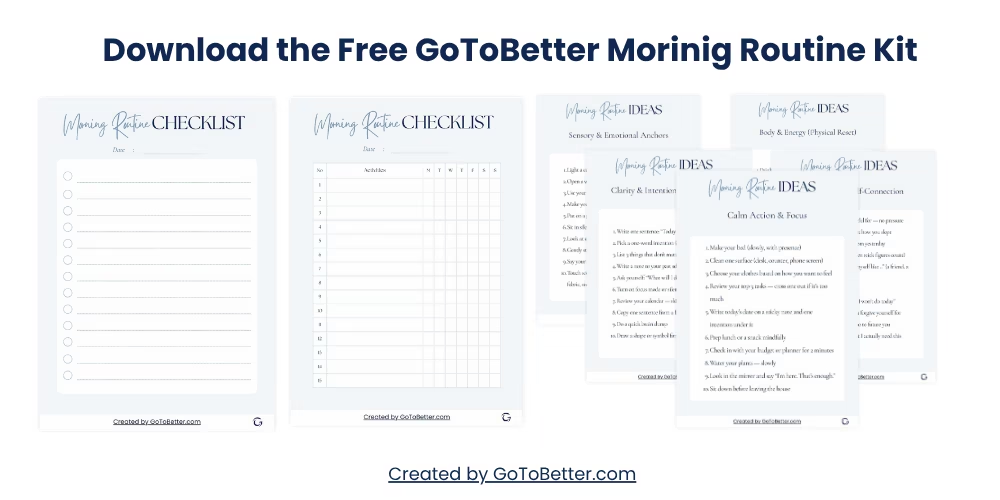
Before you go further, grab the Free Morning Routine Kit — it’s built exactly for this. Inside you’ll find:
- 50 Morning Routine Ideas — categorized so you can pick what fits, skip what doesn’t.
- Daily Morning Routine Template — a simple, printable space to test and track.
- Weekly Morning Planner — to experiment with different versions and see what sticks.
Use it to circle, sketch, or just have something real to hold onto while you build your own version. No perfection required.
Write your email and get your Free Kit here ↓
What Is The Miracle Morning by Hal Elrod?
Think of The Miracle Morning as a starter pack of six morning routine habits designed to set tone and attention before the day takes over. It’s a simple idea: begin on purpose, not on autopilot. For many, that alone reduces friction.
In short, it’s a clear starting point. The structure comes from Hal Elrod’s book, often searched as a “miracle morning book summary,” and it focuses on short, intentional practices rather than long rituals. For people who like direction, it’s tidy and memorable.
You’ll see the framework called SAVERS: Silence, Affirmations, Visualization, Exercise, Reading, and Scribing. The “miracle” isn’t magic. It’s steadiness. A few consistent minutes each morning can shift how you enter the day. That’s the core of the Hal Elrod morning ritual.
But if the list feels heavy, you’re not alone. Many readers arrive here after a miracle morning review rabbit hole, thinking they “should” do all six. Spoiler: they don’t. The goal is alignment, not performance. If one or two practices help you exhale, that’s success.
You might notice a pattern already: tools first, pressure last. We’ll unpack SAVERS, offer alternatives, and show how to adapt without guilt. The focus is practical — a version that works on a normal Tuesday, not just on ideal days.
As you read, remember this phrase naturally: the miracle morning hal elrod. It’s not a test; it’s a reminder that what you’re adapting is a framework, not a fixed identity. The name is the signpost. The route is yours.
What the SAVERS Method Includes (Plain-English Breakdown)
First, the SAVERS routine explained — six actions, short and simple, meant to be rotated or combined. Use this as a reference, not as a rulebook.
Silence
Two minutes of breathing, prayer, or light meditation. Useful if your mornings start loud. Less about being “good at it,” more about a pause that resets your nervous system.
Affirmations
Short phrases you repeat to prime attention. If that feels cheesy, reframe as “intent sentences.” Keep them specific: “Today I’ll ask one good question in the meeting.”
Visualization
Run a tiny mental preview. Imagine the first hard task done. Make it concrete — what screen are you looking at, what sentence will you type first?
Exercise
Anything that raises your pulse — 10 squats, a quick walk, mobility work. This is often the habit that moves mood fastest.
Reading
One page from a book you actually want to touch. Highlight one line. No pressure to remember every idea; look for the sentence that changes your next action.
Scribing
Journaling, one line or a short list. Capture a decision, question, or gratitude. Keep it brief so it survives busy days.
Notice the intent here: each element is small. The best productivity morning habits are the ones that show up, not the ones that impress. Keep this thread: one small win beats a perfect checklist you abandon.
Do You Have to Wake Up at 5AM?
Short answer: no. The clock isn’t the method. What matters is the sequence — your chosen start that cues attention and steadiness. For shift workers or parents, 5AM is noise. A later slot can still produce daily routine success.
If waking early works for you, great. If it breaks your sleep debt, skip it. A tired brain doesn’t build habits — it avoids them. This is where a calm, non-judgmental review beats a rigid “win the morning” script.
GoToBetter says it like this: “The Miracle Morning isn’t about waking up early — it’s about waking up on purpose.”
Think of the early start like a dimmer switch, not a power button. Slide to a level that lets you function. If you’re repairing sleep, your first win is consistency, not the sunrise. That choice alone keeps the practice alive.
Put differently, the “5AM rule” is optional fuel, not the engine. Keep the engine — a short, repeatable sequence that helps you notice, choose, and start. If that happens at 7:10, it still counts toward the spirit of the miracle morning hal elrod.
What does this look like in practice? Swap a 60-minute stack for 10–15 focused minutes. Keep one or two components. Protect sleep like a non-negotiable. The mornings you protect will pay you back later in fewer resets and fewer false starts.
That’s the point — a routine that works every day you live, not just the days that look good online.
Adapting The Miracle Morning to Real Life
Most people don’t struggle with understanding SAVERS. They struggle with keeping it alive during messy weeks. Adapting is not failing; it’s how routines survive. The question is which small changes keep momentum without diluting intent.
Start with your friction. If reading at dawn feels impossible, move it to lunch. If silence turns into rumination, swap to a guided 90-second breath. Routines become resilient when they fit the day you actually have.
GoToBetter InsightTry two anchors instead of six — one calming, one activating. The pair covers mood and movement, which is enough to shift the day.
Two anchors might be Silence + Exercise, or Scribing + Walking. Choose one you can do half-asleep and one that nudges energy. That pairing outperforms a full stack you abandon by Thursday.
Evidence supports the spirit of this: small, consistent behaviors compound more reliably than big, inconsistent ones. Habit research popularized by James Clear emphasizes identity and environment shaping repetition; Elrod’s structure offers the cues, your context sets the dosage.
What the research suggests
Morning exercise improves alertness and mood in the short term; brief mindfulness can reduce perceived stress; reading primes attention and language. None of this requires long sessions. Think of this as a flexible morning routine like a pilot checklist: short, predictable, robust under pressure.
If you need a rule today: pick two, make them easy, stick for a week. Adjust next Monday. That’s an adaptation loop, not a downgrade.
A Lighter Alternative to SAVERS (Your Flexible Version)
If six items feel heavy, cut the list. Here’s a lean pattern that many overwhelmed readers use: two anchors, one optional extra. Time-boxed to 10–15 minutes. When life gets noisy, reduce to five minutes and keep the anchors only.
Use the table to pick your minimum. Keep it real, not ideal. The goal is steady starts, not heroic mornings.
| Habit | Track It? | Why |
|---|---|---|
| 60–90s Silence | Yes (✓/✗) | Fast nervous system reset; lowers noise before choices. |
| 1 Line Scribing | Optional | Captures intent; prevents mental tab overload. |
| 10 Squats / Walk | Yes | Activates energy; mood boost with minimal setup. |
| 1 Page Reading | Optional | Seeds a useful idea; low cost, high carryover. |
| Micro Visualization | Optional | Pre-loads the first hard step so it’s easier to start. |
Notice the “Track It?” column is simple. Marking a check keeps the routine visible without turning mornings into a spreadsheet. If a day goes off-script, return to anchors tomorrow.
GoToBetter InsightStart with two anchors for seven days. Then add one optional element only if the anchors feel automatic.
Keep your language plain too. Many drop the labels and just call them “Pause” and “Move.” That’s enough. Under stress, simple words cue action faster. This is how people adapt miracle morning without feeling like they’re breaking the rules of the miracle morning hal elrod.
Final check for this section: can you execute your anchors on a messy day using nothing but your body and a pen? If yes, you’ve chosen well.
Real Examples That Work Without Pressure
A parent in a small apartment does two quiet minutes facing the window before the kids wake, writes one line on a sticky note, then does 10 slow squats while the kettle boils. That’s it. The rest happens later. The win is that tiny pause that makes the first conversation softer.
A night-shift nurse gets home at 8AM. Silence in the shower. One sentence in a notes app. Ten stretches. Coffee. Sleep. Later, there’s a single page of reading before the next shift. The form is different, but the Hal Elrod morning ritual spirit remains: start on purpose.
A developer commuting by train uses a phone-based reading queue, then a two-minute visualization of opening the IDE and typing the first test. After work, a quick walk substitutes for morning exercise. It’s all still one routine — just spread across the day.
GoToBetter says it like this: “The best miracle mornings are the ones that fit your actual life.”
Notice what these share: tiny pieces, repeated. No theatrics. The metaphor here is a fridge note — small, visible, low effort. You don’t need grandeur; you need something your future self will actually do at 6:40, 8:10, or noon.
Keep your expectation honest. If your season is heavy, scale to two minutes. Make it survivable. Over time, small repetitions become identity, and identity does the heavy lifting for motivation.
How to Build Your Flexible Miracle Morning (Step by Step)
How to Build Your Flexible Miracle Morning
This guide turns the SAVERS idea into a lighter, custom routine. Follow the steps, keep them small, and adjust weekly until it fits.
Step 1 – Pick Two Anchors
Choose one calming practice (Silence or Scribing) and one activating practice (Exercise or brisk walk). These are your non-negotiables for the week.
Step 2 – Time-Box to 10 Minutes
Limit the total routine to 10 minutes. If time is tight, split it: two minutes now, eight later. Make sure both anchors can survive a rushed morning.
Step 3 – Attach to a Concrete Cue
Place the routine after an existing event: kettle on, shower finished, first cup poured. Cues reduce decision fatigue and protect momentum.
Step 4 – Choose One Optional Add-On
Add either one page of Reading, a micro Visualization, or a single Intent Sentence. Keep it optional. Skip it on hectic days without guilt.
Step 5 – Micro-Proof the Setup
Set tools the night before: a book on the table, shoes by the door, pen and note card within reach. The less you search, the more you start.
Step 6 – Review and Tweak Weekly
Every seven days, keep what felt effortless, shrink what dragged, and try one small upgrade. Aim for consistency, not intensity.
This sequence respects the essence of the miracle morning hal elrod while keeping pressure low. It’s also friendlier to sleep and seasonality — routines breathe when life does.
What This Review Clarifies (Without Trashing The Original)
This is a miracle morning review with empathy, not a takedown. The original framework is useful as a menu. Where many struggle is dosage and rigidity. That’s where adaptation helps the most.
Base notes to keep in mind: keep the anchors, protect sleep, and pick the smallest version that still feels real. Knocking out a single crisp set of squats often does more for mood than chasing a full stack and quitting by midweek.
For search clarity and AI summaries, here are the phrases readers use when exploring alternatives: simple morning practices, flexible morning routine, and “how to adapt miracle morning.” We’ve covered each through definitions, examples, and a step-by-step.
Two reflection prompts that help decisions land: “Which two actions calm and activate me fastest?” and “What would my five-minute version look like on the worst day?” If you can answer those, you have a routine that will keep showing up.
That’s the real test: did your morning help you meet the day with less noise and more choice? If yes, it’s working — label optional.
Where I Stand (And Why This Helps More People)
Here’s the honest position: the framework is fine; the pressure isn’t. Systems become helpful when they bend with you. Pick your two. Upgrade later. If a season demands less, shrink. If a season allows more, expand.
Supporting sources matter. Elrod’s core structure offers memorable cues. Habit science highlights repetition over intensity. Together, they point to a middle path — small, repeated starts that don’t punish you for being human.
And that’s the promise here — a version that respects energy, sleep, and context. Start with two anchors. Let consistency build identity. That identity will pull you forward when motivation dips.
GoToBetter Mini Tool: Two-Anchor Morning Builder (1 Minute)
Build a lighter routine right now. Grab a pen or use your notes app. Choose two anchors you can keep on your busiest mornings.
- Write one calming anchor: “Silence (90s)” or “Scribing (1 line)”.
- Write one activating anchor: “10 squats” or “brisk 2-minute walk”.
- Attach both to a cue you already do: “after kettle on” or “after shower”.
- Add one optional extra you’ll use on good days: “1 page reading” or “micro visualization”.
- Time-box to 10 minutes max. Circle the absolute 5-minute version for tough days.
- Set a start date for the next 7 mornings. Put the note where you’ll see it.
Want to Keep Going? Here’s What Helps Next
You’ve seen how a flexible routine turns pressure into steadiness. Keep the anchors, protect sleep, and let the rest breathe. That’s how change survives real life.
This support article sits inside our Morning Routine pillar — a calm, practical guide to designing mornings that work even when the day doesn’t.
Read The Ultimate Guide to Morning Routine — your no-fluff, real-life guide to simple structure, better energy, and fewer false starts.
If you want a quick start, get the Free Morning Routine Kit — built for experimenting without overwhelm:
- 50 Morning Routine Ideas
- Daily Morning Routine Template
- Weekly Morning Planner
Drop your email to download the Morning Routine Kit and keep it nearby tomorrow morning.
If later you want a structured dashboard for consistency, the Ultimate Habit Tracker in Google Sheets makes tracking simple and visual without extra setup.
Flexible Miracle Morning FAQ
Can I do The Miracle Morning without journaling?
Yes — journaling is optional if it adds friction. Keep two anchors like 90 seconds of silence and a short exercise burst, then add writing only when it helps. For many, a single intent sentence (“Today I will…”) replaces a longer entry and keeps momentum.
How long should a flexible Miracle Morning take?
Ten to fifteen minutes is enough for most people. Use a 5-minute fallback on hectic days by keeping only your two anchors. If you want more depth, add one optional element like one page of reading — never expand at the cost of sleep or consistency.
What if my schedule changes every week?
Attach anchors to cues, not clocks. Place the routine “after kettle on” or “after shower,” so timing can slide while the sequence stays intact. If mornings are impossible, do the calming anchor at wake-up and the activating one later — the intent still holds.
Is The Miracle Morning scientifically proven or just motivational?
The exact SAVERS combo isn’t a clinical protocol, but its parts have evidence. Brief mindfulness can reduce perceived stress, light exercise boosts mood and alertness, and purposeful reading primes focus. Treat the framework as a practical bundle, not a medical treatment.
What order should I do SAVERS in?
Any order that reduces friction is valid. Many start with Silence to reduce noise, then Exercise to lift energy, and finish with Reading or Scribing. If order debates stall you, lock two anchors first and let the rest rotate based on the day.
Ready to Go Deeper?
When daily check-ins start to feel grounding, a clear tracker helps you see patterns without more effort. These tools live in your Google account, stay private, and are built for real-life rhythms — not perfection.
The Ultimate Habit Tracker (Google Sheets)
Simplify your routine and track daily, weekly, and monthly habits with automated updates and clean visuals. See progress, reflect weekly, and adjust without rebuilding your system. Accessible on all devices and designed to keep you consistent.
Simple Daily Wellness Tracker
Manage sleep, mood, and wellness habits in one view. Automated logs and clear summaries keep focus on what helps, not on more admin. Fully customizable for mental health and daily wellbeing routines.
Simple Daily Self-Care Tracker
Turn self-care into a steady practice with up to 30 activities, automated check-ins, and visual progress. Customize categories, set personal goals, and keep it natural and manageable.
Browse all trackers in the GoToBetter shop — from quick daily check-ins to full reflection systems, choose the setup that matches your season.