
+Free Morning Routine Kit (3 printable tools included)
Gentle, Real-Life Morning Relief
Stretching exercises for morning are your simplest tool to release stiffness and wake up with more energy — even if you don’t feel ready for a workout. Includes: a gentle sequence, common myths debunked, real-life examples, and a free kit to make it part of your routine.
By GoToBetter | Tested by real life, not just theory
Stretching Exercises for Morning: Why They Work
When you first wake up, your body feels heavy, stiff, maybe even a little resistant. That’s normal. Morning stiffness is not failure — it’s simply feedback. Your muscles and joints are telling you they’ve been still all night. Gentle stretching is how you answer back.
Look, you don’t need a perfect system. No gym, no 30-minute plan, no pressure. Just a few light movements that improve circulation, open your chest, and shake off the grogginess. Two minutes can feel like a reset button for your day.
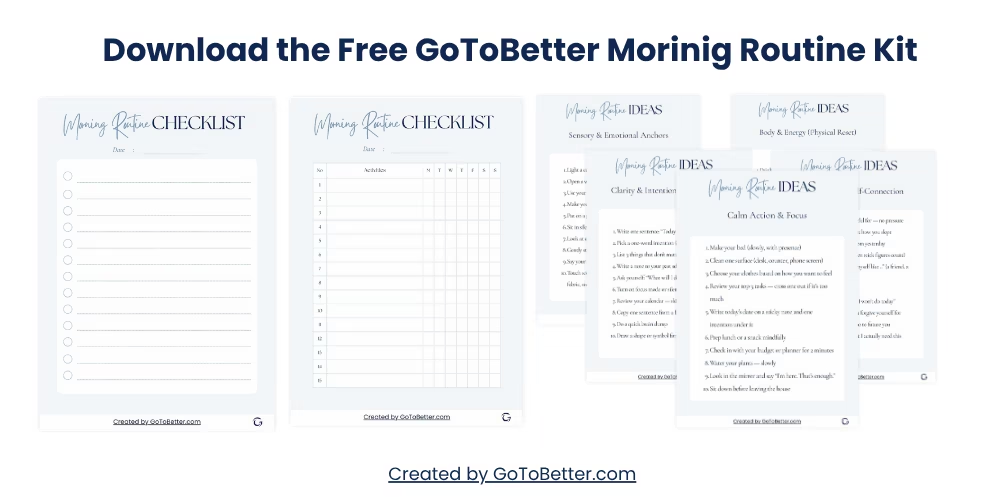
And if you’re just starting, we’ve made it easier. Before you dive in, grab your Free Morning Routine Kit — it gives you real tools to try different versions of your mornings, stretch included:
- 50 Morning Routine Ideas — flexible actions for every kind of day
- Daily Morning Routine Template — a clean page to sketch or track
- Weekly Morning Planner — experiment, compare, and see what works
Use them to circle, sketch, or just have something real to hold onto while you build your rhythm. It’s not about perfection. It’s about noticing what helps.
Write your email and get your Free Morning Routine Kit here ↓
What Are Stretching Exercises for Morning?
Stretching exercises for morning are light movements done right after waking to reduce stiffness and increase blood flow. Think of them as gentle wake-up signals for joints and muscles that have been still for hours. The goal isn’t performance. It’s relief and readiness.
Most people want two things at sunrise: less tension and a clearer head. A gentle stretching routine does both by improving circulation, opening the chest for easier breathing, and resetting your posture before the day pulls you forward. You’ll notice small shifts: shoulders drop, jaw unclenches, and your first steps feel steadier.
Authority sources align with this common-sense approach. Outlets like Harvard Health and Mayo Clinic routinely note that light mobility and simple morning stretches can improve range of motion and ease discomfort when done without forcing. No stopwatch. No targets. Just a few steady breaths and movement you can actually repeat tomorrow.
It helps to keep language simple. Instead of “dynamic mobility drills,” think “neck rolls,” “shoulder circles,” and “seated fold.” These are easy stretches for beginners that fit into any space — by the bed, next to a window, or on a hallway rug. If a move feels like too much, scale it back. The work is noticing, not pushing.
You might notice that some mornings call for shorter moves — two or three actions you can do in under two minutes. Other mornings invite a few more. That natural variation is fine. In fact, it’s what keeps a light mobility routine from becoming another task you abandon. Let the routine be responsive. Let it be alive.
Why Morning Stretching Feels Different
Sleep changes how the body feels. Tissues cool slightly, joints rest in one position, and fluid shifts. When the alarm goes off, stiffness is your system nudging you to move. Think of it like a door hinge that hasn’t swung since last night — a touch of oil and it’s smooth again. That’s all we’re doing here: a little oil for the hinges.
Some mornings, it feels like the body is arguing with the plan. That’s normal. Start small. A few shoulder rolls. Gentle neck arcs. A slow side reach. Within a minute, circulation wakes up, breath deepens, and the whole frame feels less compressed. This is the quiet magic of tension release exercises: simple inputs, steady relief.
GoToBetter says it like this: “Morning stiffness isn’t failure — it’s feedback. Answer gently and the body answers back.”
It’s worth repeating: the aim isn’t a “best time” or a personal record. It’s a softer, steadier start. If you’re half-asleep, wake-up stretches should feel forgiving — like a note on your fridge: short, helpful, and easy to act on. That’s why stretching exercises for morning work better than big routines: they’re small enough to happen.
Often, the simplest way is to connect one breath to one movement. Inhale: lengthen the spine. Exhale: melt the shoulders. Do that twice and notice how the day sits differently on your frame. Less weight. More room. That’s the whole point.
Best Morning Stretch Routine (Step-by-Step Sequence)
Here’s a calm, simple morning stretches sequence you can remember without a phone. No warmup needed beyond breathing. Move by feel and keep the range small. If a move pinches or feels sharp, reduce the angle or skip it. Relief first, always.
Seated Neck & Shoulders (60–90 seconds)
Sit tall on the edge of the bed or a chair. Roll shoulders back 5 times, forward 5 times. Tip right ear to right shoulder for two breaths; switch sides. Slow chin-to-chest and gentle look up. Keep jaw loose. This wakes the upper chain and starts your morning energy boost.
Cat–Cow or Standing Spine Wave (60 seconds)
If you prefer the bed, hands and knees for two rounds of cat–cow. If standing, place hands on thighs and ripple the spine from tail to head. Keep it subtle.
Standing Side Reach (45 seconds)
Feet hip-width. Reach right arm up, lean left, breathe twice. Switch. Think “long, not far.” Side body opens, ribs get space, breath flows.
Seated Hamstring Fold (60 seconds)
Sit with one leg extended, other foot tucked in. Hinge softly at the hips. Stop where the back stays kind. Two slow breaths; switch legs. These are daily flexibility exercises without strain.
Ankle Circles & Toe Flex (30 seconds)
Circle each ankle 5 times each way. Flex and point toes. Tiny moves, big payoff for first steps.
Placed together, this reads like a crisp cue card. You can also pick one or two moves on rushed days. Consistency grows from what fits, not what impresses. To help you compare options at a glance, use the quick map below.
| Stretch | Position | Time | Why |
|---|---|---|---|
| Neck & Shoulder Rolls | Seated (bed/chair) | 60–90s | Releases upper tension; easy stretches for beginners. |
| Cat–Cow / Spine Wave | Bed or standing | 60s | Mobilizes spine; gentle back wake-up. |
| Standing Side Reach | Standing | 45s | Opens ribs for smoother breath. |
| Seated Hamstring Fold | Seated (bed/floor) | 60s | Light posterior chain lengthening. |
| Ankle Circles & Toe Flex | Seated (bed/chair) | 30s | Wakes feet for first steps after sleep. |
GoToBetter InsightStart with two moves, not five. Then add one when mornings feel steadier. Small wins compound because they actually happen.
You might notice that on busy days, the first two moves cover most of what you need. That’s the backbone of a gentle stretching routine: do less, but do it reliably. The body learns the pattern and meets you there.
Can You Stretch in Bed? Yes — And It Counts
Short answer: yes. Long answer: that’s often the best start. The soft surface supports joints and lowers the barrier to movement. When motivation is thin, bed-based stretching exercises for morning turn “I’ll do it later” into “I’ve already started.” That shift matters.
A Quick In-Bed Sequence (2 minutes)
Before sitting up, flex and point toes 5 times, circle ankles both ways, and gently press heels into the mattress for one breath. Draw knees to chest one at a time, tiny rock side to side. Reach arms overhead, then side-to-side like you’re lengthening a blanket. Finish with a slow roll to your side and a seated neck release.
Some mornings, it feels like lying still is safer than moving. Meet that feeling halfway. Do two moves while still horizontal. Then sit. The goal is motion, not milestones. Over a week, a few in-bed sessions often reduce morning stiffness relief needs later in the day because you opened the system early.
GoToBetter says it like this: “The best routine is the one that survives your worst morning.”
And if bed-based work is all you manage for a while, that’s fine. Momentum is built by contact, not intensity. Keep the contact. The rest grows from there.
Common Myths About Morning Stretching
“You need a full warmup first.” For gentle movement, breath is the warmup. Authority sources consistently note that light range-of-motion moves are safe if you avoid forcing. Save deeper holds for later in the day if needed.
“Stretching must be intense to work.” Intensity isn’t the lever here. Consistency is. Two minutes of easy best stretches after sleep outperforms fifteen minutes you skip three days out of five.
“Morning stretching is only for athletes.” It’s actually designed for real people with real mornings — school runs, commutes, and messy kitchens. A light mobility routine lowers background tension so those other tasks feel less heavy.
“You have to follow a fixed routine.” Bodies change day to day. Keep one or two anchors and let the rest adapt. That flexible approach is what makes simple morning stretches sustainable beyond the first week.
“Skipping a day resets progress.” It doesn’t. The body remembers patterns. Return to the smallest version and carry on. No penalty. No drama.
GoToBetter InsightUse a “2-move minimum.” Pick one upper-body and one lower-body action. Everything beyond that is optional.
These myths persist because they sound serious. But mornings reward realism. Keep it small, repeatable, and kind. That’s the entire strategy.
How Long Should Morning Stretches Take?
Short answer: 90 seconds to five minutes. That’s the window most people can repeat without bargaining. Aim for a tiny baseline on your lightest days and expand when time and energy show up. This is how a gentle stretching routine becomes part of life instead of a project you abandon.
If you like simple rules, try this: two minutes on weekdays, up to five on weekends. Or attach your practice to a stable anchor — first glass of water, kettle switch, or blinds opening. Anchors cut decision fatigue and deliver a quiet morning energy boost before the day accelerates.
Notice how your body responds. Shoulders softer by the second sip of coffee? Feet landing easier when you walk to the door? That’s your feedback loop. Keep what helps and drop what doesn’t. No need to collect moves; collect effects.
Reflection helps without becoming a task. Two quick questions after you move: What felt better right away? What would I repeat tomorrow? Write nothing down if you don’t want to. Remembering is enough to shape the next choice.
Morning Stretching vs Yoga — Keep It Simple
Stretching is focused, bite-sized mobility. Yoga is a broader practice with breathing patterns, positions, and sometimes philosophy. Both can help, but if your goal is immediate ease after waking, keep it simple. Choose the moves that deliver morning stiffness relief with the least friction.
Think of stretching as a pocket tool. You pull out one function at a time — neck roll, side reach, seated fold. Yoga can be a full toolkit. Useful, but more to unpack. On rushed mornings, a pocket tool wins. On open mornings, you can explore more if you enjoy it.
Either way, the measure is the same: do you feel lighter after two minutes? If yes, good. If not, adjust the angle, reduce the hold, or switch moves. Small changes shift outcomes quickly at this time of day.
Real-Life Mornings: Stretching That Fits
There are days when the house is quiet and you can move slowly. There are days when the dog needs out, a child calls, or your calendar starts early. In both cases, these wake-up stretches adapt. One parent I know sits on the edge of the bed and does shoulder rolls while the kettle heats. Another takes three standing side reaches before opening the laptop.
Travel days often demand the most from the least. In a hotel room, a minute of cat–cow on the bed plus ankle circles can erase that compressed, airplane-seat feeling. On days after poor sleep, the only goal might be two long breaths with arms overhead. That still counts. The body registers the attention.
You might notice that one move becomes your anchor. Mine is a seated hamstring fold with a soft spine and quiet jaw. Two breaths and the day loosens. It’s not dramatic. It’s reliable. That’s the thread I keep when everything else changes.
How to Do Morning Stretches Step by Step
This short guide shows exactly what to do without turning it into a workout. Follow the steps in order, breathe slowly, and stop before discomfort. The aim is ease, not range.
Step 1 – Arrive and Breathe
Sit or lie comfortably. Inhale through the nose for four, exhale for four. Repeat twice. Let the shoulders drop on each out-breath.
Step 2 – Neck and Shoulder Release
Roll shoulders back 5 times and forward 5 times. Tip ear to shoulder for two slow breaths per side. Keep movements small.
Step 3 – Spine Wake-Up
Cat–cow on bed or a standing spine wave with hands on thighs. Move with the breath for four slow cycles.
Step 4 – Side-Body Space
Reach one arm up and lean gently to the opposite side. Two breaths. Switch sides. Think length, not depth.
Step 5 – Seated Fold (Options)
Extend one leg, hinge from the hips. Stop early. Two breaths. Switch legs. Keep the back kind and jaw soft.
Step 6 – Ankles and Toes
Circle each ankle both ways, then flex and point toes five times. Feel warmth return to the feet.
These steps sit well inside any morning. Compress them to two minutes on busy days or let them expand when you have time. The purpose is the same: a quick, repeatable path to feeling more human at sunrise.
GoToBetter Mini Tool: 2-Minute Morning Range Scan
Use this quick scan to turn stiffness into simple action. No apps, no timer — just a pen or your head.
- Choose two moves: one upper-body (neck rolls or shoulder circles) and one lower-body (ankle circles or a seated hamstring fold).
- Before moving, rate your tension 0–3 for neck/shoulders and legs/feet (0 = easy, 3 = tight).
- Do each move for two slow breaths. Keep range small and painless.
- After moving, re-rate each area 0–3. If the number drops by even one, you’re done.
- Write one sentence: “When I do X + Y, I feel ______.” Keep it short; that’s your personal cue card.
- Set tomorrow’s anchor: “After I switch on the kettle, I’ll do X + Y.” Say it once out loud.
Want to Keep Going? Here’s What Helps
The point of this guide was simple: light movement that meets you where you wake up. If all you keep is two breaths with one stretch, that’s a win that repeats.
This article lives inside our Morning Routine pillar — a bigger, calmer framework for building mornings that are flexible and kind to real life.
Read The Ultimate Guide to Morning Routines — your no-fluff map to testing small actions, adapting them, and keeping what actually works.
And if you want a ready starting point you can use tomorrow, grab the Free Morning Routine Kit — three printable tools you can keep on your desk or fridge:
- 50 Morning Routine Ideas — a categorized list for every kind of morning
- Daily Morning Routine Template — a clean space to map or track day by day
- Weekly Morning Planner — a simple layout to try versions and see what sticks
Enter your email to download the Morning Routine Kit and keep it where you wake.
Morning Stretching Exercises FAQ
How long should a morning stretch routine take?
Two to five minutes is enough for noticeable relief. Short sessions are easier to repeat daily and still deliver a morning energy boost by improving circulation. If time is tight, do two moves for two breaths each and stop when tension drops by one point.
Can I stretch in bed after waking?
Yes — in-bed stretching counts and often works better on low-energy mornings. Start with ankle circles, gentle toe flexing, and a small knee-to-chest rock to reduce morning stiffness relief needs before you stand. Switch to standing moves only if it feels helpful.
Is it safe to stretch “cold” muscles in the morning?
Yes, if the range is small, the pace is slow, and nothing is forced. Use breath as your warm-up and choose simple morning stretches like shoulder rolls, spine waves, and side reaches. If a move pinches, reduce the angle or skip it and try a different direction.
What are the best stretches after sleep for beginners?
Neck and shoulder rolls, a gentle cat–cow or standing spine wave, standing side reaches, seated hamstring folds, and ankle circles are reliable stretches for beginners. Combine one upper-body and one lower-body move for a balanced, light mobility routine.
Should I stretch before or after breakfast?
Before works best because you’re targeting stiffness from sleep when it’s most noticeable. A quick sequence before coffee acts like wake-up stretches for joints and breath; if you prefer, add a second 60-second round later after you’ve eaten.
Ready to Go Deeper?
When short, gentle moves start to feel grounding, a clear view of your habits can keep progress simple.
The Ultimate Habit Tracker (Google Sheets) helps you track daily, weekly, and monthly habits, visualize trends with automated updates, and reflect without overwhelm — all in your own Google account.
- Save time with automated logs and clean visuals
- Access anywhere and keep data private
- See patterns and adjust goals with weekly reviews
Wellness Tracker — monitor mood, sleep, and wellness habits in one simple sheet with clear summaries.
Self-Care Habit Tracker — focus on up to 30 self-care actions with gentle check-ins and visual progress.
Or explore all trackers built for real life in our shop: GoToBetter Shop.