
+Free Morning Routine Kit (3 printable tools)
The scientifically proven best morning routine starts with light, hydration, movement, and reflection — supported by research, not trends. Includes: peer-reviewed studies, myth-busting, and adaptable tools for your real mornings.
By GoToBetter | Tested by real life, not just theory
What Science Really Says About the Best Morning Routine
Most articles on morning routines give you influencer lists. But you want facts. The good news: science has answers — and they’re surprisingly simple.
Morning science isn’t about perfection. It’s about a few consistent actions that align with how your body actually works. **Light, water, and small movement** have more evidence than any extreme hack.
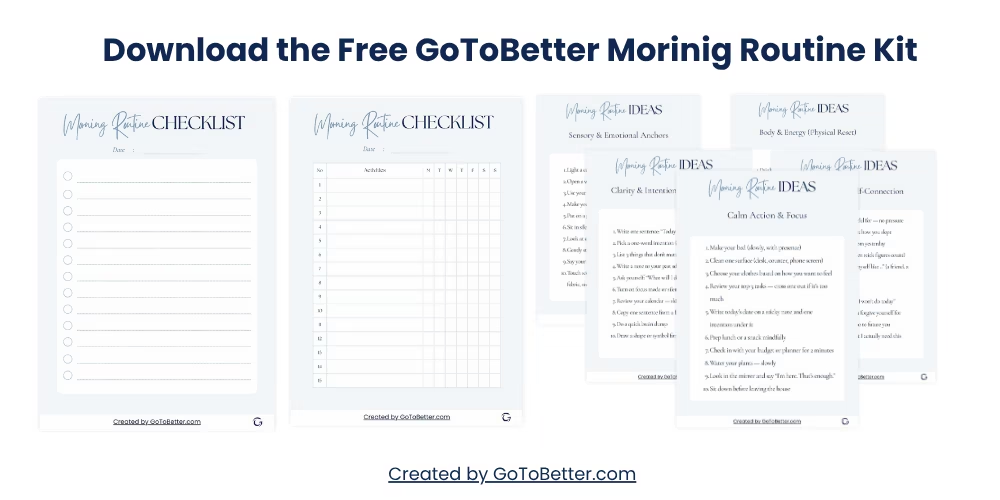
Before we go further, grab the Free Morning Routine Kit — it’s designed to help you apply the research in real life, not just read about it. Inside you’ll find:
- 50 Morning Routine Ideas — A categorized list of flexible, science-friendly actions.
- Daily Morning Template — A clean printable to test and track your mornings.
- Weekly Morning Planner — A layout for experimenting and adapting routines.
Use it to circle, sketch, or test ideas until your mornings feel like your own rhythm.
Write your email and get your Free Kit here↓
The Core Evidence-Based Habits (What Holds Up in Research)
Look past the gimmicks and the scientifically proven best morning routine keeps circling back to simple physiology: light, water, brief movement, and a minute of reflection. None of this is flashy. All of it is repeatable.
Morning Light: Anchor the Clock
Exposure to morning light strengthens circadian entrainment and helps the body’s internal clock keep time with the day. That matters because alertness rises naturally after the cortisol awakening response (~30–45 minutes post-wake), and light amplifies the signal that “day has started.” Step outside if possible; window glass filters intensity. If weather or schedule fights you, sit near a bright window for a few minutes and open the blinds fully. This is not a moral ritual — it’s how circadian rhythm and mornings talk to each other.
You might notice that on the days you get real outdoor light before screens, the rest of the day clicks into place. It’s not a productivity hack; it’s a biology nudge. See Crowley & Eastman (2015) on morning bright light and circadian phase advances.
Hydration: Low Effort, High Certainty
After sleep, mild dehydration is common. A glass of water won’t change your life, but it consistently improves comfort and reduces false hunger. That’s enough. If you want numbers, keep it simple: 250–500 ml on waking. Add electrolytes only if you like the taste or you exercised hard the night before — otherwise, hydration in the morning benefits are mostly about rebalancing fluids, not chasing performance miracles. See Riebl & Davy (2013) on hydration, fluid balance and cognitive/physical function.
Brief Movement: Wake the System
Just 30 seconds of higher-intensity movement soon after waking — for example a brisk set of body-weight squats, calf raises, or a short brisk walk — has been shown to reduce feelings of sleep inertia (that groggy post-wake slump) and boost the early morning alertness signal. In one lab study, participants felt less sleepy when performing the 30 s “sprint” bout compared to remaining sedentary, even though their actual cognitive performance didn’t improve measurably. See Kovac et al. (2021). So: you don’t need a full workout — you need a movement trigger that’s short, reliable, and realistic.
GoToBetter InsightStart with outdoor light, water, and two minutes of movement. Then add a one-line reflection next week. Layer slowly so consistency has a chance to form.
For deeper reading, browse peer-reviewed overviews on circadian timing and light exposure (e.g., Chronobiology International), hydration reviews (PubMed-indexed), and brief activity effects on sleep inertia (Sleep Medicine Reviews). The point is confidence, not perfection.
Myths That Don’t Survive Contact with Data
Trends travel faster than citations. Filtering noise saves time and keeps the scientifically proven best morning routine habits in view — the ones supported by physiology, not hype.
“Everyone should wake at 5am.”
Chronotype varies. The optimal time to wake up is the one you can sustain while protecting 7–9 hours of sleep. For many people, that isn’t 5am. Studies on sleep and performance show that consistency in wake time improves alertness and well-being more than extreme schedules. Stability beats heroics.
“Cold plunges are universally beneficial.”
Some people feel energized by cold exposure; others experience stress spikes or discomfort. Research supports short-term alertness effects, but not a universal benefit — and certainly not one that outperforms light exposure, hydration, and gentle movement. Cold water is optional, not essential, in any scientifically proven morning routine.
“Skipping breakfast is always bad.”
The science of breakfast timing is mixed. Large reviews show that the benefits of breakfast depend on hunger patterns, activity level, and metabolic goals. If you’re hungry early, eat; if not, wait. The consistent signal across studies is personalization — not obedience to a single rule.
“More supplements, better mornings.”
Supplements rarely outperform the basics. Unless you have a specific deficiency — such as vitamin D — they add little to energy or focus. Evidence-backed routines start with sunlight, water, sleep, and movement. Most capsules fix the feeling of “doing something,” not the root cause of fatigue.
GoToBetter says it like this: “Science favors routines that repeat, not rituals that impress.”
You might notice that dropping one myth frees up ten quiet minutes — enough time for light, water, and a scribbled line that actually moves the day.
How to Adapt Research to Your Real Morning
Even solid routines flex with context. Kids, shifts, deadlines — they all tug on the plan. The job isn’t to defend a perfect script; it’s to keep the anchors.
Find Your Wake Window
Choose a 60–90 minute window you can maintain most days. That’s your stability. If you’re late-type, push light earlier by stepping outside sooner. If you’re early-type, protect darkness at night and avoid bright screens before bed. Stability beats extremes.
Use CAR to Time Caffeine
The cortisol awakening response peaks naturally after waking. Delay caffeine 60–90 minutes if you tend to crash mid-morning; many people find that keeping adenosine clearance natural first, then adding coffee, steadies alertness. If delaying leads to headaches, take the gentle route — a smaller early dose, then more later.
Shift Work and Irregular Schedules
If you rotate shifts, hold onto the same anchors relative to wake time: light within the first hour, 250–500 ml water, two minutes of movement, one written line. When sleep is messy, the routine becomes the map you carry between days.
GoToBetter InsightUse a three-checkbox morning: “Light • Water • Move.” Add a fourth — “One line” — once two weeks feel stable. Most people change faster by changing less.
Some mornings, it feels like flying a small plane through clouds. Instruments steady you: light is altitude, water is fuel, movement is engine check, the one-line note is your heading. Keep those four and you’ll land the day more often.
How to Build a Science-Based Morning Routine Step by Step
This sequence turns evidence into action. Take the simplest path first, then adapt. The goal is a best morning routine backed by science that fits an actual life.
Step 1 – Set a Stable Wake Window
Pick a 60–90 minute window you can keep on weekdays and most weekends. Aim for 7–9 hours of sleep before it. Stability is the base for everything else.
Step 2 – Get Outdoor Light Early
Within the first hour, step outside for 2–10 minutes. No sunglasses if safe to do so. If you can’t go out, go to the brightest window. This lever supports circadian alignment.
Step 3 – Drink 250–500 ml of Water
Keep a glass ready by the sink or on your desk. Add a pinch of salt or lemon only for taste. Avoid chasing magic ratios — consistency is the benefit.
Step 4 – Move for Two Minutes
Choose two to three simple moves: calf raises, wall push-ups, hip hinges, or a hallway walk. Stop while it still feels easy so tomorrow is automatic.
Step 5 – Write One Line
Capture a single intention, priority, or gratitude. Keep a pen on the counter or a text file pinned. It’s a micro-reset, not a diary.
Step 6 – Time Your Caffeine
Wait 60–90 minutes after waking if you often crash. Otherwise, keep your current timing but note energy patterns for a week. Adjust by 30 minutes and recheck.
Step 7 – Decide Breakfast by Hunger
Eat if hungry; skip or go light if not. Favor protein if you need steady focus. Reassess weekly — your morning training, hormones, and schedule can shift appetite.
Step 8 – Commit to Two Weeks
Treat the first 14 days as data collection. Missed days are data, not failure. At the end, keep what clearly helps and drop the rest.
Common Questions, Answered by Research
This is where the science behind the scientifically proven best morning routine gets practical — no hype, just what data consistently supports.
What’s the right time to wake up?
The best wake time is the one your sleep can support consistently. Research on circadian rhythms shows that a stable wake schedule and darkness at night improve alertness, focus, and mood more than waking up very early. Consistency matters more than the exact hour.
Does caffeine timing really matter?
It can. After waking, the body naturally releases cortisol to increase alertness. Drinking caffeine too soon may overlap with that process and cause a later dip in energy for some people. Waiting 45–90 minutes may help smooth energy levels — but this effect varies individually. Tracking your own response works better than strict timing rules.
Is breakfast necessary?
There’s no universal rule. Studies show mixed results: some people function better with an early meal, others do fine delaying it. The key factor is total daily nutrition and stable blood sugar, not breakfast timing itself. If you’re hungry, eat. If not, don’t force it.
Does gratitude or journaling have evidence?
Yes, modest but consistent. Brief writing or gratitude exercises have been shown to improve mood regulation and attention when practiced regularly. The benefits are small, but reliable — especially when kept short and simple. One or two minutes is enough to create a sense of direction.
How long should morning exercise be?
Even a few minutes of light movement can reduce grogginess and help the body transition from sleep to full alertness. Short activity increases circulation, body temperature, and mood. For physical fitness, longer workouts work better later in the day, but for waking up — a few minutes are often enough.
GoToBetter says it like this: “Consistency is a stronger stimulant than coffee — build it first, sip later.”
If you’re still unsure, ask a simpler question: “What’s the tiny version I can repeat tomorrow?” Answers tend to be obvious once pressure is removed.
Quick Visual Summary of Proven Habits
Use this as a plain-language snapshot of the scientifically proven best morning routine. It’s not about perfection — just simple, research-backed anchors that help your body and mind start the day in sync.
| Habit | Track It? | Why |
|---|---|---|
| Outdoor light in first hour | Yes (checkbox) | Supports circadian alignment and boosts morning alertness. Bright natural light is one of the strongest signals for your internal clock. |
| 250–500 ml water | Yes (checkbox) | Rehydrates after sleep and reduces mild confusion between thirst and hunger. Comfort improves before coffee or food. |
| 2–5 min easy movement | Yes (checkbox) | Increases circulation and body temperature, helping reduce morning grogginess and lift mood. Evidence is early but promising. |
| One-line reflection | Optional | Acts as a cognitive cue — short reflection or gratitude helps direct focus and emotional tone for the day. |
| Caffeine after 60–90 min | Optional | May smooth energy for some people by allowing the natural cortisol rise first. Effect varies — use personal observation. |
| Breakfast guided by hunger | Optional | No universal rule. Eat if you’re hungry; delay if not. Stable nutrition across the day matters more than breakfast timing. |
If you like numbers, add a weekly totals row to see patterns. If you prefer simplicity, just keep the checkboxes — the method is only a scaffold for awareness.
Tools to Build Your Morning, Without Fads
Keep tools simple and bias toward clarity. The optimal morning routine isn’t hidden in an app; it’s made visible by templates you’ll actually use.
The Morning Routine Kit gives you three light-touch printables to experiment with structure without locking you into a system. If you prefer digital, explore these Google Sheets resources:
- Ultimate Habit Tracker — customizable daily, weekly, and monthly views for habit stability.
- Wellness Tracker — consolidate sleep, mood, and key wellness inputs in one place.
- Self-Care Habit Tracker — keep restorative actions visible so they stop getting skipped.
Use whatever helps you see the day at a glance. When the page is clear, the morning is calmer.
Final Thoughts: Choose Evidence, Ignore Theater
Real science beats influencers — every time. The show is entertaining; the basics are what change lives. Keep the anchors: light, water, movement, one line. Treat the rest as optional experiments you can add or remove without drama.
You might notice that the days you keep those four, the afternoon version of you says “thanks.” That’s the outcome to bet on.
GoToBetter says it like this: “The best routine is the one the body recognizes — repeat the signals and it follows.”
GoToBetter Mini Tool: 60-Second Morning Anchor
Use this one-minute reset to turn research into action right now. Timer ready? Go.
- Write today’s wake window you can hold for three days (e.g., “6:45–7:30”).
- Pick one anchor you will do within the first hour: Outdoor Light • 250–500 ml Water • 2-Minute Movement • One-Line Note.
- Decide the exact cue and place (e.g., “Water glass on the bathroom counter,” “Notebook on the kettle”).
- Set a tiny rule: “If I miss the first hour, I will still do it by 10:00.”
- Write your three-day commitment in one sentence and read it out loud once.
Want to Keep Going? Here’s What Helps Next
You’ve seen what the evidence supports and how to fit it into a real life. Keep the anchors, adjust the rest — that’s how routines stick without drama.
This support article is part of our broader guide to mornings built for humans, not hype. If you want the full picture — structure, principles, and flexible options — start here:
Read The Ultimate Guide to Morning Routines — your no-fluff, real-life map to calmer starts and steadier days.
And if you want a simple push to start tomorrow, grab the free Morning Routine Kit. It’s quick to use and easy to keep nearby.
- 50 Morning Routine Ideas — categorized, flexible, and science-friendly
- Daily Morning Routine Template — a clean space to map or track
- Weekly Morning Planner — test different versions and see what works
Enter your email to get the Free Morning Routine Kit now.
Science-Based Morning Routine FAQ
What’s the first thing science says to do after waking?
Get morning light within the first hour. Outdoor light strengthens circadian alignment and helps your internal clock signal “day has started.” If you can’t go outside, sit by the brightest window for 2–10 minutes and open the blinds fully — it still helps.
How many minutes of morning light are enough to make a difference?
Two to ten minutes is a practical start for most days. More time can help on overcast days because cloud cover lowers intensity. If mornings are rushed, pair light with another anchor — drink your water while standing by the window to make it automatic.
When should I drink coffee for steady focus?
Many people feel steadier delaying caffeine 60–90 minutes after waking. That timing respects the natural cortisol awakening response and can reduce mid-morning dips. If headaches appear when you delay, start with a small early cup and top up later — then review your week’s energy notes.
Do two minutes of movement really change anything?
Yes — brief movement reduces sleep inertia and primes mood without requiring a workout. Choose easy moves like calf raises or a hallway walk so repetition is painless. If you want more later, great — but the short version stands on its own.
What’s the simplest research-based routine for a busy parent?
Keep a three-step anchor: light, water, and a one-line note. Step outside with the kids for two minutes, drink 250–500 ml of water, then write the day’s priority on a sticky near the kettle. It’s fast, flexible, and survives chaotic mornings.
Ready to Go Deeper?
When daily check-ins start to feel grounding — not exhausting — it may be time for a clearer view of your progress.
Ultimate Habit Tracker (Google Sheets) — fully customizable daily, weekly, and monthly tracking with automated summaries. See patterns, reflect without overthinking, and keep momentum visible across goals.
- Save time with automated updates and clean visuals
- Accessible on any device, privacy kept in your Google account
- Weekly reviews to spot patterns in sleep, mood, and effort
Prefer wellness-focused check-ins? Explore the Wellness Tracker for mood, sleep, and daily habits, or the Self-Care Habit Tracker to keep restorative actions in sight.
Browse all tools built for real life — not perfection — in the shop: GoToBetter Shop.