
+Free Habit Change Planners & Worksheets Kit
Replacing bad habits isn’t about trying harder—it’s about outsmarting your own routines. Inside: 21 habit swaps that actually work, science-backed strategies, and a free printable kit made for real life (not just good intentions).
By GoToBetter | Real swaps, real routines—no hype, no shame.
Replacing Bad Habits: Outsmarting Your Old Patterns
Let’s be honest—old habits don’t let go because you “should” change. They stick because they fill a need: comfort, relief, a moment of escape. The usual advice? Just stop. But you already know that doesn’t work.
What does work is swapping your old routine for something that still hits the spot—without sending you back to square one. You’re not looking for a total life overhaul. You want practical swaps you can actually use, especially on the days when motivation is nowhere to be found.
Some swaps will stick right away. Others will take trial and error. That’s normal. What matters is finding replacements that fit your life—not someone else’s theory.
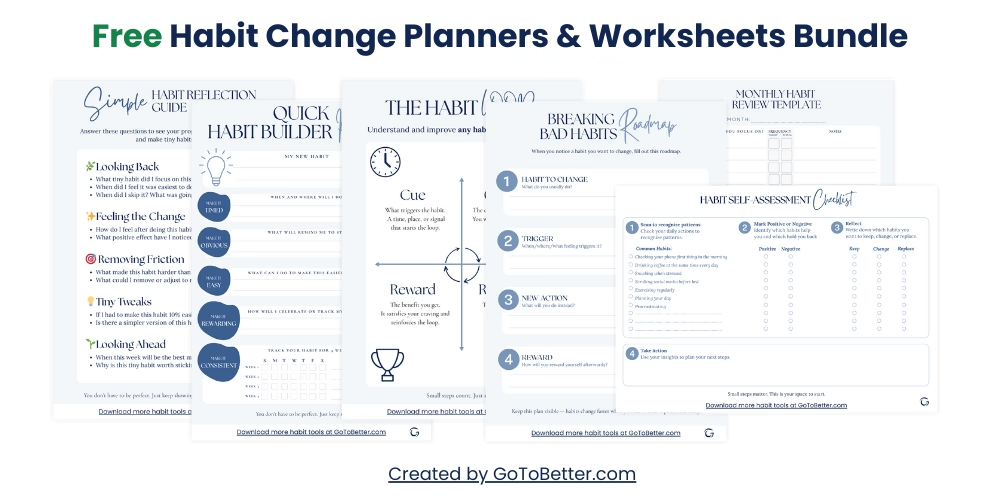
Before you jump into the swaps, get your Free Habit Change Planners & Worksheets Kit—a printable toolkit designed to show you exactly how to build habits that last, without relying on motivation or complicated systems. Here’s what’s inside:
- Quick Habit Builder Planner: Define your new habit, choose when and where you’ll do it, and spot your cues.
- Weekly Habit Tracker: Celebrate small progress, one checkmark at a time.
- Monthly Habit Review Template & Simple Reflection Guide: See what’s working, what needs adjustment, and keep moving forward.
- Habit Loop Graphic: Understand how cues and rewards shape your behavior.
- Breaking Bad Habits Roadmap: A visual guide to replacing old patterns with better ones.
Every worksheet gives you a simple, step-by-step process—so habit change feels doable, not overwhelming. Whether you want a better morning, a healthier routine, or just one habit you can finally keep, this free bundle supports you one small action at a time.
Write your email and get your Free Kit here↓
h2 id=”h2-10-habit-swaps-that-actually-work”>10 Habit Swaps That Actually Work (With Real-World Alternatives)
Most advice about replacing bad habits sounds simple—just swap the old for something better. But in reality, it’s rarely that neat. Swapping a habit isn’t about willpower or “tricking yourself” with a one-size-fits-all tip. It’s about finding what *actually* hits the same need, in your life, with your real obstacles.
Every swap here is more than a “good idea”—it’s a genuine alternative that’s worked for real people, in messy, imperfect circumstances. Each one is mapped to the reason the habit sticks, the emotional comfort it brings, and the psychological payoff you’d lose if you just “quit.”
The swaps aren’t about self-improvement for its own sake—they’re about relief, comfort, boredom, or simply having a break that doesn’t leave you worse off than you started. Each habit is unpacked step by step, so you see why the urge exists, what actually works instead, and how to adjust when the first solution doesn’t stick.
There’s no perfect swap that works for everyone. This list gives you options, with room to try, fail, and switch things up—because habit change is a process, not a single choice.
Let’s dig in. Find your sticking point and test what fits.
Swap 1: What to Do Instead of Nighttime Snacking
Why Nighttime Snacking Becomes a Habit
Nighttime snacking is almost never about hunger. It’s a comfort pattern: a self-soothing ritual to end the day, a way to unwind, avoid uncomfortable feelings, or signal “I finally get something for myself.”
For many, it’s tied to reward or stress relief. The cue is often boredom, tiredness, or a subtle emotional dip after dinner. It becomes automatic—a “background soundtrack” to TV, scrolling, or just moving through the kitchen.
GoToBetter says it like this: “Night snacking isn’t about food. It’s about giving your brain closure before sleep.”
How to Swap Nighttime Snacking for a Healthier Habit
Instead of forcing yourself to “just stop,” try replacing the habit with something that gives a similar sense of comfort or closure—but doesn’t sabotage your sleep or energy.
- Brew a cup of herbal tea or warm milk (classic, but some people genuinely enjoy it)
- Use a heated neck wrap or hot water bottle—physical warmth can mimic snack comfort
- Chew sugar-free gum or brush your teeth earlier (signals “the kitchen is closed”)
- Prep a plate of crunchy vegetables if your mouth wants something to do
- Do a 2-minute body scan meditation (YouTube is full of these—just lie down and listen)
- Switch to “TV with hands busy”—knit, fidget, doodle, or fold laundry while you watch
- Write down the best or worst thing about your day—give your mind closure, not your stomach
- Set up a “no-food zone” for one hour before sleep and light a candle or dim the lights instead
Mix and match. Try one swap at a time, or rotate a few until something sticks.
| Old Habit | Replacement Options | Need Matched | Watch Outs |
|---|---|---|---|
| Mindless night snacking | Herbal tea, heated wrap, crunchy veggies, doodling, body scan, brush teeth, “TV fidget” | Comfort, closure, sensory reward | Snack urge can return on stress days—adjust, forgive slips |
Why These Nighttime Snack Swaps Work
All these swaps do one thing: they deliver comfort or closure, just in a different way. Your brain expects a wind-down at night. Changing what that looks like (without trying to fight your own cravings) is the fastest path to breaking the loop.
Think of it as rerouting a familiar road: you’re still heading “home,” just taking a quieter, safer side street.
GoToBetter InsightTry building your swap around a physical cue—a mug, a wrap, a pen, a light. Most habits fade faster when you give your senses a new job at the same moment the craving hits.
Real-World Watch Outs for Nighttime Snacking
Some nights, nothing will work. You’ll still find yourself raiding the pantry, even when you “know better.” That’s not a personal failure—it’s feedback. Adjust the routine, experiment, or just forgive yourself and try again tomorrow.
Ask yourself: “What would actually feel good right now if food wasn’t an option?” Sometimes it’s rest, sometimes contact (call or text someone), sometimes just a reset ritual like dimming the lights.
Some days, I still eat cookies at midnight. But the more swaps I test, the less power the old pattern has over me. Habit change is a cycle, not a switch.
For a full, step-by-step guide to changing food, sleep, and screen routines—with printable planners—see Breaking Unhealthy Habits: Proven Steps for Food, Sleep & Screen Change.
Swap 2: What to Do Instead of Nail Biting
Why Nail Biting Becomes a Habit
Nail biting is often invisible until your fingertips are sore or your nails are gone. It’s a stress response, a boredom fix, and a nervous energy release—all wrapped in one quick, unconscious motion.
It’s not about bad manners. It’s about your hands needing something to do when your mind is restless or under pressure. For many, nail biting becomes a “silent background process” during work, traffic, or even watching TV.
GoToBetter says it like this: “Biting your nails is your brain’s way of managing tension—it’s a shortcut to soothe yourself when words or actions feel too hard.”
How to Swap Nail Biting for a Healthier Habit
Forget “just stop”—that only adds guilt. Instead, redirect the urge with a physical, repetitive action that can satisfy your hands and nervous system in the same moments.
- Keep a stress ball or fidget cube at your desk or in your bag
- Rub a small drop of scented lotion or balm into your hands when the urge hits
- Try a silicone “chewable” jewelry piece (works well for both kids and adults)
- Carry a mini nail file—when you notice a rough edge, file it instead of biting
- Use a pen with a clickable top or twist mechanism for meetings or waiting
- Keep textured paper or fabric in your pocket and “worry” it with your fingers
- Experiment with press-on nails or clear polish as a “friction shield”
Rotate different swaps for different situations—home, work, car, calls. Small, portable, and tactile is best.
| Old Habit | Replacement Options | Need Matched | Watch Outs |
|---|---|---|---|
| Nail biting during stress, boredom, or restlessness | Fidget tool, hand balm, chew jewelry, nail file, textured fabric, pen | Tactile comfort, sensory distraction | Urge may spike with anxiety—combine swaps as needed |
Why These Nail Biting Swaps Work
The real trick: give your hands a “job” whenever your brain wants to bite. Research reviews show that “sensory substitution”—swapping nail biting for a neutral action, like squeezing a stress ball—can significantly reduce nail-biting habits in adults and teens, especially when practiced regularly.
It’s a bit like reprogramming a shortcut key on your computer: the trigger stays, but the action and result change.
GoToBetter InsightStart by noticing when and where you bite your nails most. Keep a swap tool in every “hot zone”—desk, sofa, car, bag. Convenience beats intention every time.
Real-World Watch Outs for Nail Biting
You might slip back into biting in big moments—interviews, deadlines, family gatherings. That’s normal. Don’t ditch all progress for one relapse. Instead, ask: “What’s missing right now—calm, focus, or a sense of control?” Sometimes you need to double up swaps (fidget plus lotion, for example).
Many people discover nail biting drops off when they give their hands something purposeful to do. Drawing, folding laundry, or just squeezing a stress ball at key moments can be enough to loosen the habit’s grip over time.
Most nail biters don’t stop overnight. The key is reducing the habit’s “airtime” each week—not achieving a perfect zero.
Swap 3: What to Do Instead of Doomscrolling or Mindless Social Media Use
Why Doomscrolling Becomes a Habit
Doomscrolling—or endlessly scrolling social media and news—hooks you because it delivers a constant stream of tiny dopamine hits. It’s a quick escape from stress, boredom, or uncertainty, and gives you a false sense of control (“I’m staying informed,” you tell yourself, even as anxiety rises).
This habit thrives in moments of overwhelm or transition. It fills mental gaps: before bed, during breaks, even while waiting in line. The algorithm’s job is to keep you scrolling, not satisfied.
GoToBetter says it like this: “Doomscrolling isn’t about curiosity. It’s about trying to soothe anxiety by chasing ‘one more update’—but it never ends.”
How to Swap Doomscrolling for a Healthier Habit
You don’t need to quit your phone cold turkey. The real trick: swap the endless scroll for a short, intentional reset that gives your brain a real break or sense of completion.
- Set a timer for 5 minutes—use your phone for one specific thing, then put it away (alarms and kitchen timers help)
- Replace scrolling with a quick “micro-activity”—stretch, walk around the room, splash cold water on your face, step outside
- Use “read later” tools (like Pocket or Instapaper) so you save articles for a dedicated time instead of endless browsing
- Swap to a single, curated feed (Reddit, a group chat, newsletters)—check one source, not twenty
- Try guided breathing (most phones have a simple app or built-in widget)
- Move your most tempting apps off your home screen—replace with a photo, weather widget, or quote
- Start a “1-minute sketch” or doodle each time you reach for your phone out of boredom
Test several swaps and notice which ones actually interrupt the urge. Customization beats willpower every time.
| Old Habit | Replacement Options | Need Matched | Watch Outs |
|---|---|---|---|
| Mindless doomscrolling/social media | Timed check, micro-activity, breathing app, single feed, doodle, move apps | Quick escape, mental reset, anxiety relief | Urge spikes when tired or bored—be ready to swap fast |
Why These Doomscrolling Swaps Work
All these swaps offer closure or relief without the “open loop” of endless content. In practice, setting small, realistic boundaries—like choosing a set time to stop scrolling or swapping a mindless digital habit for a simple, physical action—works far better than trying to quit all at once. Micro-limits are less overwhelming, lower resistance, and actually make it possible to follow through, even on your messiest days.
Metaphorically, think of doomscrolling as being lost in a hall of mirrors. These swaps are your door out—real, physical actions that signal “done for now” to your brain.
GoToBetter InsightThe moment you want to scroll, change locations—even just stand up. Swapping context is the fastest way to break the digital trance.
Real-World Watch Outs for Doomscrolling
On bad news days, the urge to scroll can become relentless. You might tell yourself, “Just checking,” and lose an hour. That’s not a flaw in you—it’s a feature of the apps. Adjust your swaps: keep a post-it or object nearby as a reminder, or schedule a “doomscroll window” (yes, really) where you’re allowed to binge, then switch to your replacement.
If you fall back into endless scrolling, ask: “What do I want from this right now—distraction, reassurance, something to look forward to?” Sometimes a quick call, music, or even stepping outside does the job better.
Breaking the habit isn’t about going tech-free—it’s about knowing when to step out of the loop and give your brain what it’s really asking for.
Swap 4: What to Do Instead of Negative Self-Talk or Self-Criticism
Why Negative Self-Talk Becomes a Habit
Negative self-talk isn’t just a bad mood or a passing thought—it’s a well-worn mental pathway, often built from old feedback, stress, or comparison. The brain defaults to criticism because it feels familiar, sometimes even “productive,” as if pointing out flaws will keep you safe from future mistakes.
This habit is often about safety and old defense mechanisms. For many, self-criticism becomes background noise during any challenge—work, relationships, even basic routines. It can spike after a mistake or whenever you feel behind.
GoToBetter says it like this: “Self-criticism isn’t motivation. It’s just stress disguised as self-improvement.”
How to Swap Negative Self-Talk for a Healthier Habit
You won’t shut down your inner critic by arguing with it. Instead, swap the instant judgment with an intentional “pause and reframe” or a physical anchor that interrupts the spiral.
- Label the thought out loud or in writing: “That’s self-criticism, not truth.”
- Counter the inner voice with one small, neutral fact: “I made a mistake on that email, but I fixed it.”
- Use a self-compassion prompt: “What would I say to a friend in this moment?”
- Wear a rubber band or bracelet—snap or touch it gently when self-talk starts (physical cue to shift focus)
- Practice a short grounding ritual—three deep breaths, name five things you see, or move to a new space
- Swap in a “mantra moment”—repeat a short, realistic phrase: “Mistakes are data,” or “Still learning.”
- Replace negative spirals with quick action—stand up, drink water, write down one thing that did go well today
Not every swap will click on the first try. Test a few and keep the easiest one visible (on your desk, phone, or mirror).
| Old Habit | Replacement Options | Need Matched | Watch Outs |
|---|---|---|---|
| Negative self-talk, self-criticism | Label/reframe, self-compassion prompt, grounding, mantra, physical anchor, quick action | Emotional safety, self-acceptance, stress relief | Critic may return under stress—practice swaps even on “good” days |
Why These Negative Self-Talk Swaps Work
Swapping your inner critic for a “neutral observer” interrupts the shame cycle before it builds. Research from the Mindful Self-Compassion program shows that practicing self-kindness—even briefly—reduces anxiety and increases resilience. Neff & Germer, 2013.
It’s like flipping the script from a harsh coach to a calm narrator—same situation, but a very different outcome.
GoToBetter InsightMost people fight their critic directly. Try labeling and moving instead—your body helps your brain reset faster than arguments ever will.
Real-World Watch Outs for Negative Self-Talk
When you’re tired or under pressure, the critic will sound louder. If you slip back into harsh self-talk, notice it, then swap to your “neutral observer” or use your physical anchor. Some days, you’ll need the swap every hour. That’s not failure—it’s real change in motion.
A practical reflection: “If a friend messed up in this way, what would I actually say to them?” Often, the answer is far kinder than anything you’d tell yourself.
I still catch myself in old thought loops, especially after setbacks. Each time I pause, reframe, or move, the critic’s hold gets weaker—and self-acceptance gets a little easier.
Swap 5: What to Do Instead of Over-Checking Your Phone
Why Over-Checking Your Phone Becomes a Habit
Phone checking is the modern reflex—almost an extension of your hand. The urge usually spikes during pauses: waiting in line, in meetings, during ads, or while working on something difficult. It feels like “just checking,” but it’s actually a fast way to fill boredom, dodge discomfort, or search for a tiny dopamine hit.
This habit is driven by both cue and craving. Each notification, buzz, or idle moment is an invitation to scroll, swipe, or refresh. And most people underestimate how many times a day they reach for their phone—until they start counting.
GoToBetter says it like this: “Over-checking your phone isn’t about information. It’s a ritual for relief when nothing else is happening.”
How to Swap Over-Checking Your Phone for a Healthier Habit
You don’t need to go “phone free.” Instead, swap the urge to check with a fast, intentional action—one that fills the same gap but gives your brain a real reset or reward.
- Move your phone out of reach (into a bag, drawer, or across the room) for set periods
- Keep a “swap object” handy—book, notebook, fidget, or stress ball
- Set a visible phone limit: rubber band around the phone, post-it on the case, grayscale screen
- When the urge hits, do a single breath, neck roll, or sip water before touching your phone
- Designate “phone check zones” (e.g., only at your desk or in the kitchen, never in bed or bathroom)
- Replace the “default grab” with a micro-action: jot a quick note, doodle, or stretch
- Use an app blocker or “focus mode” for set hours if you want tech help
- Try “phone stacking” during meals or with others: put all phones in a pile and leave them alone
Rotate swaps for different situations. The goal is to break the autopilot—one check at a time.
| Old Habit | Replacement Options | Need Matched | Watch Outs |
|---|---|---|---|
| Over-checking phone during pauses or stress | Move phone, swap object, visible limit, micro-action, phone zones, app blocker, phone stacking | Relief from boredom, quick dopamine, distraction, social comfort | Urge spikes with anxiety or FOMO—have swaps ready for high-stress times |
Why These Over-Checking Phone Swaps Work
Swapping the “grab and check” reflex for a real-world action interrupts the craving loop. Even short “phone breaks” can reduce anxiety and boost attention. Simple micro-actions—like stretching, changing your environment, or jotting down a quick note—often reset your mental state faster than another scroll session.
It’s like swapping a sugar craving for a glass of water—the ritual is still there, but the effect is less jittery and more restorative.
GoToBetter InsightChange your default by making the phone less convenient. Out of hand, out of mind. Even a one-foot distance breaks the pattern more than you’d expect.
Real-World Watch Outs for Over-Checking Your Phone
Some days, you’ll catch yourself grabbing the phone before you realize it. That’s expected. Don’t waste energy on guilt—just pause and try your chosen swap again. The real win is awareness and having options on hand.
Ask: “What am I hoping to find by checking right now—boredom relief, a distraction, a little social hit?” Sometimes, simply labeling the urge (“this is boredom, not emergency”) helps weaken its hold.
I still check my phone more than I want, especially under stress. But swapping even a third of those checks for a real break adds up—less noise, more focus, and a little more control over my attention.
Swap 6: What to Do Instead of Mindless TV Watching After Work
Why Mindless TV Watching After Work Becomes a Habit
Mindless TV time after work isn’t just about entertainment—it’s a decompression ritual. For many, it’s how the day officially “ends.” You flop on the couch, hit play, and let the noise fill the tired gaps in your brain. It’s predictable, easy, and feels safe.
This habit is about relief, not laziness. The cue is almost always fatigue, stress, or wanting a mental escape. Over time, it can become automatic—screen on, mind off—no matter how little you actually enjoy the shows.
GoToBetter says it like this: “The real appeal of TV after work is not the show—it’s the permission to do nothing.”
How to Swap Mindless TV Watching for a Healthier Habit
You don’t have to give up your screen entirely. Instead, swap “default TV time” for a new wind-down ritual that gives the same relief—but with more intention or movement.
- Replace the first 10 minutes of TV with a walk outside or a quick stretch session (even in your living room)
- Pair TV with a hands-on activity: fold laundry, do a puzzle, color, sort mail, or meal prep
- Try an “audio-only” switch—play a podcast or music and lie down with your eyes closed
- Limit TV to a single episode or set a timer, then swap to reading, journaling, or calling a friend
- Make the first 5–10 minutes screen-free: light a candle, shower, change clothes, or tidy a small space
- Have a “TV snack bin” with non-food comforts—soft blanket, fidget toy, stress ball, scented lotion
- Choose one “active” night per week: try a short hobby, video call, or walk instead of automatic TV
The goal isn’t perfection—just breaking the all-or-nothing pattern and building a menu of real alternatives.
| Old Habit | Replacement Options | Need Matched | Watch Outs |
|---|---|---|---|
| Mindless TV after work | Walk/stretch, pair with activity, podcast/music, time-limit, screen-free ritual, comfort objects, hobby | Relief, mental escape, decompression | Fatigue may override swaps—start with small changes, not a total ban |
Why These Mindless TV Watching Swaps Work
These swaps keep the best part of the ritual—the break—but add presence or movement. Even a few minutes of movement or simply changing your environment after work can significantly reduce stress and lift your mood—no willpower required.
Think of TV time as a “gateway habit.” By inserting a brief, alternative activity first, you change the rhythm of your evening and give yourself a true reset—not just a numbing scroll.
GoToBetter InsightStart with a swap that’s easy enough to do on autopilot—pair a simple stretch or small task with your usual TV time. Over time, these swaps become the new “off switch” for your workday.
Real-World Watch Outs for Mindless TV Watching
Some evenings, nothing will replace the comfort of the couch and screen. That’s fine—just try inserting a micro-swap before you sit down, or pair TV with a secondary activity. If you miss a day, skip the guilt and try again next time.
Ask yourself: “What do I want from TV right now—background noise, distraction, comfort, or just a break?” Sometimes, a simple alternative (even for five minutes) is enough to break the cycle of mindless watching.
I still use TV to unwind, especially after tough days. But with a few swaps on hand, I don’t end up lost in hours of shows I barely remember—and the evenings feel more like mine.
Swap 7: What to Do Instead of Late-Night Scrolling in Bed
Why Late-Night Scrolling in Bed Becomes a Habit
Late-night scrolling in bed is one of the most common modern traps. It starts as a quick “catch up” or mindless scroll, but quickly turns into an hour (or more) of lost sleep. You’re tired, but your brain is still seeking stimulation, comfort, or a way to unwind.
This habit is about chasing a last bit of freedom or escape before tomorrow begins. For many, it’s the only “me time” they get all day. The screen’s glow feels like a buffer from worries, loneliness, or just the unfinished business of the day.
GoToBetter says it like this: “Late-night scrolling is the digital version of ‘just one more minute’—but your brain never wins that bargain.”
How to Swap Late-Night Scrolling for a Healthier Habit
You don’t have to give up your phone entirely at night, but you do need a new bedtime ritual that feels just as soothing, but helps you wind down for real.
- Charge your phone outside the bedroom, or across the room so you can’t reach it from bed
- Swap scrolling for a short “analog” ritual: read one page of a real book, journal one line, or draw for two minutes
- Listen to an audio book, music, or a calming podcast with the screen off (set a sleep timer)
- Keep a “fidget object” or stress ball by your bed—use it for a few minutes as you settle in
- Try a gentle breathing exercise or body scan (there are audio guides that don’t require looking at a screen)
- Replace phone time with a small “get ready for tomorrow” habit—lay out clothes, write a tiny to-do list, prep your bag
- Dim the lights 30 minutes before bed; signal to your brain that the day is done
Test which swaps actually help you let go of the day, not just avoid it. One change that makes screens less automatic is worth more than any willpower speech.
| Old Habit | Replacement Options | Need Matched | Watch Outs |
|---|---|---|---|
| Scrolling on phone in bed | Phone out of reach, book/journal, audio with screen off, fidget, breathing, prep for tomorrow, dim lights | Wind down, comfort, escape, “me time” | Urge spikes with stress, loneliness, or worry—prepare swaps in advance |
Why These Late-Night Scrolling Swaps Work
These swaps replace blue light and mental noise with rituals that actually trigger sleep signals in your brain. Numerous studies confirm that removing screens at least 30 minutes before bed improves sleep quality and makes it easier to fall asleep.
Think of late-night scrolling as “procrastinating on tomorrow.” When you replace it with a gentle, offline wind-down, you’re not just helping your sleep—you’re giving your future self a head start.
GoToBetter InsightMake bedtime swaps obvious—place a book, journal, or fidget object right where your phone used to be. The easier the new ritual is to reach, the more likely you’ll use it.
Real-World Watch Outs for Late-Night Scrolling
Some nights, the urge to scroll will overpower every plan. If you fall back into it, skip the self-judgment and try again the next night. The goal isn’t perfection, it’s making your default behavior just a little bit healthier and easier to repeat.
Before you pick up your phone, ask: “What do I actually need right now—distraction, comfort, or just to rest?” Sometimes, closing your eyes and listening to a familiar story works better than any scroll.
Even after years of practicing swaps, I still reach for my phone some nights. But the more tools I have within arm’s reach, the less often I lose sleep to “just one more minute.”
Swap 8: What to Do Instead of Doom Eating During News Cycles or Stressful Events
Why Doom Eating During News or Stress Becomes a Habit
Doom eating—mindless snacking or overeating when the news is overwhelming or life feels chaotic—is a modern comfort ritual. Stressful headlines, constant notifications, and tense world events crank up anxiety. Food becomes a way to anchor yourself, numb out, or regain a fleeting sense of control.
This habit is not about hunger; it’s about calming the nervous system. The combination of distressing news and a snack is a fast route to emotional relief, especially if you’re already tired or tense.
GoToBetter says it like this: “When the world feels too much, food is often the quickest way to feel ‘okay’ again—even if it’s only for a minute.”
How to Swap Doom Eating for a Healthier Habit
Instead of fighting the urge or banning snacks, create an intentional buffer between stress and eating. The goal is to soothe yourself with alternatives that offer relief, sensory comfort, or a sense of grounding—without defaulting to food.
- Pair news-watching with a non-food comfort: a warm drink, holding an ice pack, or using a scented lotion
- Swap the snack for a sensory ritual: hand massage, fidget toy, doodling, or textured object
- Set a pause—when the urge to snack hits, stand up and move to a different room, even for a minute
- Listen to news while stretching, tidying, or walking in place to diffuse nervous energy
- Replace eating with a short “check-in”—ask yourself: “Am I hungry, or just overwhelmed?”
- If you do snack, switch to smaller, slower options: tea, grapes, cut veggies, or nuts
- Use headphones to create a boundary between you and the noise; or turn off notifications for a set period
Experiment with these swaps to find which ones actually calm your system—not just distract you from it.
| Old Habit | Replacement Options | Need Matched | Watch Outs |
|---|---|---|---|
| Doom eating during news or stressful events | Non-food comfort, sensory ritual, pause/move, slow snack, check-in, boundary with headphones | Calm, comfort, emotional reset | High anxiety may override swaps—prepare ahead or combine multiple |
Why These Doom Eating Swaps Work
Swapping food for sensory or movement rituals gives your body the comfort it craves—without the energy crash or guilt. Therapists often recommend simple tactile activities (like holding a cold object or using hand lotion) or short mindful movement breaks as healthier ways to manage anxiety and reduce the urge to snack in response to stress.
Think of this swap as “redirecting the relief”—you’re still honoring your need for comfort, just with more options on the menu.
GoToBetter InsightTry switching the channel, not just the snack. A minute away from the screen or a simple sensory swap breaks the loop faster than forcing willpower alone.
Real-World Watch Outs for Doom Eating
When news is especially bleak, every swap may feel useless at first. If you catch yourself snacking anyway, let it go and focus on what you can adjust next time. The swap that works today might not work tomorrow—having several options gives you more control.
Pause and ask: “What kind of comfort do I need right now—taste, touch, movement, or just less input?” The clearer the answer, the easier it gets to try something different (even if only for a few minutes).
Personally, I still reach for snacks when the news feels heavy. But with a few go-to swaps, I don’t spiral as far—and I bounce back with less regret.
Swap 9: What to Do Instead of Skipping Exercise or Activity Out of Habit
Why Skipping Exercise or Activity Becomes a Habit
Skipping movement isn’t about laziness—it’s about friction. The more steps or effort it takes to start, the easier it is to say, “I’ll do it later.” After a long day, your brain will pick the path of least resistance, especially if exercise feels like a chore or past attempts have fizzled.
This habit is about avoiding discomfort, not a lack of willpower. The cue is usually tiredness, overwhelm, or even a subtle dread of “doing it wrong.” Over time, being sedentary becomes the automatic default, especially when you don’t have a go-to alternative.
GoToBetter says it like this: “Skipping movement isn’t a failure—it’s what happens when exercise is harder to start than doing nothing.”
How to Swap Skipping Exercise for Easier Movement
The secret isn’t motivation or willpower. It’s lowering the bar—so movement feels like less work than skipping it. Build tiny, friction-free swaps right into your existing routine.
- Keep a pair of sneakers or resistance band where you’ll see them—near your desk, TV, or door
- Swap “exercise” for “movement snacks”—stand, stretch, or do 30 seconds of any movement each hour
- Combine screen time with light movement: march in place, do ankle circles, wall push-ups during commercials
- Set a playful micro-challenge: touch your toes after each bathroom break, 10 steps during phone calls, or a dance move before dinner
- Use “if-then” cues: If I make coffee, I do 10 squats; if I check my phone, I stretch my arms
- Choose one fun activity you don’t dread (mini-trampoline, hula hoop, gentle yoga, silly walk)
- Invite someone else to join—accountability or a bit of competition can help
Experiment until movement is easier to do than to skip. The swap doesn’t have to be exercise—it just has to be motion.
| Old Habit | Replacement Options | Need Matched | Watch Outs |
|---|---|---|---|
| Skipping exercise or movement | Movement snacks, screen-time movement, micro-challenges, if-then cues, fun activity, accountability | Energy, routine, a sense of progress | Perfectionism or dread—make swaps as easy as possible, avoid “all-or-nothing” thinking |
Why These Movement Swaps Work
Small, easy swaps change the default from “sit and stay” to “move a little, then decide.” Studies show that frequent, brief movement breaks—like standing up, stretching, or walking—can significantly benefit health and mood, and are often easier to maintain than committing to full workouts.
Think of movement swaps as “unlocking the pause button.” Each tiny action gives you a reset—without the pressure of a full workout or a gym commitment.
GoToBetter InsightIf you dread “exercise,” switch to “movement.” Tiny actions—done often—do more for your body and mind than any perfect plan that never gets started.
Real-World Watch Outs for Skipping Exercise
Some days, you’ll do the bare minimum—stand up, stretch, walk to another room. That still counts. Don’t wait for the “right time” or the right mood. Use swaps to make movement the default, not the exception.
Before you write off the day as sedentary, ask: “What’s one tiny thing I can do now?” Even the smallest shift breaks the cycle.
Personally, I’ve abandoned more exercise plans than I can count. But with movement swaps on hand, I move more often—and it never feels like punishment.
Why Replacing Bad Habits Is All About Smart Swaps
Here’s the truth: replacing bad habits isn’t a single breakthrough—it’s a series of small, smart swaps that fit your life as it really is.
No one rewrites old routines overnight. Each new swap is an experiment. If the first one flops, it doesn’t mean you’re stuck with your old habit forever. It just means you need a better match for the need that habit filled.
The whole idea is to keep trying—replacing bad habits with alternatives you’ll actually reach for, especially when motivation runs out. That’s not perfection. That’s progress.
GoToBetter Mini Tool: Your 1-Minute Habit Swap Audit
Ready to outsmart an old habit right now? Use this ultra-quick audit to spot where your current swap is falling short—and choose a better match. All you need is a pen, your phone, or your mind.
- Pick one habit you want to swap (e.g., nighttime snacking, doomscrolling).
- What do you get from this habit—comfort, escape, reward, distraction? Write the real need.
- List 2–3 “swap” ideas from this article that feel doable, not forced.
- Now, honestly rate each swap: Does it match the same need? If not, tweak it—can you add a ritual, change the timing, or make it more enjoyable?
- Commit to trying just one swap today—even if it’s just for a minute.
Repeat as needed. The best swaps aren’t perfect—they’re just the ones you’ll actually use, especially on a rough day.
Want to Keep Going? Here’s What Helps Next
You’ve just explored real-world ways to swap out stubborn habits—without the guilt, shame, or all-or-nothing thinking that keeps most advice stuck on paper. Remember, this isn’t about winning at self-improvement. It’s about finding real relief, a better comfort, or a smarter way to meet your needs.
This guide is just one piece of a bigger picture. If you want the full map to habit change—including the science, psychology, and the small adjustments that make change stick—start with the main guide here:
Read The Ultimate Guide to Breaking Bad Habits — your no-fluff, real-life guide to understanding why habits form, how to reroute them, and what to do when old patterns come back.
Or, if you want to get started with structure—without any pressure—you can download the Free Habit Change Planners & Worksheets Kit. It’s a set of simple, printable tools designed for anyone tired of theory and ready to see what actually works:
- Quick Habit Builder Planner: Define, cue, and anchor your new swaps.
- Weekly Tracker and Monthly Review Templates: See what’s working, and adjust as you go.
- Reflection guides and habit loop visual: Understand your triggers, routines, and rewards.
Try a real swap with a real plan. Enter your email and download your free Habit Change Kit here. Every tool is made for real life—not perfect days.
Get your Free Habit Change Planners & Worksheets Kit here ↓
Replacing Bad Habits FAQ
What’s the best way to replace a bad habit with a healthier one?
The best way to replace a bad habit is to swap it for a specific, doable alternative that meets the same emotional need. For example, if late-night snacking comforts you, try a warm drink, stretching, or a five-minute wind-down ritual instead. The swap must be practical and feel “easy enough” to do on tough days—if it feels forced, experiment until it actually fits your life.
Why do most habit swaps fail—even if I pick a “better” option?
Most swaps fail because they don’t satisfy the real underlying need—like comfort, escape, or stress relief. Swapping mindless phone use for a walk might sound good, but if you’re seeking quick relief, it may not stick. Focus on finding swaps that truly match your emotional triggers and test new routines until one “clicks” for you.
Can I swap out multiple bad habits at once?
Swapping more than one habit at a time is possible, but it’s often overwhelming and less effective. Start with one swap, test it in real-life situations, and build confidence before adding more. Stacking too many changes at once usually backfires—make each swap as easy as possible and celebrate even tiny wins.
What if I relapse or slip back into my old habit after trying a swap?
Relapse is part of the habit change process—not a failure. When you slip, pause and review what triggered the old habit. Then, update your swap or adjust your cues. The goal isn’t perfection; it’s learning what fits your real patterns and adapting as you go.
How do I find the right habit swap for me?
The right habit swap is personal—it matches your emotional “why,” feels practical, and is easy enough to do even on low-motivation days. Experiment with two or three swaps from this list and notice what feels relieving, not just “healthy.” If something feels forced, try a different approach until one sticks.
Ready to Go Deeper?
When you’re ready to make tracking and self-awareness part of your routine—not just a “fix”—it’s time for a tool that adapts with you.
That’s what the Ultimate Habit Tracker is for. It’s a fully customizable, Google Sheets-based system for tracking, reflecting, and seeing real progress over time—without overwhelm or endless setup.
- Track daily, weekly, or monthly habits with simple, dynamic visuals
- Reflect and adjust with built-in reviews
- Use it anywhere: phone, laptop, or offline
- Keep your data private and always accessible
You don’t need a perfect system. You just need one that works—on your best days and your messiest ones.
Check out the Ultimate Habit Tracker here or see all GoToBetter trackers in the shop — designed for real change, not perfection.