
+Free Morning Routine Kit with 3 Printable Planning Tools
A morning routine schedule helps you feel calm, not rigid — whether you’re tired of chaotic mornings, struggling with time, or simply want more order. Includes: flexible time blocking tips, transition logic, printable templates, and real-life examples.
By GoToBetter | Tested by real life, not just theory
What a Morning Routine Schedule Really Means
Most people think a morning routine schedule means planning every minute. That’s why so many fail. A real schedule is less about exact times and more about creating order without overload. It’s about transitions, buffers, and knowing how your nervous system responds to each block of time.
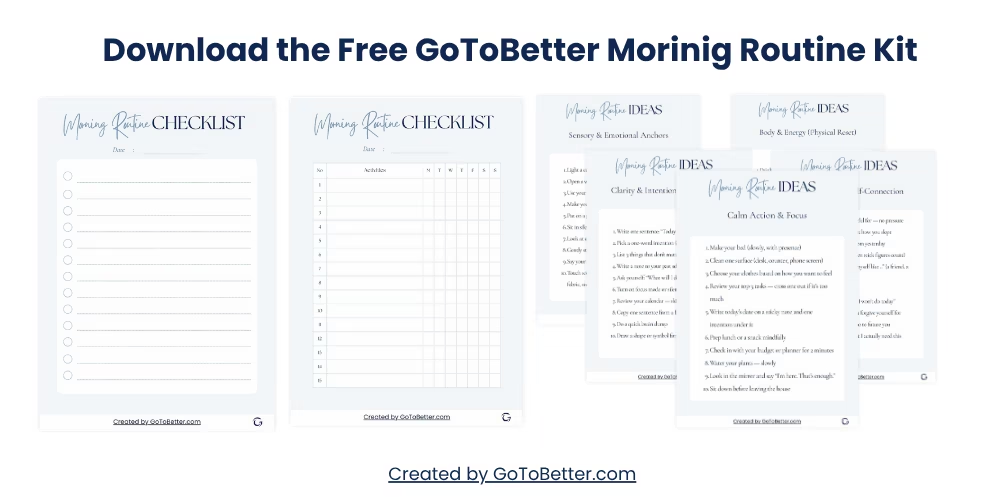
Before you go further, grab the free Morning Routine Kit. It includes:
- 50 Morning Routine Ideas — a categorized list of flexible actions for any morning
- Daily Morning Routine Template — map your flow day by day without over-scheduling
- Weekly Morning Planner — experiment with different versions and see what works
These tools are simple, printable, and designed to keep you grounded while you build a routine that fits your life.
Write your email and get your Free Morning Routine Kit here ↓
Why Morning Routines Break Down (and How to Avoid It)
Some mornings look perfect on paper and chaotic in real life. That gap usually comes from three things: planning by the minute, ignoring transitions, and stuffing in too many tasks. A sustainable, realistic daily schedule treats mornings like a flow, not a checklist.
You might notice the pressure to wake up earlier as the only fix. It isn’t. Packing more into the same hour just compresses your nervous system. Instead of clarity, you get hurry. The point of a morning routine schedule is to create a calm start to day—not a race against the clock.
Another trap is copy-pasting a stranger’s routine. It may look inspiring, but it doesn’t know your school run, medication window, or commute. When a plan ignores context, it punishes you for being human. Better: build a structured morning plan that fits today’s constraints, not a fantasy week.
Last, there’s the myth that precision equals progress. Many guides push 15-minute slots for everything. The result? Micro-deadlines that keep you checking the clock instead of moving with intent. Choose fewer blocks, add breathing room, and protect transitions between tasks so your plan survives reality.
GoToBetter says it like this: “Transitions matter more than start times. Protect the handoffs and the morning will hold together.”
Bottom line: if your morning plan leaves zero room for being a person, it will break. A flexible morning routine that includes buffers, transition anchors, and time blocking that breathes is what holds up when life gets noisy.
Time Blocking That Breathes (Without Over-Scheduling)
Time blocking is powerful—when the blocks are generous. Think in ranges, not minutes. Use anchors (coffee finished, kids’ shoes on, laptop open) to mark transitions between tasks, then add buffer time so every block can slip a little without derailing the whole plan.
Often, the simplest way is to group tasks by energy and context. Put all quiet, solo work together. Put all movement together. Put all “out-the-door” steps together. Then place buffers around the edges. This is buffer time schedule logic, not perfectionism.
| Block | Transition Anchor | Buffer (min) | Purpose |
|---|---|---|---|
| Wake + Reset | Glass of water finished | 5–10 | Let the body catch up before decisions begin. |
| Movement | Shoes on / mat rolled out | 5–10 | Absorb delays without skipping movement entirely. |
| Planning | Notebook open / calendar visible | 5 | Shift attention smoothly from body to brain. |
| Out-the-Door | Bag zipped / keys in hand | 10–15 | Account for misplaced items and last-minute needs. |
Notice how each block uses a physical anchor. These anchors do the heavy lifting: they reduce decision friction and make time feel less brittle. Your goal isn’t to fit more tasks; it’s to make the flow sturdy. That’s how a morning routine schedule stays intact when a child needs help, a pet needs attention, or you simply move slower than planned.
GoToBetter InsightStart with three blocks and two anchors. Then add buffers around each block. It’s easier to expand a stable plan than to rescue a fragile one.
Use time blocking morning logic to group what belongs together, and let buffers absorb the mess. Fewer blocks, cleaner handoffs, better mornings.
Plan by Energy, Not Just the Clock
A schedule that respects physiology lasts longer than one that worships precision. Light exposure, temperature, and sleep debt shape your alertness more than motivation does. Neuroscience voices like Andrew Huberman emphasize timing light and movement to support circadian rhythm. Build around energy patterns first; the clock is second.
Map your first two hours by how your mind actually feels. If you’re foggy in the first 20 minutes, make the first block mechanical: water, light, simple movement. If focus peaks after breakfast, place planning there. This is energy-based scheduling—you design around the nervous system you have today.
Habit stacking helps here, but only when it reflects your body’s pace. “Coffee → stretch → open calendar” is a smooth chain because each step prepares the next. “Email → cardio → deep reading” is a rough chain because arousal and attention zig-zag. Keep chains consistent inside each block so transitions feel like slides, not jumps.
GoToBetter says it like this: “A calendar should reflect the nervous system. If the body says ‘slow,’ the plan should, too.”
If mornings are volatile (kids, shifts, chronic pain), design “high” and “low” variants of the same block. On low days, keep the anchor but trim the content. The routine stays recognizable, which keeps momentum intact—even when capacity is limited.
Flexible Schedules You Can Adapt (Real-World Flow)
Some mornings, it feels like everything moves at once. Rather than force a perfect script, build variants you can swap without re-planning. This creates a consistent daily routine that adapts on the spot.
Variant: School-Run Parent
Wake + Reset (water, light, window) → Movement (5–10 min stretch while breakfast cooks) → Planning (3 lines in notebook; check calendar) → Out-the-Door (pack, coats, keys). Keep a 10-minute buffer tied to “keys in hand.” On heavy mornings, the movement trims to a single mobility flow but the anchor remains. It’s a flexible morning routine that survives missing shoes.
Variant: Freelancer Between Clients
Wake + Reset → Planning (pick 1 task for today’s first deep block) → Movement (short walk) → Deep Work Prep (close tabs, noise controls) → Start. Tie the transition between tasks to “calendar event opened.” If a call arrives early, buffer absorbs it; the structured morning plan doesn’t collapse.
Variant: Early Class Student
Wake + Reset → Movement (stairs or bike to campus) → Planning (2-minute scan of deadlines) → Class. The buffer sits between movement and planning to catch dorm delays. If sleep is short, swap movement for a bright-light exposure and slow breathing. Same anchors, adjusted load.
Each variant keeps anchors and buffers stable so identity stays intact. That’s how a morning routine schedule becomes something you can trust—not because it’s rigid, but because it’s designed to bend.
Add Habits Without Overloading (Gentle Stacking)
Habit stacking works when it respects context. Add only one small behavior per week, and attach it to an anchor already in your plan. After “water glass empty,” journal one sentence. After “mat rolled out,” do five slow squats. These are healthy morning habits because they borrow momentum from the step before them.
Keep stacks inside a single block. Crossing blocks (“after breakfast, answer one email”) invites context switching and time creep. If the stack requires gear or setup, bundle it at the block boundary so the transition between tasks stays smooth. The calendar shows blocks; the stacks live inside them.
When deciding what to add, use a capacity check: can this habit survive a late wake-up, a spill, or a quick turnaround? If not, shrink it. A strong morning routine schedule survives ordinary problems. That’s how consistency compounds without ever feeling like overload.
GoToBetter InsightTry anchor → micro-action → optional extension. The micro-action guarantees a win; the extension rides the wave only if capacity is there.
Write down the stack under the block it belongs to. One line is enough: “After coffee, 1 line journal.” Over time, your structured morning plan becomes a set of reliable chains, not a pile of tasks.
Stay Consistent Without Rigidity
Consistency is not perfection; it’s reliability. Schedule a weekly 10-minute review to adjust buffers, remove one drag item, and protect the strongest anchor. That review is where a consistent daily routine is maintained—quietly, without drama.
Consider this quick self-check as you review: Where did you rush? Where did a buffer save the morning? Which block felt heavy? Which transition was smooth? The answers tell you what to nudge next week. Small edits keep the whole structure resilient.
If motivation dips, lower the load but keep the shape. Keep anchors and buffers, shrink the contents. The identity signal remains: “This is still my morning.” That’s often enough to carry you until energy returns.
To keep the emotional pressure low, write one permission line at the top of your plan: “Today counts even if I do the short version.” Then follow through. Over time, the calendar becomes proof that your plan fits real life, not the other way around.
Two questions help refine the next iteration: What’s the smallest change that would remove the most friction? What’s the single block that deserves more protection next week? Answering these keeps your adjustments focused and useful.
How to Build a Morning Routine Schedule With Buffers
This step-by-step keeps things simple: design a flow, protect the handoffs, and let buffers take the hit when life gets loud. Follow the steps in order once, then iterate weekly.
Step 1 – Map Your Anchors
List 3–4 anchors already in your morning (water glass empty, shoes on, bag zipped, laptop open). These mark transitions between tasks and will become your handoff points.
Step 2 – Choose Three Blocks
Group your morning into three generous blocks (Wake + Reset, Movement, Planning/Out-the-Door). Fewer blocks mean fewer chances to stall.
Step 3 – Add Buffers Around Each Block
Place 5–15 minutes around each block. Let buffers absorb delays so the flow holds. If you’re frequently late, increase the outgoing buffer.
Step 4 – Stack One Micro-Habit
Attach one tiny action to an anchor inside a block (after coffee, one-line journal). Keep it small enough to survive messy days.
Step 5 – Test for Seven Days
Run the plan for a week without changing it. Notice where you rushed, where buffers helped, and which block felt heavy.
Step 6 – Adjust Using Energy Notes
Match blocks to your natural alertness. Place planning at your first focus peak; move movement earlier if it wakes you up reliably.
Step 7 – Prepare a Low Version
Create a shorter, low-capacity variant for each block (two stretches instead of ten, one-line plan instead of a full review). The anchors stay; the load shrinks.
You’ll notice this isn’t about perfect timing. It’s about flow. Think of your morning like a runway, not a racetrack—the job is to build speed smoothly and take off, not to win a lap time.
GoToBetter Mini Tool: The 1-Minute Buffer & Anchor Check
Use this quick check to make your morning flow sturdier tomorrow. Grab a pen or notes app and complete the steps now.
- Write three anchors you already do each morning (e.g., “water glass empty”, “shoes on”, “bag zipped”).
- Next to each anchor, add a buffer number you can protect (5, 10, or 15).
- Circle the anchor that most often feels rushed. Increase its buffer by +5 minutes for tomorrow only.
- Choose one block (Wake + Reset, Movement, Planning/Out-the-Door). Write a “low version” you’ll use on busy days (one line journal, two stretches, two-minute plan).
- Set a cue: add one calendar reminder titled “Protect the handoff” at the time of your circled anchor.
- Commit to one change for tomorrow: “I’ll keep the anchors the same and shrink the load, not the buffer.”
Want to Keep Going? Here’s What Helps
You’ve built the logic: generous blocks, clear anchors, and buffers that hold. Keep refining in small steps and your mornings will feel steadier week by week.
This support article is part of the broader Morning Routine pillar — a practical system for designing mornings that match real life, not wishful thinking.
Read The Ultimate Guide to Morning Routines — your no-fluff, real-life guide to building a routine that adapts as you do.
If you want something you can use right now, get the Free Morning Routine Kit. It includes three printable tools designed to help you plan, adapt, and reflect as you go:
- 50 Morning Routine Ideas — a categorized list of flexible actions for any kind of morning
- Daily Morning Routine Template — map or track your routine day by day
- Weekly Morning Planner — try different versions and see what actually works
Ready for a calmer start tomorrow? Enter your email and download the Free Morning Routine Kit. Keep it visible. Let it guide the first minutes — then let your buffers do the rest.
Morning Routine Schedule FAQ
How long should a morning routine last?
Most people do well with 60–120 minutes, spread across three generous blocks. Shorten or extend based on commute, family needs, and energy peaks. If time is tight, keep anchors the same and trim the load inside each block so your structure remains familiar.
Should I plan by minutes or by blocks?
Plan by blocks with buffers, not by the minute. Blocks reduce decision fatigue and protect transitions between tasks when life runs late. Use anchors like “coffee finished” or “bag zipped” to mark handoffs, then give each block 5–15 minutes of buffer time.
How do I add buffer time without waking earlier?
Keep wake time constant and shrink task load inside blocks instead. Maintain the same anchors and add +5 minutes around the most fragile handoff. For example, keep “keys in hand” as the out-the-door anchor but simplify breakfast or movement on busy days.
What if kids or unexpected events derail me?
Create “low versions” of each block so the morning routine schedule stays recognizable under stress. Keep the anchor identical and reduce the steps (one stretch, one line plan, grab-and-go breakfast). The shape holds, which preserves momentum and reduces guilt.
Can this approach work for shift workers?
Yes — anchor-based blocks adapt well to shifting clocks. Place light exposure and gentle movement early to signal “morning,” then add planning at your first alertness peak. Keep the same anchors across shifts and adjust buffers to match the day’s constraints.
Ready to Build Your System?
When daily check-ins start to feel grounding, it’s a good moment to build a clear view of your habits and wellness — without adding complexity.
The Ultimate Habit Tracker (Google Sheets)
- Fully customizable with automated updates and clear, dynamic visuals
- Track daily, weekly, and monthly habits across devices — your data stays in your Google account
- Weekly review space to see patterns and keep momentum, with light gamification to stay motivated
Wellness Tracker (Google Sheets)
- Log mood, sleep, and wellness habits in one place with automated summaries
- Designed to support simple, consistent check-ins that inform your routine choices
Self-Care Habit Tracker (Google Sheets)
- Track up to 30 self-care actions with visual progress and customizable categories
- Keep self-care visible and manageable alongside your morning blocks
Or explore all planners and trackers built for real life: GoToBetter Shop.