
+Free Morning Routine Kit (3 printable planning tools)
Mindful morning practices help you start the day grounded and clear-headed — whether you want calm rituals, sensory awareness, or just a gentler way to begin. Includes: breath practices, simple self-care, grounding tools, and real-life scenarios.
By GoToBetter | Tested by real life, not just theory
What Is a Mindful Morning?
A mindful morning isn’t about waking up early, tracking streaks, or squeezing in productivity before breakfast. It’s about presence, breath, and intention. A calm start where even small rituals — sipping tea, stretching, noticing light — help you feel connected before the day pulls you away.
And because most mornings are messy, you don’t need hours or silence. You need just one or two mindful pauses that shift how the whole day feels.
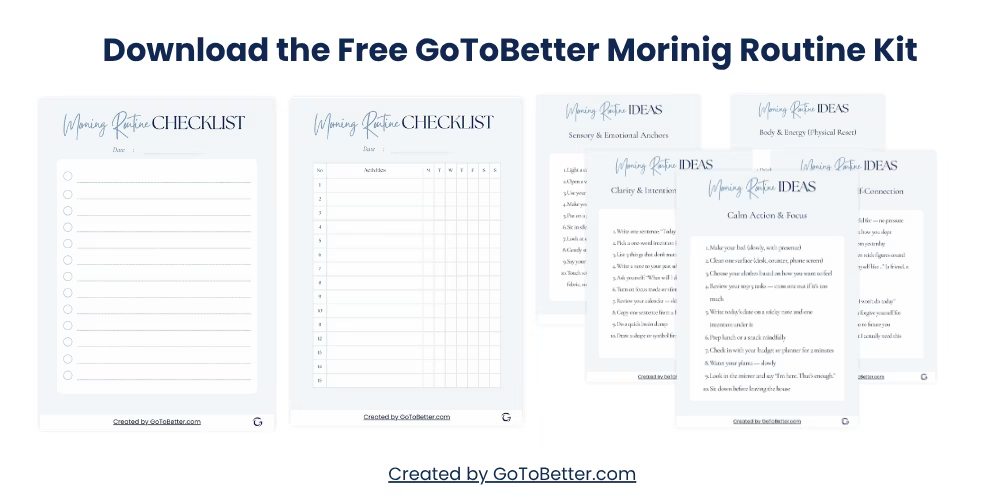
Before you go further, grab the free Morning Routine Kit. It gives you three simple printables to experiment with your mornings:
- 50 Morning Routine Ideas — flexible actions you can circle or swap.
- Daily Morning Routine Template — space to sketch or track what works.
- Weekly Morning Planner — try versions side by side and reflect.
Use them to circle, sketch, or experiment — no pressure, just something real to hold as you find your rhythm.
Write your email and get your Free Kit here↓
Why a Mindful Morning Feels Different (Not a Productivity Hack)
A mindful morning feels different because the goal isn’t speed or output — it’s feeling present in your own life. It’s a presence over output approach that gently reorients attention before the day starts pulling on it.
Think of it like stepping onto soft flooring right after waking — there’s support underfoot. Sensory awareness comes first: temperature on skin, the taste of water, the weight of the blanket, the light behind the curtains. This is not about doing more. It’s about noticing what is already here.
As Jon Kabat-Zinn teaches in mindfulness-based stress reduction, attention changes the quality of experience. Thích Nhất Hạnh writes about washing dishes in full awareness — not to finish faster, but to be fully alive while doing it. That same principle fits a mindful morning routine: the point is to be present during the first small acts of the day.
You might notice the impulse to optimize. To squeeze value from every minute. That’s the old script. A calm start to the day begins when attention lands on breath, body, light, and sound. Two slow breaths can be enough to shift the tone. The morning doesn’t have to earn its keep.
GoToBetter says it like this: “Presence is not measured in minutes — it’s found in moments.”
When the mind wants a plan, offer it something simple: sit up, breathe, sip. These slow morning practices create continuity between sleep and wakefulness. No apps, no timers, no streaks. Just presence and breath. That’s the architecture of a mindful morning — ordinary actions done with attention.
Over time, the nervous system starts to expect this gentler entry. A gentle wake-up becomes normal, not a luxury. And clarity later in the day often begins here, in the first quiet reflection of the morning.
Simple, Slow Morning Practices You Can Actually Keep
Often, the simplest way to keep a self-care morning routine is to pair one tiny action with a sensory cue. Keep it small enough to do even on hard days. Choose one. Let it be your anchor for a week.
The ideas below use everyday grounding techniques — breath, touch, temperature, light — because they’re reliable and always available. Pick what already fits your space and energy.
| Sensory Cue | Tiny Action | Why It Helps |
|---|---|---|
| First light through the window | Place a hand on chest and take two slow breaths | Links waking with presence and breath; lowers morning reactivity |
| Feet touch the floor | Notice contact for five seconds | Creates a grounded start and a calm start to the day |
| Water glass on the nightstand | Sip slowly and feel temperature | Simple sensory awareness shifts attention out of autopilot |
| Kettle clicks off | Smell the steam before pouring | Micro-pause builds quiet reflection into routine |
| Bathroom mirror | Name one intention in seven words or fewer | Morning intention setting guides tone without scheduling |
| Shower warmth | Relax shoulders on the exhale | Softens tension with body-first awareness |
You might notice resistance at first. That’s normal. Keep it friendly. Choose one practice and allow it to be small. Let it be the “note on your fridge” for your attention — always in sight, never demanding.
GoToBetter InsightStart with one sensory cue and one tiny action. Then adapt after a week. Small anchors create durable habits without pressure.
When a practice sticks, consider a second anchor later in the morning — not as an upgrade, but as a natural extension. Keep the tone gentle. A mindful morning is sustained by one calm minute, repeated, not by complexity. Choose less so you can actually keep it.
Staying Present When the Morning Is Rushed
Some mornings, it feels like there’s no room for anything. That’s exactly when presence can help most. The practice adjusts to your reality; it never demands a new schedule.
Before the breakfast rush, a parent stands still for two breaths at the sink, feeling the cool counter under fingertips. Nothing public. Nothing dramatic. Just a tiny reset. Later, during a commute, headphones stay in the pocket for one stop while attention maps the rhythm of footsteps and the air on cheeks. The day keeps moving; attention gets steadier.
A student sits at the edge of the bed and stretches ankles slowly before checking messages. Two circles each way. Notice heat, tightness, release. That’s mindfulness in motion. A remote worker watches the kettle and counts three exhales before opening the laptop. No gold stars. Just a cleaner handoff between home and screen.
GoToBetter InsightUse transit moments as anchors instead of adding new tasks. Everyday transitions are prebuilt pauses.
If the mind argues that two breaths won’t matter, test it. Notice the tone before and after. Does the body feel 2% softer? Does the jaw drop a little? That’s your data. A mindful morning doesn’t require special conditions. It requires notice before doing.
Reflection helps the practice fit better over time. Ask quietly: What made presence easier today — light, sound, warmth, stillness? What got in the way? Adjust your cue, not your worth. The practice serves you, not the other way around.
Myths That Keep Mornings Tense (Debunked)
There are a few stories that make mornings harder than they need to be. Let’s dissolve them and keep what actually helps.
Myth 1 — Long meditation is required
Reality: two to three breaths can shift state. Mindfulness isn’t paid for in minutes. It’s paid attention. If a seated session fits, great. If not, let breath and sensing be enough. A mindful morning routine is valid at any length.
Myth 2 — Mindful means “spiritual”
Reality: awareness is a human skill. Not a membership card. Anyone can feel water’s temperature, hear birds, or name an intention in the mirror. That’s practice, not performance.
Myth 3 — It’s a productivity hack
Reality: chasing output often flattens attention. Presence can improve decisions later, but that’s a side effect, not the point. Keep the focus on short still counts and calm clarity, not metrics.
Myth 4 — Wake at 5 A.M. or fail
Reality: the clock is not the standard. The standard is whether you feel connected. If dawn helps, fine. If not, let your first mindful moment happen whenever you wake. Consistency of noticing beats consistency of scheduling.
GoToBetter says it like this: “The best morning isn’t efficient. It’s one that feels like yours.”
If you ever feel pressure building, simplify. Drop back to a single anchor: water, light, or breath. When presence rises, tension drops. That’s the trade worth making.
Real-Life Ways to Apply This (Without Changing Your Schedule)
Small anchors fit inside real mornings. On school days, attention lands on the warmth of a mug while backpacks get zipped. On travel days, a slow breath meets the cool air at the airport door. On late-start weekends, sunlight on the floor becomes the cue to stretch calves against the wall for ten seconds.
In shared apartments, silence is scarce. So presence becomes quieter: feel the fabric of a sweater before putting it on; name one word (steady, curious, soft) that sets tone. In busy homes, the first step onto the hallway rug becomes a check-in. Is the jaw tight? Soften it. Is breath high in the chest? Let it drop.
When stress runs high, use temperature as a reliable lever. Wrap hands around a warm cup. Rinse wrists in cool water. Temperature draws attention into the body fast — a portable grounding technique when noise and demands spike.
For those craving more connection, try a brief gratitude line that stays concrete: “sun on the table,” “quiet kettle,” “sleepy dog.” Keep it sensory. Keep it true. This stays far from a performance list and close to quiet reflection. Over days, the list becomes a record of being here, not a badge.
None of this requires a plan. The plan is being present. The rest follows. That’s how a mindful morning carries into the day without force.
How to Create a 5-Minute Mindful Morning
This simple guide keeps technology out and attention in. Use one step or all five. Let comfort lead.
Step 1 – Start with Two Breaths
On waking, place a hand on chest or belly and take two slow breaths. Notice the rise and fall. Let the exhale be slightly longer.
Step 2 – Open One Sense
Pick a single sensory door: light, sound, temperature, or touch. Give it five seconds of full attention. Name it silently.
Step 3 – Set a Seven-Word Intention
Speak one short line to guide the tone. Example: “Move slowly, speak kindly, breathe before replies.” Keep it under seven words if possible.
Step 4 – Move Gently for Ten Seconds
Roll shoulders, circle ankles, or stretch calves against a wall. Keep the movement small and friendly. Notice sensations as they change.
Step 5 – Protect the First Minute
Before touching messages, give one more minute to being here: sip water, look at light, feel the floor. Let the day meet you, not the other way around.
GoToBetter Mini Tool: The 1-Minute Sensory Anchor
Use this quick exercise to lock in a calm start tomorrow. No apps, no timers — just attention and one tiny choice.
- Pick one cue you always meet in the morning (light at the window, feet on the floor, kettle click, mirror).
- Write one tiny action you will pair with that cue (two slow breaths, name a seven-word intention, feel the cup’s warmth).
- Describe the sensation you expect to notice (temperature, contact, sound, stretch) in five words or fewer.
- Set a single boundary for the first minute (no messages until after the cue + action).
- Commit with one line you can say aloud tomorrow: “When I meet [cue], I will [action].”
Want to Keep Going? Here’s What Helps
What you did here is small on purpose: attention first, everything else later. Keep that shape. Let your mindful morning routine grow only as far as it stays kind.
This support article is part of our Morning Routine pillar — a calm, real-life approach to starting the day without pressure or performance.
Read The Ultimate Guide to Morning Routines — your no-fluff, real-life guide to building a morning that fits you, not the other way around.
If you want a friendly nudge tomorrow, grab the Free Morning Routine Kit — three printable tools that make experimenting simple:
- 50 Morning Routine Ideas — flexible, real actions you can circle and try.
- Daily Morning Routine Template — a clean space to map or track what worked today.
- Weekly Morning Planner — compare versions side by side and see what actually sticks.
Enter your email, download the kit, and keep it nearby. It’s a gentle prompt when you wake and a quiet check-in when life gets noisy.
Get the Free Morning Routine Kit below ↓
When you’re ready for a broader view later, a structured tracker can help connect mornings with the rest of your day. The Ultimate Habit Tracker in Google Sheets is customizable, visual, and lives in your own account — useful when you want patterns, not pressure.
Mindful Morning FAQ
What is a mindful morning routine?
A mindful morning routine is a short sequence of simple actions done with full attention. Instead of chasing output, it centers presence and breath during the first moments of the day. Think two slow breaths, noticing light, or sipping water with sensory awareness.
How do I start a mindful morning if I only have 2 minutes?
Pair one everyday cue with one tiny action. For example, when feet touch the floor, take two slow breaths and name a seven-word intention. If you forget, use the next cue (kettle click, mirror) and begin there — the window to start is always open.
Do I need meditation experience or apps to do this?
No. A mindful morning works with ordinary sensations, not technology. Use grounding techniques like temperature, touch, sound, and gentle movement. If seated practice helps later, add it — but it’s optional, not required.
Does a mindful morning help with morning anxiety?
Yes — brief sensory attention can reduce reactivity and create a calmer handoff into the day. Two breaths, a warm mug, or noticing light can downshift the nervous system. If anxiety persists, keep the practice tiny and repeat it at the same cue each day.
Is morning or evening better for mindfulness?
Both work, but morning sets the tone before habits cascade. Use mornings for presence and breath, and evenings for reflection if that feels natural. Choose the slot that you can keep on your busiest days.
Ready to Go Deeper?
When check-ins start to feel steady, it can help to see everything in one clear view. The trackers below are built for real life — simple to start, customizable when you need more.
Ultimate Habit Tracker (Google Sheets)
Fully customizable with daily, weekly, and monthly views; automated updates and clear visuals to focus on what matters. Lives in your own Google account for privacy.
Wellness Tracker (Google Sheets)
Organize mental health, mood, sleep patterns, and wellness habits in one place with simple logs and readable summaries — designed to support steady, human-scale change.
Self-Care Habit Tracker (Google Sheets)
Track up to 30 self-care activities with gentle prompts and visual progress. Customize categories and routines to fit your energy and season.
Explore all trackers in our shop — from quick daily check-ins to fuller reflection systems, built to grow with you.