
+Free Printable Habit Change Planners (6 Worksheets Inside)
How to stop bad habits isn’t just about willpower — it’s about recognizing your patterns, disrupting the loop, and building something better in its place. This article includes: expert-backed strategies, real-life examples, and printable planning worksheets to help you break bad habits step by step.
By GoToBetter | No pressure, just tools that work
How to Stop Bad Habits with Practical Tools and Everyday Shifts
You don’t need to overhaul your life or summon endless discipline to stop a bad habit. What you need is clarity: what’s triggering the behavior, what’s keeping it in place, and how to shift it — one small decision at a time.
This article shows you how to stop bad habits using research-backed strategies, real-world tactics, and printable tools that actually help you interrupt the cycle. You’ll learn how to spot habit loops before they start, how to use extinction and substitution wisely, and how to stay consistent without chasing motivation.
And to make it easier, we’ve created a free kit you can download and use right away — no setup, no guilt, no perfect day required.
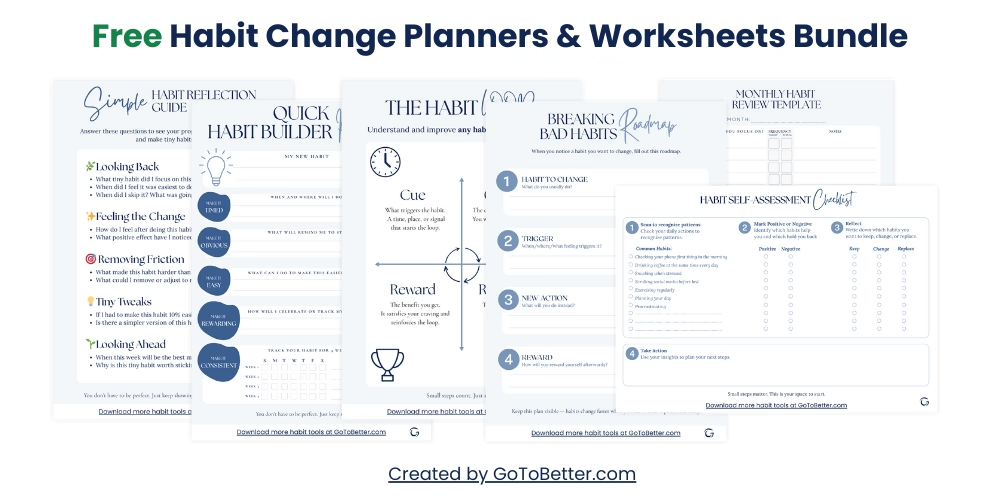
Here’s what’s inside the Free Habit Change Planner Bundle:
- Breaking Bad Habits Roadmap — helps you identify triggers, map out your replacement plan, and choose simple reinforcement strategies that stick.
- Habit Loop Graphic — visualize why the habit feels automatic and where to disrupt the cycle.
- Habit Self-Assessment Checklist — reflect on which habits drain you and which ones are shifting.
- Monthly Habit Review Template — track subtle progress without pressure or performance goals.
- Quick Habit Builder Planner — design a tiny replacement habit when you’re ready.
- Simple Habit Reflection Guide — pause and notice what’s working, even in the smallest ways.
Whether you’re trying to stop doomscrolling, late-night snacking, or self-sabotaging thoughts — this kit will help you understand what’s happening and guide you through change that lasts.
Write your email and get your Free Kit here↓
How to Stop Bad Habits When They Feel Impossible
Bad habits aren’t proof that you’re lazy, broken, or unmotivated. They’re proof that — at some level — the habit is giving you something your brain wants. That’s why it sticks.
If you want to know how to stop bad habits, don’t start with pressure. Start with one honest question: What is this habit actually doing for me? Most so-called “bad” habits aren’t random — they provide comfort, control, distraction, or a momentary sense of relief. Even if they cause problems later, they make something easier now.
Most habits run on a simple loop — cue, behavior, reward. But you don’t need a PhD in behavior theory to break them. You need leverage. You need something real to hold onto when the urge shows up — even if it’s just a pause, a breath, or a better option nearby.
This is how to stop bad habits when they feel impossible:
Not with force. With visibility.
Not with guilt. With one small moment of choice.
GoToBetter says it like this: “A bad habit is just a shortcut your brain keeps trusting.”
The 3 Proven Paths: Extinction, Substitution, and Interruption
If you want to know how to stop bad habits effectively, you need to choose the right approach for the moment. Most guides tell you to “replace” the habit — but that’s just one strategy. There are actually three science-backed ways to break bad habits:
- Extinction: letting the habit loop die off by not reinforcing it with the usual reward.
- Substitution: replacing the habit with a different action that satisfies the same cue.
- Interruption: deliberately pausing or disrupting the pattern before it completes.
Each method has its place. Substitution works well for physical behaviors like snacking or scrolling. Extinction is useful when you know the habit is mostly psychological — like overchecking, avoidance, or internal spirals. Interruption is ideal when you’re not ready to replace the habit, but still want to reduce its hold on you.
Learning how to stop bad habits means choosing the right technique at the right time — not expecting one fix to work for everything.
GoToBetter says it like this: “You can’t outmuscle a habit you don’t understand.”
How to Spot and Change Habit Cues
Most habits aren’t random. They start with a cue — something in your environment, emotions, time of day, or internal state that triggers the behavior. If you want to stop a bad habit, you have to spot what’s starting it.
Common cues include:
- Time of day (e.g., late at night)
- Emotional state (e.g., stress, boredom)
- Environment (e.g., seeing your phone or fridge)
- Social triggers (e.g., being around certain people)
Tracking when and where a habit happens — even just with quick notes — helps you identify the loop. From there, you can either remove the cue, shift your response, or insert a pause.
In the free kit, you’ll find a printable worksheet that helps you map out your habit cues, so you’re not guessing anymore.
GoToBetter says it like this: “The cue doesn’t disappear, but your response can.”
Extinction Techniques: When Replacing Isn’t Enough
Not every bad habit needs a replacement. Sometimes the most effective way to stop it is to let it fade — by no longer giving it the payoff it expects. This approach is called extinction, and it works by consistently breaking the connection between cue and reward until the behavior loses its grip.
Extinction isn’t about punishment. It’s about removing the reinforcement that kept the habit alive. For example, if you’re used to picking up your phone the moment you feel awkward in silence, the cue is discomfort, and the reward is distraction. The extinction path means sitting through the silence without grabbing the phone — over and over — until the urge fades.
This can feel uncomfortable at first. Your brain expects the loop to complete. When it doesn’t, it protests. That protest — the internal restlessness or craving — is a sign the extinction process has started. The more you hold the line, the weaker the link becomes.
GoToBetter says it like this: “A habit starves when the loop no longer pays off.”
One of the most overlooked parts of extinction is preparing for discomfort. If you just try to “be strong,” the urge will win. But if you expect the tension and name it (“this is the craving passing”), you shift from being inside the habit to observing it.
GoToBetter InsightLabel the discomfort as part of the habit dying off. It makes the craving easier to sit with — and gives it less control.
You might notice the urge gets louder before it gets weaker. That’s normal. It’s called an extinction burst — a temporary intensifying of the behavior before it fades. It’s the brain’s last push to get the reward it expects.
Here’s where most people give up: they interpret that surge as a failure or sign that the habit is “too strong.” But really, it means you’re close to breaking it. If you can ride that wave once or twice, the intensity often drops quickly.
GoToBetter Mini Tool: Discomfort Labeler
Next time you feel the urge to fall into a bad habit, pause for 10 seconds. Then mentally label what you’re feeling with one of these:
- “This is the craving talking.”
- “This is the extinction burst.”
- “This is the loop looking for its reward.”
Say it clearly in your mind or write it down. You’re not suppressing the habit — you’re observing it from outside the loop.
Over time, this builds a tiny space between trigger and action. That space is what breaks the loop. You don’t need to replace the habit right away — you just need to interrupt it long enough for the link to weaken. This is how to stop bad habits when you’re not in the mood to build something new.
Substitution Strategies That Actually Stick
Some habits don’t just need to stop — they need to be redirected. That’s where substitution comes in. The idea is simple: instead of trying to eliminate the habit cold, you swap it with something less harmful or more aligned with your values. But the challenge is finding a substitute that actually works.
Most substitution attempts fail because they don’t satisfy the same need. You might tell yourself, “I’ll drink water instead of snacking,” but if the real need was comfort or stimulation, water doesn’t cut it.
Here’s how to make substitution work:
- Identify the real function of the habit — What is it giving you? Relief? Control? Stimulation?
- Choose a substitute that hits the same psychological note, even if it looks totally different on the surface.
- Make the new habit as frictionless as the old one. If it takes more effort, it won’t stick under pressure.
If doomscrolling gives you a dopamine hit after a long day, a 3-minute music break might do the same without the side effects. If biting your nails soothes anxiety, rubbing a texture stone or tapping your fingers can redirect the sensory input.
GoToBetter says it like this: “If the habit soothes, the substitute must soothe. If it stimulates, so must the swap.”
This is one of the most nuanced parts of learning how to stop bad habits: recognizing that the habit isn’t the problem — it’s the placeholder. And you don’t remove a placeholder without putting something real in its place.
GoToBetter Mini Tool: Substitution Finder
Choose a bad habit you want to break. Then answer:
- What emotion or need shows up right before the habit starts?
- What short activity would meet that same need, even just a little?
- How can I make that new action available in 10 seconds or less?
Write it out and keep it visible — next to your desk, phone, or mirror.
Over time, you’re not just doing something different — you’re training your brain to expect a different reward. And that’s when change starts to stick.
What to Try Instead: Real Substitutes That Actually Help
Not every habit is physical — and not every substitute needs to be clever. Sometimes you just need a way to hit the same emotional or sensory note with less damage. These aren’t perfect swaps. They’re *placeholders with intention* — ways to gently rewire the loop instead of letting it run wild.
Here’s a quick-start map to help you choose better substitutes based on what the habit actually gives you. This is how how to stop bad habits becomes real — not by force, but by fit.
| If your habit gives you… | Try instead: | Why it works |
|---|---|---|
| Sensory stimulation (scrolling, snacking, biting nails) | Fidget tools, crunchy snacks, textured objects, cold water splash | Meets the body’s need for input or distraction — without the same long-term cost |
| Emotional regulation (comfort, escape, numbing) | Brief self-touch (hand on heart), safe self-talk line, soothing playlist | Gives the nervous system a signal of safety or care — just enough to shift gears |
| Social belonging (people-pleasing, reactive texting, approval-seeking) | Short “wait before reply” habit, one safe check-in with your own values | Interrupts autopilot response and builds self-alignment before action |
| Control or structure (over-planning, list-making, organizing) | 3-breath reset, 1-minute “what actually matters now” check | Maintains agency — but reduces compulsive rigidity or overwhelm |
| Overthinking or analysis spirals | Physically grounding cue (e.g., “Name 3 things I see”), brain dump on paper | Moves energy from looping thought into grounded action |
| Performance high (rush of success, urgency, multitasking) | Quick body movement + deep breath + intentional restart | Channels intensity without falling into overdrive loops |
You don’t need to guess anymore. Substitution works best when you respect what the habit was doing for you — then offer it something better. Not perfect. Just better. That’s enough to start turning the loop in a new direction.
GoToBetter says it like this: “Substitute the function — not just the form.”
Interruption Strategies: Break the Loop in Real Time
Sometimes you’re not ready to fully stop a habit — and you’re not sure what to replace it with yet. That’s where interruption comes in. This strategy is about pausing the habit loop before it completes, even if you don’t do anything else.
Interruption works best when:
- You’re stuck in automatic behaviors (like overchecking or mindless scrolling)
- You’re aware of the habit but can’t change it yet
- You want to build awareness before attempting a replacement
If you’re wondering how to break bad habits without a full plan or perfect substitute — this is the move. Interruption gives you just enough space to catch yourself before the habit runs on autopilot. That pause is where change begins. You don’t need to win every time. You just need to interrupt the cycle once in a while.
It’s a gentle but powerful way to start learning how to break bad habits without pressure, punishment, or perfect timing. Just awareness — and a little friction in the right place.
GoToBetter says it like this: “You don’t need to stop the habit. Just interrupt the script.”
GoToBetter Mini Tool: 10-Second Pattern Break
When you feel the habit urge building, try this:
- Pause for 10 seconds — do nothing.
- Say (out loud or in your head): “This is the loop. I’m inside it.”
- Touch something physical (desk, floor, wall) to ground yourself.
This tiny shift weakens the link between cue and automatic action. Over time, the script loses its grip.
Interruption is the lowest-pressure strategy — and often the most overlooked. It doesn’t require motivation. Just a micro-second of noticing. That’s enough to start breaking the loop.
How to Interrupt Mental Habits (Like Overthinking or Self-Blame)
Not all bad habits are visible. Some run silently in the background of your mind — like spirals of self-blame, catastrophizing, or endless replays of what went wrong. These are still habits. These are still habits. They form predictable patterns — and yes, they can be interrupted. And yes, they can be interrupted.
If you want to know how to stop bad habits like overthinking, here’s the trick: you don’t argue with the thoughts — you break the pattern that keeps them looping. Interruption doesn’t mean fixing the thought. It means stepping out of the mental rut, just long enough to reset.
GoToBetter says it like this: “You can’t outthink a thinking habit. But you can break its rhythm.”
GoToBetter Mini Tool: Mental Loop Reset
When you catch yourself mid-spiral, try this 30-second pattern break:
- Name the mental habit out loud or in writing (e.g. “self-criticism loop”).
- Stand up and change your physical position — even just stretch your arms or walk to another room.
- Say: “This isn’t helping. I’m breaking the rhythm.”
You’re not trying to solve the thought. Just cut the loop. That’s enough.
This is one of the most overlooked forms of habit change. Because mental habits don’t feel “real,” we forget they follow the same rules. But once you interrupt them consistently, their pull weakens. That’s how to stop bad habits even when they’re invisible.
Examples of Mental Habits (And How to Interrupt Them)
These aren’t full solutions — they’re small pattern-breakers. Think of them as mental first aid: just enough to spot the loop and loosen its grip for a moment. Everyone’s brain runs different scripts. The goal isn’t to fix everything — just to notice what’s happening, and try something. Anything. That’s the first step toward how to stop bad habits that live in your mind, not just your body.
Try one. If it doesn’t help, try another. You’re not failing — you’re observing. That’s already progress.
| Mental Habit | What It Feels Like | Realistic Interruption |
|---|---|---|
| Overthinking | Your mind spirals into decisions, plans, or possibilities — none of which feel settled | Whisper: “I’m looping.” Then do one grounding action (stand, exhale slowly, name your feet) |
| Self-blame | A quiet inner monologue tearing you down over something you can’t change | Pause. Ask: “Would I say this to someone I love?” Then repeat their version — not yours. |
| Catastrophizing | You jump straight from a small trigger to the worst-case scenario — before it even starts | Name 2 other possible outcomes — not “positive,” just *realistic*. Say: “It’s not settled yet.” |
| Ruminating | Replaying a mistake, memory, or moment hoping it’ll feel resolved “this time” | Notice the urge to “re-fix” the past. Say: “This won’t give me peace.” Breathe out twice. |
| Social Comparison | You scroll or reflect — but end up feeling behind, small, or not enough | Say out loud: “This is a story, not a truth.” Then name something in your space, now. |
| Future Rehearsal | You mentally practice a future moment so many times it starts to feel threatening | Write one real sentence you could say. Stop. Let it be unfinished. |
Again: you don’t need to win the thought battle. You just need to know when you’re in one. That moment of recognition — even if messy, imperfect, and late — is how you start to break bad habits that run in your head instead of your hands.
GoToBetter says it like this: “You can’t outthink a thought loop. You can only step outside it.”
What Not to Do (Even If It Sounds Logical)
Most people don’t fail to break bad habits because they’re lazy or uncommitted. They fail because they’re using strategies that were never going to work in the first place. If you’ve ever wondered how to break habits and actually make it stick — start by knowing what not to do.
These common mistakes sound logical on the surface. But in practice, they keep the habit loop alive — or even make it stronger.
- “I’ll just stop doing it.”
This is the classic trap. If the habit is automatic and rewarding, stopping without changing the cue or payoff is like trying to hold your breath forever. It works for 3 minutes. Then the loop takes over. - Trying to replace the habit too fast.
Replacement works — but only if the new action satisfies the same emotional or sensory need. If not, it creates frustration, not change. That’s why understanding the function of the habit matters more than jumping into swaps. - Ignoring the cue.
You can’t break a loop you don’t see. If you’re trying to stop a behavior without knowing what’s triggering it, you’re fighting a ghost. Most habits don’t start randomly — they start on cue. Miss that, and you’re guessing in the dark. - Overcomplicating the plan.
Some people respond to failure by doubling down. “This time I’ll use 5 trackers, 3 alarms, and a 12-step checklist.” That’s not how to break habits. That’s how to burn out while looking productive. - Making it personal.
“I keep doing this because I suck.” No — you keep doing it because the loop is stronger than your strategy. Shame locks the habit in. The moment you make it about identity instead of pattern, change becomes much harder.
GoToBetter says it like this: “The loop wins when the strategy is wrong — not because you are.”
If this sounds familiar, you’re not alone. Most people were never taught how to break habits in a way that actually fits their real life. They were told to be stronger. Try harder. Stay motivated. But the truth is: bad habits don’t need punishment — they need better pattern disruption.
That’s what the rest of this guide is here for. To show you real ways to shift the loop — without guilt, without drama, and without waiting for a perfect day.
Ready to make your next attempt smarter than your last one? Keep going. This time, you’re not winging it.
How to Stop a Bad Habit Step by Step
This method simplifies the process of breaking a habit using cue-awareness, interruption, and substitution — no pressure, just clarity.
Step 1 – Spot the Loop
Pick one habit. Notice what usually happens before it: emotion, time of day, or situation. That’s your cue.
Step 2 – Label the Function
Ask yourself: What does this habit give me? Comfort, stimulation, escape, control? That’s the hidden reward.
Step 3 – Interrupt the Pattern
Next time the habit starts to play out, pause. Say: “This is the loop.” Do nothing for 10 seconds. Just notice.
Step 4 – Try a Substitute
Offer your brain something easier or better — a brief sensory shift, grounding cue, or action that meets the same need.
Step 5 – Repeat with Kindness
You don’t need perfection. Just show up for the loop a few more times with awareness. Change happens by pattern, not pressure.
The Role of Self-Control (and Why It’s Overrated)
Let’s say it directly: most people overestimate how much self-control they’ll have in the moment — and underestimate how much their environment, fatigue, or emotional state will shape their behavior.
The idea that stopping a bad habit is just about “trying harder” is not just unhelpful — it’s false. In most cases, people relapse not because they lack character, but because they walked into the same situation with the same cues and hoped this time would be different.
GoToBetter says it like this: “Willpower is a backup system — not a plan.”
Self-control is real, but it’s limited. It burns out faster when you’re tired, hungry, stressed, or emotionally overwhelmed. That’s why the smartest way to stop bad habits isn’t to rely on discipline — it’s to change the path of least resistance.
Here’s what that looks like in practice:
- Removing cues (e.g., deleting social media apps)
- Adding barriers (e.g., putting junk food in hard-to-reach containers)
- Creating physical friction (e.g., keeping your phone in another room)
- Changing context (e.g., moving work locations to avoid old triggers)
These small changes work not because you become a better person — but because the automatic part of your brain no longer has its usual path to follow.
GoToBetter InsightInstead of using energy to resist the old habit, use it to build an environment where the habit can’t run on autopilot.
So no, you don’t need more self-control to stop bad habits. You need fewer chances for the habit to hijack your attention when you’re vulnerable.
Real-Life Tools and Pattern Breakers That Actually Help
Some days, the idea of “changing your habits” feels too big. What helps more is having something small, grounded, and clear you can reach for in the moment — a sentence, a worksheet, a visual that breaks the loop just enough.
That’s why we built the free kit around habit-breaking tools that don’t require a full plan or new identity. They’re for messy days. For half-energy moments. For the times when you catch the habit halfway and still want to choose differently.
Let’s say you’re stuck in a habit of self-criticism every time you miss a task. You could open your Quick Habit Builder Planner and answer two prompts:
What did I actually do today? and What helped even a little?
That moment of reflection is enough to interrupt the usual spiral.
Or maybe you notice a habit of checking your inbox 30 times a day. You open the Habit Loop Graphic from the kit and trace the cycle:
Cue: boredom between tasks → Behavior: open email → Reward: small hit of control or purpose.
From there, you can experiment with a different behavior — like two minutes of music, or standing and stretching — that meets the same need without defaulting to the loop.
GoToBetter Mini Tool: Bad Habit Snapshot
One of the easiest ways to start learning how to stop bad habits is to notice what’s really happening around them — without judgment, just awareness.
Next time you catch yourself doing a habit you want to stop, take a quiet moment after. Don’t overthink it — just ask:
- What was going on right before I did it?
- What did I feel during it — relief, tension, boredom?
- What do I feel now?
Jot it down or just notice it. You don’t need to fix anything yet. This is the first step in how to stop bad habits that feel automatic: observing them in real life, not in theory.
This kind of gentle mapping matters. It gets you out of the all-or-nothing mindset. You’re not trying to “be better.” You’re just trying to notice more clearly — and change one thing, one layer at a time.
GoToBetter says it like this: “A habit isn’t a character flaw. It’s a loop. And loops can be rewired.”
GoToBetter Mini Tool: 1-Minute Habit Breaker Questions
Before your next habit loop starts, try this:
- What am I trying to feel less of right now?
- What feeling or outcome am I hoping this habit gives me?
- What’s a smaller, lower-effort action that could meet that same need — even a little?
Pause. Name the loop. Choose one micro shift. Even if it doesn’t work every time, you’re already changing how it ends.
Want to Keep Going? Here’s What Helps
Most bad habits don’t disappear overnight — but understanding them changes how much power they have. If you’ve made it this far, you already know how to stop bad habits starts with seeing them clearly and interrupting the cycle one step at a time.
This article is part of the GoToBetter Habit Change Series — a real-life approach to behavior change that skips the guilt and starts with small, doable shifts.
To explore the full method behind habit change, check out the full guide:
Read The Ultimate Guide to Breaking Bad Habits — it covers how habits form, why they stick, and what to do when motivation doesn’t show up.
And if you want help right now — with zero setup — the Free Habit Change Planner Kit gives you a printable, pressure-free path forward. It’s designed to help you understand why certain habits keep showing up — and exactly how to stop bad habits without relying on willpower alone.
Inside, you’ll find six clear worksheets to guide you step by step through the process of breaking old patterns and replacing them with better ones:
- Breaking Bad Habits Roadmap — pinpoint triggers, create a replacement plan, and choose how to reinforce new behaviors
- Habit Loop Graphic — visually map what makes certain habits feel automatic (and where to disrupt them)
- Habit Self-Assessment Checklist — reflect on what’s actually changing and where friction still shows up
- Monthly Habit Review Template — stay aware of small shifts and patterns over time
- Quick Habit Builder Planner — design simple, positive routines to replace unwanted ones
- Simple Habit Reflection Guide — slow down and notice even small wins that build trust and momentum
If you’ve ever wondered how to stop bad habits that drain your energy, time, or focus — this is your starting point. No pressure. Just honest tools for real change.
Get the Free Habit Change Planner Kit:
How to Stop Bad Habits FAQ
What is extinction in habit breaking?
Extinction means stopping the habit by removing the reward — not replacing it. The behavior gradually weakens when the loop no longer delivers its usual payoff. For example, ignoring a phone notification instead of opening it removes the dopamine hit, making the trigger lose its strength over time.
Why do I go back to old habits when I’m tired?
Because tiredness weakens your brain’s ability to interrupt automatic loops. When energy is low, you default to what’s easiest — and bad habits often require no effort. That’s why low-friction substitutions or cue removals work better than relying on willpower at night.
How long does it take to stop a bad habit?
There’s no fixed timeline — it depends on how often the habit is triggered, how rewarding it feels, and how consistent you are in breaking the loop. Some habits fade in a few weeks; others take longer, especially if they’re tied to emotion or identity.
What if the habit is mental, not physical?
Mental habits like rumination or self-criticism follow the same cue–loop–reward structure. The key is awareness. Naming the loop, interrupting the thought pattern, or replacing it with a grounded question (“What’s actually true right now?”) can begin to shift the pathway over time.
Do I need a tracker to break bad habits?
No, but it can help. A simple tracker lets you see when, why, and how often the habit shows up — making patterns visible. If you’re not ready for that, even jotting down post-habit reflections once a week can reveal a lot about what’s keeping the loop alive.
Ready to Go Deeper?
Once you start noticing loops and making small changes, habit tracking becomes less about control — and more about clarity.
That’s where the Ultimate Habit Tracker comes in.
It’s designed to help you track multiple behaviors across your week, reflect on what’s shifting, and notice patterns in energy, emotion, and consistency — without pressure or perfection.
- Track up to 10 habits across daily, weekly, or monthly views
- Log emotions, energy levels, and habit intensity — all in one view
- Use built-in self-review templates to adjust your system as life changes
You don’t need a complete system.
You just need one view that shows what’s real — and what’s possible.
Check out the Ultimate Habit Tracker here or explore the full collection at our shop — built for real life, not perfection.
Quick Summary: How to Stop Bad Habits That Actually Stick
To sum it up clearly—here are the core moves from this guide, minus the noise. These are the actions that actually help you stop bad habits in real life:
- Notice what need the habit is trying to meet — not just the behavior itself
- Interrupt the loop at the easiest point: trigger, action, or reward
- Use friction to slow down the habit, or substitution to reroute it
- Don’t rely on motivation — rely on visibility and micro shifts
- Track patterns lightly to spot what’s really going on (not to control yourself)
If you’re tired of starting over or second-guessing yourself, it’s okay to keep it simple. The truth is, learning how to stop bad habits doesn’t take willpower — it takes one honest step at a time. No pressure. Just real progress you can actually repeat.