
+Free Morning Routine Kit (printable tools to plan & adapt)
A better morning routine starts with small upgrades that fit real life — whether you’re tired of rushing, juggling family mornings, or just want less friction. Includes: flexible tweaks, guilt-free mindset shifts, and printable tools to experiment with.
By GoToBetter | Tested by real life, not just theory
What Makes a Better Morning Routine?
Let’s be clear: a better morning routine doesn’t mean a 5am alarm or a list of 10 perfect habits. It means reducing the frictions that trip you up and creating mornings that feel calmer, lighter, and more on your terms.
You probably already have pieces of a routine. Coffee. A shower. Checking your phone. The problem isn’t starting from nothing — it’s that your mornings feel more chaotic than you’d like. This article is about upgrades, not overhauls.
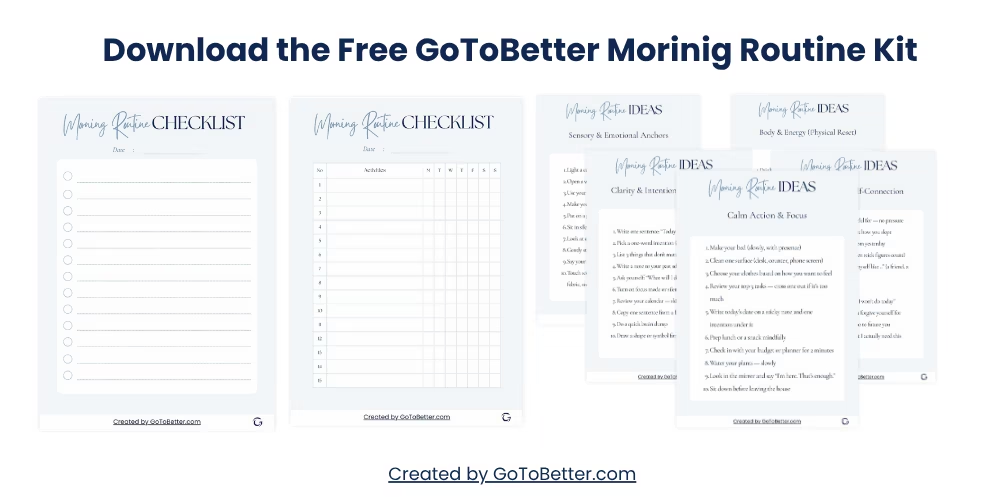
And before you go further, grab the Free Morning Routine Kit — it includes 3 printable tools to help you plan, adapt, and reflect on your mornings as you go:
- 50 Morning Routine Ideas — a categorized list of flexible, real-life actions.
- Daily Morning Routine Template — a clean space to map or track your routine day by day.
- Weekly Morning Planner — try different morning versions and see what actually works.
Use it to circle, sketch, experiment — or just have something real to hold onto while you build your own rhythm.
Write your email and get your Free Kit here↓
Small Tweaks That Actually Work in Real Life
Most fixes that stick are not dramatic. They are the kind you barely notice — the zipper on your bag that’s finally working, the mug that lives next to the kettle. A better morning routine grows from these quiet adjustments that reduce friction and make a calm start to the day feel normal.
Consider swapping the first three minutes of doomscrolling for a glass of water while the coffee machine warms up. That’s not a life transformation. It is, however, a reliable way to anchor simple morning habits to what already happens. Another easy morning upgrade: put your vitamins next to the mug you always use. The goal is not to remember more — it’s to forget less.
When mornings feel messy, it’s often because too many decisions stack up before 9 a.m. Lay out clothes the night before. Put the backpack by the door. Move your keys to a single hook. These are small morning changes that turn chaos into a better daily rhythm without adding effort. If it takes under a minute and removes a snag, it earns a spot.
Flexibility matters too. Some days there’s time for a stretch on the mat. Some days there’s only 30 seconds standing by the sink. Keep a flexible morning habits menu: one longer option and one “mini” version for the same action. The routine doesn’t break when the plan does — it shrinks, then carries on.
GoToBetter InsightStart with one friction point and remove it this week. Then add one easy win next week. Change feels durable when it’s paced.
Think of the path from bed to door as a hallway. If the floor is cluttered, you trip. If it’s clear, you glide. The work here is hallway clearing — put things where your half-asleep self will actually find them. This is how friction-free mornings happen: not by willpower, by design.
Two quick checks help. First, ask: “Where did I stumble today?” Second: “What would make that stumble impossible tomorrow?” The answer is usually physical, not motivational — a charger by the bed, the right socks, the cereal at the front of the shelf. Keep it tangible; keep it boring; keep it working.
How to Reduce Morning Friction Without Waking Earlier
Improvement does not require an earlier alarm. It requires fewer snags between waking and leaving. To build a guilt-free routine, tackle bottlenecks first, not behaviors. Identify the two moments that always slow you down — then engineer around them.
Target Your Two Bottlenecks
You might notice that getting dressed and finding the lunchbox steal most minutes. Others discover that shower timing and phone distractions eat the morning. Fix the choke points with environment changes, not pep talks. If the phone is the snag, charge it outside the bedroom and use a $10 alarm clock.
Use a Clear “Swap” Instead of “Add”
Often, the simplest way is to replace a high-friction step with a lower-friction alternative. Swap a 10-minute guided meditation for one quiet minute staring out the window. Replace a full breakfast cook with a ready-made bowl and kettle eggs. This creates easy morning upgrades that cost nothing in time.
| Habit | Track It? | Why |
|---|---|---|
| Phone outside bedroom | Optional | Reduces instant scrolling; supports a calm start to the day. |
| Clothes laid out at night | No | Removes choice overload when energy is low. |
| Water before coffee | Optional | Simple cue replacement that’s easy to remember. |
| Two-minute stretch | Yes | Micro-movement boosts alertness without extra planning. |
| Bag by the door | No | Prevents last-minute scavenger hunt; avoids morning stress. |
One more layer: design for your groggy self. Labels on bins. The mug shelf at shoulder height. A single tray for keys, wallet, badge. If it feels almost too obvious, it’s perfect. The measure of a realistic morning routine is how well it works on your worst day.
GoToBetter says it like this: “A better morning doesn’t come from more steps — it comes from fewer obstacles.”
The Mindset Shift: Upgrade, Don’t Overhaul
Overhauls look exciting and collapse fast. Upgrades look ordinary and last. The mental reframe is simple: keep what already works, and make it smoother. Remove what reliably fails. That’s the whole move. It’s the quiet engine of a better morning routine.
There’s no moral score in mornings. Some days you’ll have a full sequence; other days you’ll have a single breath at the window. Both count. James Clear’s habit thinking reminds us that identity grows through repeated action, not perfect streaks. BJ Fogg’s research shows tiny, reliable steps beat ambitious plans that never land. Borrow the principle, not the hype.
It helps to set “floor” and “ceiling” versions for any habit. Floor = the smallest version that still feels like momentum (one line in a journal). Ceiling = the nice-to-have when time/energy allows (five minutes of writing). This keeps flexible morning habits adaptive instead of brittle. The routine bends; the identity stays intact.
GoToBetter InsightTry a floor-and-ceiling rule for each habit. The floor protects consistency; the ceiling absorbs good days without pressure.
Two reflection prompts make the mindset real: “What already works that I’m keeping?” and “What repeatedly fails that I’m removing?” No drama, just edits. Like tuning a radio, you’re reducing static until the signal is clear.
GoToBetter says it like this: “Upgrade, don’t overhaul — sustainable change is an edit, not a rewrite.”
Real Examples of Flexible, Guilt-Free Mornings
Here’s how this plays out when the day is not behaving. On school days, backpacks get packed at night and live by the door with shoes inside them. Breakfast is cereal plus fruit within reach. When the house gets loud, there’s one minute of quiet by the window after the door closes. That’s the anchor. It’s enough.
On work-heavy weeks, the first ten minutes shift to a standing stretch and a calendar glance — not a full planning session, just the single decision: “What’s the one thing by noon?” That one sentence reduces scatter and protects a better daily rhythm. The coffee warms while the answer lands.
On low-energy mornings, the floor version runs on rails: water, clothes, bag, out. A short breath at the sink replaces journaling. Email waits for after commute. The win is leaving the house steady, not impressive. This is the definition of a guilt-free routine: nothing to apologize for; nothing to prove.
You might notice that family seasons and deadlines change what “better” means. That’s fine. The point is rhythm, not ritual. The menu stays the same; the portion sizes shift. A calm start to the day comes from right-sizing effort to your actual morning, not the imaginary one from someone else’s list.
Ask two questions while brushing your teeth: “What’s heavy today?” and “What helps me leave steady?” Then pick the floor version. It feels like tying your shoes — mundane but decisive.
Common Myths About Morning Routines (And What to Do Instead)
Myth one: Great mornings require waking at 5 a.m. Reality: sleep research led by Matthew Walker and others points out that consistent sleep and wake times matter more than extreme early hours. If earlier means less sleep, performance and mood drop. Keep the wake time that protects sleep; shift tasks, not rest.
Myth two: More steps equal better outcomes. In practice, every extra step is another place to stall. Trade a 20-minute block of “shoulds” for two simple morning habits that always land. Results come from friction removal, not complexity.
Myth three: Productivity is the only point. No — mornings can center presence, health, or family connection. Success might be a calm hand on a child’s shoulder, not an extra task done. Choose measures that match your life, not social media.
Myth four: The routine must be the same daily. James Clear’s work on identity and BJ Fogg’s tiny behaviors both support adaptable structures. Keep core cues stable and allow size to vary. This keeps friction-free mornings when life resists choreography.
Swap dogma for evidence: guard sleep consistency, compress steps to the essentials, and measure by how you feel leaving the house. When in doubt, pick the floor version. It’s the most reliable way to build a better morning routine that endures.
Tools That Help: Free Kit + Light Tracking
Tools should make action easier, not heavier. Start with paper or a simple sheet for one reason: it’s always there. Use the Morning Routine Kit to circle three options for weekdays and two for weekends. Keep it on the fridge — like a note you can’t ignore. That’s how a realistic morning routine stays visible and used.
Light tracking can support attention without pressure. A weekly box with five squares — not seven — acknowledges real life. Mark the squares you did, ignore the ones you didn’t. This creates a calm start to the day without the scoreboard feeling.
Digital trackers can help if they reduce clicks. A short list, one tap per item, or a simple Google Sheet that mirrors your paper. The point is to see patterns, not to perform. If tracking feels like homework, cut it in half. Let the tool fit the morning, not the other way around.
Two questions keep tools honest: “Does this make my choices easier?” and “Can I keep this on my worst week?” If the answer to either is no, simplify. That’s the test that protects flexible morning habits from turning into a chore.
How to Upgrade Your Morning Without Waking Earlier
This short sequence helps remove friction and add easy wins — no earlier alarm required. Follow the steps as written, then adapt to your context.
Step 1 – Scan Your Morning
List the first five actions after waking as they actually happen. Circle the two moments that feel slow, messy, or avoidable.
Step 2 – Clear One Obstacle
Pick the biggest snag and remove it with an environment change: move the phone, pre-pack the bag, set out clothes.
Step 3 – Create a Floor Version
Choose the smallest viable form of one habit: one line journal, one minute stretch, water before coffee.
Step 4 – Set a Ceiling Version
Define the nice-to-have longer version for good days. Keep it optional so momentum never depends on it.
Step 5 – Swap, Don’t Add
Replace one time-waster with a supportive cue. Phone scroll becomes window breath; scattered breakfast becomes ready bowl.
Step 6 – Test for Five Mornings
Run the new flow for one weekday cycle. Note the single point that still snagged; adjust that, not everything.
Step 7 – Review and Lock One Change
Keep the change that felt easiest. Then, if useful, repeat steps 2–6 with the next bottleneck.
GoToBetter Mini Tool: The 1-Minute Morning Friction Scan
Use this tonight to remove tomorrow’s biggest snag. No app needed — just pen and a small scrap of paper.
- List the first five actions after waking exactly as they happen (no idealizing).
- Circle the two moments that create delay, searching, or tension.
- Choose one environment fix for the top snag (move, place, prep, label) and set it up now.
- Create a floor version for one habit (e.g., one line journal, one minute stretch, water before coffee).
- Put a visible cue where you’ll see it half-asleep (mug by kettle, keys on tray, note on door).
Small step, big relief. If it works, repeat tomorrow for the second snag.
Want to Keep Going? Here’s What Helps
You’ve seen how upgrades — not overhauls — make mornings steadier. Keep what works, remove what trips you up, and let the size of your routine flex with your day.
This support article sits inside our broader approach to mornings. For the full picture of rhythms, pacing, and gentle structure, start here:
Read The Ultimate Guide to Morning Routines — a clear, no-fluff, real-life guide to designing mornings that fit your season, not someone else’s rules.
If you want a simple way to experiment this week, grab the Morning Routine Kit. It includes:
- 50 Morning Routine Ideas — a categorized list of flexible actions for every kind of morning
- Daily Morning Routine Template — a clean space to map or track your routine day by day
- Weekly Morning Planner — test different versions and see what actually works
Get the Free Morning Routine Kit: enter your email below to download and keep it where you’ll use it.
Better Morning Routine FAQ
How can I make mornings calmer without waking earlier?
Reduce bottlenecks instead of adding time. Identify the two snags that always slow you down and fix them with environment changes like pre-packing bags or charging your phone outside the bedroom. For example, setting clothes out at night and placing keys on a single tray can save five minutes without an earlier alarm.
What are realistic habits for a busy weekday morning?
Use floor versions that take under a minute. Try water before coffee, one minute of stretching by the sink, or writing one line that names your “by-noon” task. If the day opens up, use the ceiling version (five minutes of movement or journaling) without making it mandatory.
Do I need the same routine every day to see benefits?
No — keep core cues stable and let the size vary. Maintain the same anchors (wake, water, dress, out) and scale actions based on energy and time. This protects consistency on rough days while letting you do more when it’s available.
How do I stop phone scrolling from derailing my start?
Replace the cue and move the device. Charge the phone outside the bedroom and set a basic alarm clock, then swap the first scroll for a window breath or water while the kettle warms. If you commute, batch news or messages to the train instead of the pillow.
Can small changes really improve my morning energy?
Yes — small changes reduce decision load and preserve willpower for later. Simple moves like prepping clothes, a brief stretch, and water before coffee steady your physiology and mood. Over a week, these micro-wins add up to a calmer start and fewer rushed choices.
Ready to Go Deeper?
When daily check-ins start to feel grounding — not exhausting — it might be time to build something more complete.
Ultimate Habit Tracker (Google Sheets) — simplify your routine, track daily/weekly/monthly habits, and see progress with clear, automated visuals. Built for flexible review so you can adjust without starting over.
- Save time with automated tracking and clean dashboards
- Access anywhere — laptop, phone, or offline
- Reflect weekly to understand patterns and keep momentum
- Private by design — lives in your own Google account
- Tailor categories, goals, and views to your life
Focused on health and mood? Explore these:
Wellness Tracker — track mood, sleep, and wellness habits in one simple sheet with clear summaries that support steady change.
Self-Care Habit Tracker — keep up to 30 self-care activities visible, with gentle prompts and visual progress designed to feel natural and manageable.
Or browse all tools built for real life, not perfection: GoToBetter Shop.