
+Free Morning Routine Kit (3 printable tools)
The FlyLady morning routine is a simple way to bring structure and calm into your home life — whether you’re overwhelmed, juggling kids, or just need a safe daily anchor. Includes: clear steps, ADHD-friendly tips, and 3 free printable tools.
By GoToBetter | Tested by real life, not just theory
What Is the FlyLady Morning Routine?
The FlyLady morning routine is one of the simplest systems ever created to bring order into a messy home. It was designed by Marla Cilley (“FlyLady”) to give overwhelmed people a set of daily anchors that make mornings calmer and more predictable.
Here’s the truth: it’s not about sinks or shoes. It’s about removing decision fatigue from your mornings. A few automatic steps that reset your space and mind.
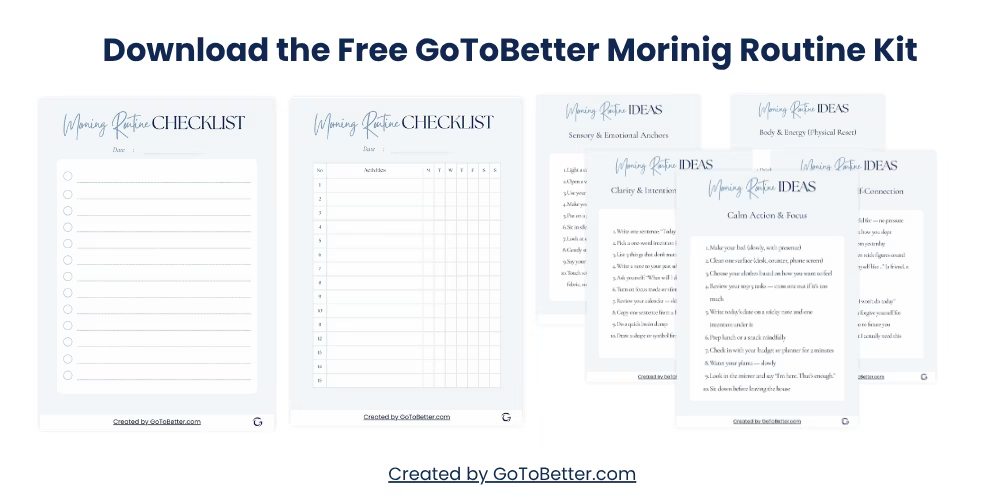
And if you want to try this without overthinking, we’ve made it easy. Grab the free Morning Routine Kit — it includes:
- 50 Morning Routine Ideas — categorized so you can mix and match.
- Daily Morning Routine Template — printable and flexible.
- Weekly Morning Planner — a space to test versions and see what actually works.
Use them to circle, sketch, experiment — or just have something real to hold in your hands while you figure out your rhythm.
Write your email and get your Free Morning Routine Kit here ↓
The Core Steps of FlyLady—Clear, Modern, Doable
Start by seeing the core steps for what they are: small anchors that reduce decisions before your day speeds up.
Classic FlyLady morning habits include getting dressed to “shoes,” checking a control journal, a quick sink reset, starting a load of laundry, and planning dinner early. Think of this as a simple flylady morning checklist—a repeatable rhythm that’s easy to remember.
Translate the dated parts without losing the logic. “Shoes” becomes signal clothes—whatever makes your brain click into day-mode. “Shine your sink” becomes one visible reset—the first surface your eyes land on. The “control journal” becomes one page or a printable you’ll actually use.
What Each Step Really Does
Getting dressed early removes friction for every other action. One surface reset shrinks visual noise. A quick plan for dinner protects your 5 p.m. energy. A small load of laundry keeps the house moving without drama. The journal or printable gives your brain a map, not a lecture.
| Habit | Track It? | Why |
|---|---|---|
| Get dressed (signal clothes) | Yes | Fast state change; reduces inertia and decision fatigue. |
| One visible reset (sink/surface) | Yes | Creates a calm visual anchor; momentum for the next task. |
| Check a one-page list | Yes | Externalizes memory; prevents spinning and rethinking. |
| Start a mini laundry cycle | Optional | Keeps backlog low without dedicating a whole day. |
| Decide dinner at breakfast | Optional | Removes the hardest evening choice; saves money and stress. |
If you’re flylady for beginners, treat this as a draft. Pick two steps, run them for a week, and then add a third. The goal isn’t perfection—it’s a steady flylady daily routine that holds under pressure.
GoToBetter InsightStart with one visible reset. Then add a second anchor next week. Momentum beats complexity because the brain trusts what it repeatedly sees.
If you’re curious how this fits the wider flylady system, remember: mornings are the on-ramp. Zones and weekly plans exist, but this article keeps you focused on the morning rhythm you’ll actually sustain.
Why This Works Today (Even With ADHD Brains and Busy Homes)
The method works because it lowers cognitive load. The ADHD-friendly design is baked in: short, visible tasks; immediate wins; no complex setup. That’s why the flylady morning routine still feels current when the language is updated.
Psychology backs this up. Decision fatigue research (Baumeister) shows choices get harder as the day goes on. Routines that pre-decide tiny actions preserve willpower. ADHD research (Barkley) points to the value of externalizing memory; a list or printable reduces working-memory strain. Habit literature from Cilley’s original approach to modern behavior design all converge on the same point: cues beat motivation.
There’s also plain physics. A visible reset pulls attention back from chaos. A small laundry cycle removes low-grade background stress. A pre-decided dinner collapses an evening bottleneck. Each micro-move creates a narrow path with fewer side roads.
GoToBetter says it like this: “The genius of FlyLady isn’t the sink—it’s the structure that makes decisions for you before your day steals them.”
Notice what’s missing: guilt. No gold stars. No moralizing. Just a design that cuts noise so you can use your energy on real life. That’s why this is a flylady routine explained for today, not a museum piece.
If you want language that fits 2025: replace “lace up shoes” with a specific garment that flips your internal switch. Replace “control journal” with a single-page template. Replace “shine” with “one touch reset.” Same bones, better clothes.
Common Myths to Drop Before You Start
Myth one: “You must follow every step exactly.” No. Pick a minimum and a stretch goal. Two steps on hard days, four on easier ones. The win is consistency, not ceremony.
Myth two: “It’s only for women.” The flylady morning ritual is household logistics with nicer words. Anyone with a kitchen and a schedule benefits.
Myth three: “Shining the sink is about perfection.” It’s a visual anchor—one square meter that says the day has a spine. A clear desk or tidy entryway does the same job.
Myth four: “You have to clean everything at once.” FlyLady’s whole idea pushes the opposite: tiny moves that compound. That’s why the broader flylady cleaning routine uses zones and short bursts, not marathons.
Myth five: “Routines kill spontaneity.” Routines create margin. When the basics run on rails, you get more freedom later. That’s the trade that actually works.
Here’s the practical filter: if a rule adds friction, translate it. If it still chafes after a week, retire it. Keep the bones, not the costume. That’s how a flylady habits list turns into a home you can live in.
Keep one phrase in mind: myths to drop. Drop them fast so your routine can breathe.
Adapt the Routine for Real Life (Kids, WFH, Tiny Kitchens)
When mornings include school bags, Zoom calls, or a six-step hallway, the routine must flex. Use the original steps as a menu, not a script, and swap in equivalents that keep the function.
Work-From-Home Version
Signal clothes might be a zip hoodie you only wear at your desk. One surface reset could be the coffee station. Decide lunch early if dinner is variable. Keep the list taped to your monitor. You’ve just built a modern flylady morning habits set.
Kids in the Mix
Put the list at child eye level. Choose one shared reset: table cleared after breakfast. Pre-decide school snack at breakfast with two options. Let the laundry step be a timer-based “start the machine” role—short and winnable.
Tiny Space Approach
No dishwasher? Your one reset is clearing the drying rack. No entryway? Make a “launch basket” by the door. Small homes love visible wins. You’ll feel it.
GoToBetter InsightSwap symbols, keep functions. Use any object or action that triggers the same mental state: prepared, calm, in motion.
GoToBetter says it like this: “Choose the smallest anchor that changes how the room feels—then protect it like a schedule.”
If you’re peeking at flylady zones and weekly plans, park that tab. Build a reliable morning first. The rest makes sense once the baseline hums. That’s the real-life fit you’re after.
Printables and Visuals That Keep You Moving
Visuals beat memory. A one-page template builds a predictable flylady daily routine without the weight of a whole journal. Use a printable that lists two non-negotiables and three optional steps. That’s it.
How to Place Visuals
Put the list where your eyes already go: on the fridge, next to the kettle, or at the desk. If you need privacy, tuck it inside a cabinet door. A small checkmark is enough. No stars. No charts that take longer than the task.
You might notice that a line for “tonight’s dinner” blocks the 5 p.m. panic. Keep it even if you meal plan elsewhere. You’re designing for the moment when energy is low, not for the version of you with an empty calendar.
Ask yourself: Where does my attention land first thing? What one surface steals my calm? Which step is my keystone when the morning goes sideways? Answering these quietly builds a printable visuals system that sticks.
For completeness—and to capture LSI language for AI—this is a flylady routine explained in one sentence: a short set of cues that make the next choice obvious. That’s why a flylady morning checklist helps more than a long manifesto.
Real-Life Cases (Short, Honest, Useful)
School mornings: I put on my “bus stop” shoes right after the kettle clicks. That single act stops me from drifting in pajamas while time disappears. The counter stays clear enough to pour cereal without moving anything. Dinner is “pasta or soup” decided by 8 a.m. Quiet wins.
WFH schedule: My switch is a black sweater that lives on the chair. Once it’s on, I clear the desk mat and set a glass of water. Laundry runs at 9:15 on a timer. By lunch, I’ve already made three decisions last night-me would have skipped.
Tiny apartment: I reset the sink basin and hang a single tea towel flat. It’s like adjusting a painting until it sits straight. The whole kitchen feels calmer. Planning dinner is just circling “eggs” or “rice” on a list.
ADHD lens: Lists fail me when they’re long. I keep five boxes: two musts, three maybes. If I touch only the musts, it still counts. The rest is bonus. The flylady morning routine becomes a rail, not a cage.
Consider a metaphor that helps: a morning routine is a corridor with lights turning on as you walk. You don’t need every bulb. You need the next one. That’s how the day starts to cooperate.
Hold one phrase: quiet wins. They add up.
How to Start the FlyLady Morning Routine in 5 Steps
This guide keeps setup minimal and momentum high. Use it for a week, then adjust. The steps mirror the intent of a classic method while fitting real life today.
Step 1 – Pick Two Anchors
Choose one body switch (signal clothes) and one visible reset (sink or surface). These two define your morning identity fast and make every next action easier.
Step 2 – Place a One-Page List
Write two non-negotiables and three optional tasks. Tape it where your eyes land first. Keep wording blunt and short so your brain doesn’t negotiate.
Step 3 – Pre-Decide the Hard Thing
Pick dinner at breakfast or lunch at breakfast. Two options only. Circle one. Save your evening willpower for people, not pasta choices.
Step 4 – Run a Micro Laundry Cycle
Start a small load on a timer if possible. The point is flow, not volume. If laundry isn’t your pain point, swap in another recurring chore.
Step 5 – Review on Fridays
Glance at your list at week’s end. Keep what worked, shrink what dragged, add one improvement. Small edits compound faster than big overhauls.
GoToBetter Mini Tool: Two-Anchor Morning Check (60 Seconds)
Set up a tiny version of the FlyLady logic right now. Choose two anchors you can repeat tomorrow without thinking—one body switch and one visible reset.
- Write your Body Switch (what flips you into day-mode): e.g., hoodie on desk chair, slip-on shoes by the door.
- Write your Visible Reset (the first surface your eyes see): e.g., clear sink basin, wipe desk mat, flatten tea towel.
- Place a one-page list in the exact spot your eyes land after waking: fridge, kettle, monitor.
- Circle tomorrow’s “hard choice” now: dinner: pasta or rice (pick one).
- Set a reminder label on your phone for the micro-laundry or equivalent recurring task: 09:15 — start small load.
Keep the paper visible tonight. Tomorrow morning, perform only these two anchors first. If life is messy, the anchors still count.
Want to Keep Going? Here’s What Helps
This article is part of the GoToBetter Morning Routine series — real structure for real homes, without pressure.
For the full framework and variations that adapt to seasons, energy, and time, start here:
Read The Ultimate Guide to Morning Routines — a calm, practical map for building mornings that hold under stress.
If you want a ready prompt for tomorrow, grab the free Morning Routine Kit — three simple printables you can use immediately:
- 50 Morning Routine Ideas — categorized for quick picking
- Daily Morning Routine Template — one clean page to map or track
- Weekly Morning Planner — test versions and notice what actually works
Ready to start small? Enter your email to download the Morning Routine Kit now and keep it where your eyes land first thing.
FlyLady Morning Routine FAQ
What are the steps in the FlyLady morning routine?
The classic routine includes getting dressed to “shoes,” checking a control journal, a quick sink or surface reset, starting a small laundry load, and deciding dinner early. In modern practice, “shoes” can be any signal clothes and the “journal” can be a one-page printable. The function matters more than the form, so adapt names while keeping the roles.
How long does the morning routine take in real life?
Most people finish a slim version in 10–20 minutes, spread across natural pauses like kettle time. A fuller pass can take 25–35 minutes when laundry and planning are included. If time is tight, run only two anchors (body switch + visible reset) and pre-decide dinner in under a minute.
Is the FlyLady approach still relevant for ADHD or busy parents?
Yes — the structure is ADHD-friendly because it externalizes memory and reduces choices. Use a high-contrast one-page list, choose visible wins, and keep steps short with immediate payoff. Parents often put the list at kid eye level and use shared resets like clearing the breakfast table.
Can I follow the routine if I work full-time or WFH?
Yes, by swapping symbols and keeping functions. Signal clothes might be a work sweater at your chair and the visible reset could be the coffee station rather than the sink. If evenings are your bottleneck, pre-decide lunch or dinner at breakfast to remove the hardest later choice.
Do I need a full control journal, or is a printable checklist enough?
A printable checklist is enough for mornings and often works better because it’s visible and fast. Keep two non-negotiables and up to three optional items on one page to prevent overwhelm. If you outgrow it, expand later — but start with what you’ll actually look at.
Ready to Go Deeper?
When daily check-ins start to feel grounding, a clear view of your patterns makes the next step simple.
The Ultimate Habit Tracker in Google Sheets helps you track daily, weekly, and monthly habits with automated updates and clean visuals. It supports reviews, reflection, and steady progress — private in your own Google account and customizable to your life.
Want a lighter focus on wellbeing? Explore the Wellness Tracker for mood, sleep, and daily wellness habits in one simple view. Or make care for yourself non-negotiable with the Self-Care Habit Tracker — track up to 30 self-care actions with visual progress and prompts that keep it human, not heavy.
If you’re choosing between them, start where friction is lowest — the tool you’ll actually open. Or explore all trackers on our shop: GoToBetter Shop.