
This guide shows how to choose and use printable habit trackers — with layout tips, real-life examples, and a free 3-template kit.
By GoToBetter | Built for real use, not digital clutter
What Is a Printable Habit Tracker (And Who Should Use One?)
A printable habit tracker is a physical sheet — usually a grid, circle, or checklist — that helps you track habits by hand. You print it out, hang it somewhere visible, and check off actions as you go. No apps, no syncing. Just pen and paper.
And that’s the point.
Unlike digital trackers, which often sit hidden in tabs or send annoying reminders, a printable habit tracker is visual and present. It lives in your space. It reminds you passively. You don’t need to open anything — it’s already there, holding space for what you care about.
This makes it ideal for:
- People who are overwhelmed by apps and systems
- Anyone who wants a visual nudge, not another notification
- Those starting from scratch — no digital learning curve
- Habit builders who need presence over data
Printables are especially useful if you’re in a season where structure helps, but friction hurts. When opening an app feels like a chore, paper lowers the barrier. It’s forgiving. It doesn’t demand. It simply sits there and waits.
If you’ve tried tracking habits before and stopped because the app was too much (or too little), this might be your best reset. Printable trackers don’t try to be everything. They just help you notice — and repeat — what matters.
GoToBetter says it like this: “A printable tracker is like a quiet promise on paper: I want to show up, even if it’s messy.”
Whether you’re building one tiny habit or re-centering your whole day, a well-placed printable can help you see — and believe — that change is happening. One checkmark at a time.
Why Use a Printable Habit Tracker?
Most digital habit trackers are built for people who are already organized.
But if you want something you’ll actually see — no setup, no notifications — printable still wins. It goes on your wall, into your planner, or next to your kettle. It doesn’t ping. It just sits there and quietly does its job.
One page is all you need. Whether you’re tracking one habit, building a 21‑day streak, or just trying to stay consistent — paper makes it clear. No apps. No dashboards. Just presence and progress.
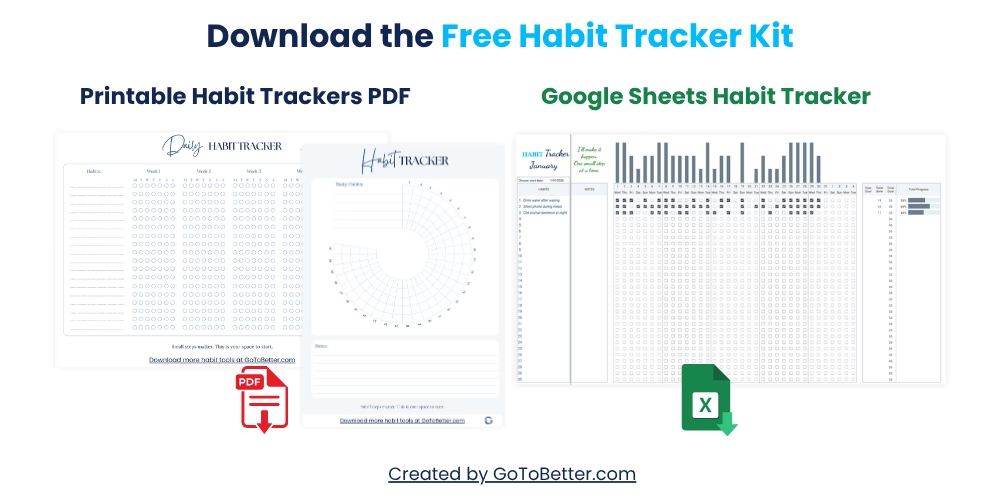
To get you started, we’ve put together a free Printable Habit Tracker Kit — plus a Google Sheets version if you ever want to go digital.
Here’s what’s inside:
- Daily Printable Habit Tracker — a clean grid to track up to 25 habits over a full month
- 30‑Day Circle Tracker — a visual layout for tracking mood, energy, or single-focus habits
- Google Sheets Habit Tracker — editable, click‑to‑log, with built‑in charts and progress stats
Whether you use paper, spreadsheets, or both — these tools are designed to be simple, flexible, and actually usable.
Write your email and get your Free Kit here↓
Why Printable Habit Trackers Still Work (Even in 2025)
Apps promise automation, syncing, and stats. But when it comes to forming real habits, sometimes simpler tools win. A printable habit tracker doesn’t buzz. It doesn’t disappear behind another tab. It stays in front of you — quietly holding space for what you said matters.
You see it when you make coffee. When you open your notebook. When you pause between meetings. The reminder isn’t artificial. It’s visual. Physical. Present. It reflects your intention back at you.
Plenty of people start with digital systems and abandon them. Not because the tech is bad — but because their life isn’t always tech-compatible. Tired eyes, dead batteries, too many logins. A printable tracker skips all that.
There’s also a mindset shift. When you print something, you commit in a quiet way. You’re not setting up a system. You’re saying: this matters enough to be on paper. That subtle cue can anchor you more than a weekly app notification.
GoToBetter says it like this: “The best habit tracker is the one you actually look at. Print it. Place it. Let it become part of the room.”
You don’t need to track everything. You just need one page that reflects what you care about. And that page — if it’s designed well — can hold a lot more than checkboxes.
GoToBetter InsightStart with one printable tracker visible in one place. Don’t move it. Let visibility do half the work before you even pick up a pen.

What Makes a Printable Habit Tracker Actually Usable
Not all printable habit trackers are worth printing. Some are so cluttered you avoid looking at them. Others are so empty they don’t guide anything. A good tracker balances clarity, structure, and flexibility. You can glance at it and know exactly what to do.
The best layouts tend to do a few key things well:
- Use a clean grid that doesn’t overwhelm or distract
- Provide enough space to actually mark progress (not just tiny dots)
- Label habits clearly — or give room for custom names
- Include logical time frames (like 21, 30, or 100 days)
But design alone isn’t the goal. The real question is: does it help you show up? A beautiful tracker that sits in a drawer isn’t helping anyone. A plain sheet taped to the fridge, though? That can be life-changing — if you see it daily and interact with it.
That’s why we built the Free Printable Habit Tracker Kit the way we did: clean, visible, and focused. No extra fluff. Just real structure that gives your habit a place to live.
GoToBetter Mini Tool: The Visible Check
Pick one spot where your eyes naturally land every day (mirror, fridge, wall by your desk). Put your tracker there. For the next 3 days, every time you glance at it, mentally note: “I still care about this.” No marks needed. Just awareness.
The 3 Types of Printable Habit Trackers Most People Use
When people say “printable habit tracker,” they could mean a few different things. Depending on your goals, each format offers unique strengths. Here’s what to look for:
| Tracker Type | Best For | Why It Works |
|---|---|---|
| Daily Grid (30 days) | Tracking multiple habits at once | Lets you see patterns across a full month at a glance |
| Circle Tracker (30-day wheel) | Visual habit streaks or mood/intention tracking | Makes completion feel visual and satisfying |
| Single Focus (21-day tracker) | Focusing on one habit at a time | Builds clarity and commitment through repetition |
You might rotate between these. For example, someone might use a grid during routine-heavy months, then switch to a circle tracker for seasonal goals. There’s no perfect format — just what helps you stay engaged right now.
That’s why we included both the Daily Grid and Circle Tracker in the kit — so you can experiment.
Why the Time Frame You Pick Matters More Than You Think
21-day tracker. 30-day grid. 100-day challenge. These numbers aren’t just arbitrary. They shape how your brain sees progress. A shorter tracker feels more achievable — and helps you test habits without pressure. A longer one helps you see identity shifts.
Here’s how to think about each:
- 21 days: short enough to test without overwhelm; builds early consistency
- 30 days: gives you a full monthly rhythm; useful for aligning with planner routines
- 100 days: long enough to track a major life shift (e.g., fitness, mindset)
You might notice you naturally drop off around day 12 or 15. That’s not failure — that’s feedback. It means your tracker might need to get more visible, or your habit too abstract. Changing the tracker — not the goal — can often reset the momentum.
GoToBetter says it like this: “Don’t commit to 100 days unless you can picture day 14.”
Choosing the Right Printable Habit Tracker
Picking a printable habit tracker isn’t just about the design — it’s about matching the format to what actually supports your consistency. The way a tracker looks and feels can change whether you interact with it or ignore it. In this section, we’ll explore how to choose one that actually gets used.
Some people thrive with structured layouts. Others need open-ended space. Neither is better. But choosing wrong can lead you to abandon the tracker — not because tracking doesn’t work, but because the format didn’t fit how you think and operate.
Structured vs. Open Layouts
A structured tracker uses a fixed grid. You fill in habit names, then tick off progress day by day. These are excellent for people who want visible progress and repetition. But they can feel rigid if your routines vary.
Open-ended layouts give you more flexibility. You might just have a 30-day circle to color in. Or a blank space to reflect and jot. These encourage mindfulness and engagement but can be harder to sustain without cues or structure.
GoToBetter InsightUse a grid-based tracker if you want repetition and visible proof. Try open formats if your habits shift day to day — or if visual space motivates you more than structure.
How Many Habits Should You Track?
The short answer? Fewer than you think. Many people print a tracker, list 12 habits, and give up in three days. Printable works best when it’s focused. One or two key behaviors is plenty. You can always add more later.
If you’re using our Daily Printable Habit Tracker, there’s space for up to 25 — but that doesn’t mean you should fill them all. Sometimes it’s smarter to track the same habit in two different ways (e.g. “Drink water” and “Refill water bottle”) to reinforce the flow.
GoToBetter says it like this: “The fewer things you track, the more likely you are to actually notice them.”
Which Template for Which Purpose?
Each type of printable tracker supports a slightly different goal. Here’s a breakdown to help you choose the right one from our kit:
| Tracker Type | Best For | Why |
|---|---|---|
| Daily Printable Habit Tracker | Multiple habits, daily repetition | Provides a structured grid to log up to 25 actions across a month |
| 30-Day Circle Tracker | One big habit, mood, or intention | Creates a visual sense of progress that’s satisfying to complete |
| Google Sheets Tracker | Digital + printable hybrid tracking | Includes analytics, auto-highlighting, and is mobile friendly |
Daily vs Monthly Habit Trackers: Which Layout Works Better?
Most printable habit trackers fall into two categories: daily layouts and monthly overviews. They’re both useful — but they serve different purposes. Picking the right one can make the difference between a tracker you ignore and one you use consistently.
Daily habit trackers focus on short-term repetition. You fill out one day at a time, usually with space for reflection or detailed notes. They work well if you’re building a daily routine, want to track how you feel each day, or need flexibility from day to day.
Monthly trackers offer a zoomed-out view. You get a single page showing an entire month of progress — often in a grid format. These are great for spotting patterns, tracking multiple habits at once, and building streaks you can see at a glance.
Here’s how they compare:
| Layout Type | Best For | Why It Works |
|---|---|---|
| Daily Tracker | One habit with space to reflect | Encourages daily presence and mindful check-ins |
| Monthly Tracker (Grid or Circle) | Multiple habits or single focus over time | Gives a visual overview of consistency and momentum |
You don’t have to choose just one. Some people use a daily tracker during periods of change or stress, and a monthly version when they’re in a stable rhythm. Others combine both — using the monthly as a “dashboard” and the daily for personal notes.
GoToBetter says it like this: “Use a monthly tracker to see the shape of your month. Use a daily one to meet yourself where you are.”
Think about what motivates you: seeing the bigger picture — or showing up today? That’s your answer.
Minimalist, Editable, or Visual? How to Choose Your Template
Not every printable habit tracker works the same way — and that’s the point. Some are minimal and clean. Others are colorful and visual. A few let you customize before printing. The right template depends on how you think, how you stay motivated, and what kind of habits you’re tracking.
Here’s a breakdown of the most common styles — and when each one actually helps:
- Minimalist: clean lines, no distractions, plenty of white space. Great if you get overwhelmed easily or just want clarity. This is the default style in our free Daily Habit Tracker.
- Editable: lets you fill in names, dates, or checkboxes before printing (usually in PDF or Google Sheets). Useful if your routine changes or you want to pre-label everything.
- Visual: circle trackers, mood wheels, or color-based layouts. Best for people who are more motivated by visual progress than detailed tracking.
Here’s the key question to ask: What will actually pull me back to the page?
If you want simplicity and ease — go minimalist.
If you’re tracking many habits — editable may help you stay organized.
If you want the satisfaction of “coloring in” your day — visual is your friend.
Don’t overthink the choice. You’re not marrying a layout. You’re experimenting. You can always switch next week if the current one stops working.
Where to Place Your Tracker So You’ll Actually Use It
This sounds minor. It isn’t.
Where your tracker physically lives can make or break your follow-through. A tracker stuffed in a drawer is just clutter. One pinned near your coffee maker? That’s a habit anchor.
Place It Where the Habit Begins
If you’re tracking a morning routine, place the tracker somewhere visible the moment you wake up. If you’re tracking exercise, stick it by your workout gear. Trackers work when they’re part of the context — not just an afterthought.
Most people forget to check their tracker because they placed it where they don’t look. You want it in the natural line of sight during the habit cue.
Use It as a Visual Cue
Your brain loves closure. Seeing a row of checkmarks builds momentum. That’s why putting your tracker in a visible, low-effort spot matters. It becomes a prompt — not just a log.
GoToBetter says it like this: “A good tracker doesn’t just record progress. It makes progress easier to repeat.”
GoToBetter Mini Tool: Tracker Placement Check
Think of the habit you want to track. Then answer these three questions to choose the best spot for your tracker:
- Where do I usually do the habit?
- What’s the first thing I see when I enter that space?
- What’s one object I can pair the tracker with (e.g. mug, toothbrush, charger)?
Place your tracker exactly where it overlaps with those answers.
Printable vs. Google Sheets Habit Trackers
Some people think they have to choose one. You don’t. These two formats do different jobs — and they actually work well together.
Printable trackers are best for daily visual reinforcement. Google Sheets gives you long-term patterns and reflection space. You can use one for presence, one for trends.
Let’s compare how each works:
| Feature | Printable Tracker | Google Sheets Tracker |
|---|---|---|
| Setup | Just print and go | One-time copy to Google Drive |
| Best For | Daily check-ins, visual reminders | Reviewing trends, setting formulas |
| Accessibility | Needs to be printed and visible | Works on desktop + mobile |
| Motivation style | Tactile and visual | Data-driven and customizable |
Both are included in your free kit — not to force a choice, but to let you experiment. Some people start with printables and switch to Sheets. Others combine them: one to stay consistent, the other to notice deeper shifts.
GoToBetter says it like this: “Trackers don’t change behavior. Interaction does. Choose the format you’ll actually interact with.”
How to Use Printables as Habit Anchors
This is the real magic of printable trackers — they can do more than just record progress. They can trigger it. That happens when you turn the act of marking your tracker into part of the habit loop itself.
The Action + Tracker Loop
Here’s how this works in practice:
Let’s say your habit is “evening skincare.” You print the tracker and tape it to your mirror. Every night, after you do your skincare, you check it off. Eventually, the act of checking off the box becomes the final step in your routine — not an extra task, but a built-in ritual.
This is how you create a feedback loop. Habit leads to tracker, tracker leads to identity reinforcement, identity reinforcement leads to next habit.
Stacking Trackers with Routines
If you already have routines, pair your tracker check-ins with them. For example:
- Morning coffee = look at tracker
- Evening wind-down = mark completed boxes
- Sunday planning = review tracker and choose one change
Keep it visible. Keep it frictionless. The tracker becomes an extension of your daily environment, not an app to remember or a system to “check.”
GoToBetter says it like this: “The moment you mark the tracker becomes part of the habit itself.”
GoToBetter Mini Tool: Anchor Spot Finder
Choose one habit you’re trying to track. Then answer:
- Where am I when I do this habit most days?
- What’s already part of that space (mirror, drawer, shelf)?
- What’s one place in that space I can attach a tracker — no tape required?
Attach your tracker there. Let it become the closing gesture of the habit, not an afterthought.
Inside the Free Kit: 2 Printable Trackers That Actually Work
If you prefer tracking habits on paper, this free kit gives you two simple, calming layouts that work with any journal, clipboard, or fridge door. No clutter. No overdesign. Just clean, usable structure built to help you actually follow through.
Here’s what’s inside:
- Daily Printable Habit Tracker — a classic 30-day grid that lets you track up to 25 habits. Perfect for those who want repetition, visible checkmarks, and space to notice patterns across the month.
- 30-Day Circle Tracker — a visual, single-focus layout ideal for mood, energy, or intention tracking. You color in a segment each day to see the shape of your progress over time.
Both are designed to be calm, flexible, and easy to start — even if you’re in a messy season or starting over. They print cleanly on A4 or US Letter, and work with pens, highlighters, or even stickers.
And if you ever decide to go digital, the same kit also includes a Google Sheets version. It’s fully editable, click-to-log, and comes with built-in charts and auto-highlighting — perfect for reflection and long-term habit tracking. You can copy it directly to your Google Drive and use it on desktop or mobile.
You don’t have to choose between paper and spreadsheets. Use the printable for daily visibility, and the Sheets version for deeper insights. That’s why we included both.
It’s all free — and it’s built for real life. You can download the full kit below and start with whichever version fits your brain today.
Ready to Go Deeper?
Once your printable tracker becomes part of the routine, you might start noticing patterns — or wondering what they really mean.
The GoToBetter Shop offers printable tools designed for that next step: guided journals, progress check-ins, and layered trackers that help you reflect without overwhelm.
Whether you want to stay simple or build a deeper tracking rhythm, there’s something to match your pace — without pressure.
Visit the GoToBetter Shop — from single-page printables to full reflection systems, everything’s made to fit your real life, not fight it.
One Last Thing
You don’t need the perfect system. You just need something visible, honest, and calm — that quietly reminds you who you’re becoming.
That’s the real job of a printable tracker. Not to impress. Not to measure everything. But to hold space for your effort, in the background, where habits are built.
Simple doesn’t mean small. It means you’ve cleared space for what matters. Start there.
Printable Habit Tracker FAQ
What’s the best printable habit tracker for beginners?
Start with something simple and clear — like a 30-day grid or circle. The free Daily Printable Habit Tracker in our kit is designed for ease: no clutter, just one page that shows your progress at a glance.
Is a 21-day or 30-day tracker better?
21 days is great for testing a habit without pressure. 30 days helps build rhythm and routine. Both are included in our free kit — choose based on what feels manageable for you right now.
Are there minimalist habit tracker printables?
Yes. The free kit includes a clean, no-fuss layout with space to track up to 25 habits. It’s designed to be calm, not overwhelming — just structure, clarity, and white space.
What if I forget to use my printable tracker?
Move it where your eyes go. A tracker only works if you see it. Try placing it by your mug, mirror, or laptop. Visibility turns it from a task into a cue.
Do printable trackers actually work — or are apps better?
Printables work when you want focus and presence. Apps give data, but paper gives visibility. The best tracker is the one you’ll actually check — and paper makes that easy.